医疗IT

Search documents
AI赋能+专利集中到期,2026年将是医疗保健私募激动人心的一年!
Hua Er Jie Jian Wen· 2026-01-26 08:12
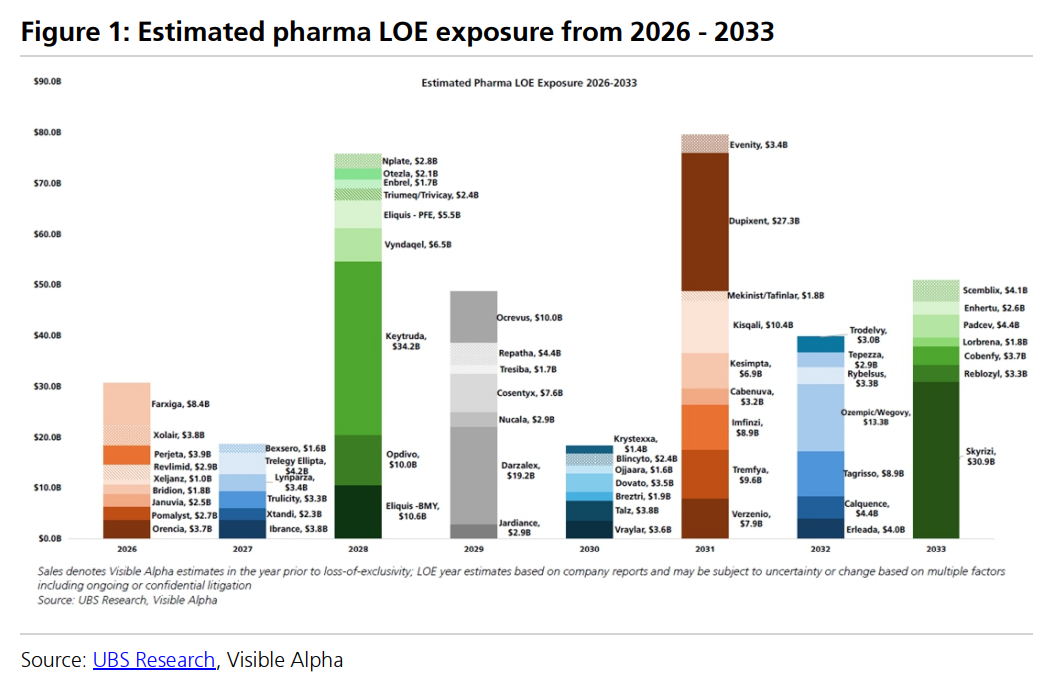
Core Viewpoint - The U.S. healthcare private equity market is at a critical turning point, with expectations for a revival in 2026 driven by macroeconomic clarity, advancements in AI technology, and the impending expiration of pharmaceutical patents [1][4]. Market Sentiment Recovery - The healthcare sector faced significant pressure in 2025 due to drug price reforms, insurance policy adjustments, FDA approval uncertainties, and high interest rates, leading to a decline in risk appetite across most sub-industries [2]. - Signs of recovery began to emerge in the second half of 2025, with expectations that stabilization in interest rates and gradual resolution of policy uncertainties could sustain this momentum into 2026 [3]. Patent Expiration and M&A Dynamics - A key structural factor for the anticipated recovery in private healthcare in 2026 is the upcoming expiration of patents for major pharmaceutical companies, with UBS estimating a concentrated period of patent expirations from 2026 to 2033 [4]. - The demand for strategic acquisitions of high-quality private biotech assets is expected to rise as multinational pharmaceutical companies increasingly rely on external innovation [4][7]. M&A Trends and Exit Strategies - In 2025, private biotech company acquisitions reached $16.4 billion, a year-on-year increase of approximately 150%, indicating a shift towards M&A as a primary exit strategy for private equity funds [7]. - The competitive landscape for acquisitions is likely to intensify in 2026, focusing on differentiated mechanisms and late-stage clinical assets as the patent cliff approaches [7]. Key Therapeutic Areas for Private Equity - UBS highlights three therapeutic areas that may serve as catalysts for private equity in 2026: - Psychedelics are entering a critical validation phase, with multiple Phase III clinical data expected to be disclosed in 2026, making it suitable for defensive capital allocation [8]. - The KRAS target may undergo paradigm validation, particularly if RVMD's Phase III data in pancreatic cancer is positive, potentially reshaping market perceptions of the KRAS pathway's commercial potential [10]. - Weight loss and metabolic diseases remain high-interest areas for acquisitions, with new oral GLP-1 and long-acting weight loss drugs expected to drive continued M&A activity [10]. AI's Evolving Role in Healthcare - AI is transitioning from a concept-driven valuation tool to a direct influence on cost structures within the healthcare sector, particularly in medical IT and managed care [11]. - The current phase of AI is expected to benefit private equity and growth assets more than creating uniform valuation premiums in the secondary market [11]. Exit Activity and Market Dynamics - In 2025, healthcare VC investments showed a pattern of early stability followed by late recovery, with a notable increase in PE-led exit activities, primarily through M&A [12]. - The number and quality of IPOs in healthcare are expected to marginally improve in 2026, enhancing risk appetite in both primary and private markets, although UBS does not foresee a comprehensive boom year [13].

贝恩公司:2026年全球医疗健康行业私募股权报告(英文版)
Sou Hu Cai Jing· 2026-01-14 00:17
Group 1: Market Overview - The global healthcare private equity (PE) market experienced a strong recovery in 2025, achieving record growth with disclosed deal value exceeding $191 billion, surpassing the previous peak in 2021 [14][19] - A total of approximately 445 transactions were recorded, marking the second-highest annual total in history [14][19] - Exit activity also rebounded significantly, with exit value reaching an estimated $156 billion, up from $54 billion in 2024, driven by an increase in large transactions [18][19] Group 2: Regional Performance - In Europe, deal value doubled to approximately $59 billion, primarily driven by biopharma and healthcare services transactions [28] - North America saw a temporary pullback in the second quarter due to macroeconomic uncertainties, but still achieved a healthy exit value of around $90 billion, significantly higher than 2024's $35 billion [29] - Asia-Pacific set a record for deal value, exceeding 2021's high by more than 30%, with notable growth in biopharma, medtech, and healthcare IT [30][31] Group 3: Sector Insights - Biopharma remained a core focus, with deal value rising to an estimated $80 billion, accounting for about 30% of overall deal volume [36] - Provider and related services saw a 57% increase in deal value to approximately $62 billion, driven by technology-enabled assets [41] - Medtech experienced significant growth, with deal value nearly doubling to an estimated $33 billion, reflecting investor interest in large-scale assets [42] Group 4: Deal Dynamics - Sponsor-to-sponsor transactions surged, with over 150 deals expected and more than $110 billion in estimated value, indicating a strong market [47] - High-value deals exceeding $1 billion contributed to the overall increase in average deal size, with more than 30 such transactions recorded in 2025 [54] - The healthcare IT sector continued to attract investment, accounting for nearly 20% of healthcare transactions in 2025, supported by strong fundamentals [62]

2026年全球医疗健康行业私募股权报告(英文版)-贝恩公司
Sou Hu Cai Jing· 2026-01-12 16:26
Core Insights - The global healthcare private equity (PE) market is set for a strong recovery in 2025, achieving record levels in deal value and volume, with significant regional differentiation and sector evolution [1][2][3] Group 1: Market Performance - In 2025, the global healthcare PE transaction value exceeded $191 billion, marking a substantial increase from 2024 and surpassing the previous peak in 2021 [1][2] - The number of transactions reached 445, making it the second-highest annual total in history [1][2] - Exit values also surged to $156 billion, the second-highest on record, driven by an increase in large transactions, with over 40 exits exceeding $1 billion [1][2][3] Group 2: Regional Market Dynamics - Europe saw a doubling of transaction value to $59 billion, primarily due to strong growth in biopharma and healthcare services [2][3] - North America experienced a temporary pullback in the second quarter but still achieved a healthy exit value of $90 billion, supported by 26 transactions over $1 billion [2][3] - The Asia-Pacific region set a historical record for transaction value, growing over 30% compared to 2021, with significant contributions from China, Japan, and India [2][3] Group 3: Sector Trends - Biopharma continued to dominate the market, with transaction value reaching $80 billion, accounting for a significant share of overall deal volume [2][3] - Healthcare IT transactions doubled to $32 billion, driven by technology-enabled assets and a focus on analytics and workforce optimization [2][3] - Medtech showed remarkable growth, with transaction value nearly doubling to $33 billion, highlighting its emergence as a new growth engine [2][3] Group 4: Transaction Models - Sponsor-to-sponsor transactions rebounded strongly, with over 150 deals valued at more than $110 billion, indicating a robust market environment [3] - Public-to-private and carve-out transactions also gained traction, reflecting evolving investment strategies [3] - The overall increase in large transactions has led to a significant rise in average deal sizes, with more than 30 deals exceeding $1 billion [3][3] Group 5: Future Outlook - The healthcare PE market is expected to remain active in 2026, driven by high levels of dry powder and a growing number of sponsor-owned assets reaching the end of their fund lives [3] - Key questions for the future include the sustainability of European growth, the trajectory of healthcare IT, and the potential for biopharma activity to open up [3][3]

MiniMax上市引爆人工智能应用 讯飞医疗涨超20%领跑AI医疗板块
Zhi Tong Cai Jing· 2026-01-09 08:25
Core Viewpoint - The stock of iFlytek Medical Technology (02506) surged by 20.58% to HKD 97.55, with a trading volume of HKD 190 million, following significant developments in the AI healthcare sector [1] Group 1: Market Reaction - iFlytek Medical Technology's stock experienced a peak increase of 25% before closing at a 20.58% gain [1] - The trading volume reached HKD 190 million, indicating strong investor interest [1] Group 2: Industry Developments - The debut of domestic large model company MiniMax saw its stock price soar over 100%, highlighting a growing interest in AI applications [1] - The AI healthcare sector is witnessing intensified catalysts, particularly with OpenAI launching the ChatGPT Health feature, which offers health-related answers and connects smart devices [1] Group 3: Policy and Investment Trends - Northeast Securities notes that large model companies are increasingly focusing on healthcare, which is becoming a key investment area supported by policy initiatives [1] - Southwest Securities emphasizes that traditional healthcare IT investments are under pressure due to stricter local finance and medical insurance controls, but AI is seen as a means to enhance grassroots healthcare and optimize resource allocation [1] - The ongoing support from policies, such as the "14th Five-Year" National Health Information Planning, reinforces the growth potential of AI in healthcare [1] Group 4: Company Positioning - iFlytek Medical Technology is recognized as the leading AI healthcare company with the broadest coverage in the industry, positioned to benefit from policy dividends and national projects [1]
卫宁健康的前世今生:2025年Q3营收12.96亿行业排22,净利润-2.48亿行业垫底,券商仍看好长期优势
Xin Lang Cai Jing· 2025-10-31 23:32
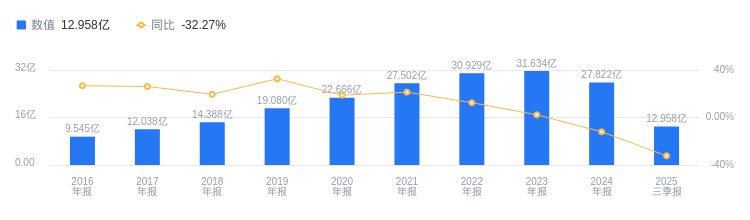
Core Viewpoint - Weining Health, a leading player in the medical IT industry, is facing short-term challenges but is expected to leverage its long-term competitive advantages through enhanced product offerings and operational efficiencies [6][7]. Group 1: Company Overview - Weining Health was established on April 7, 2004, and listed on the Shenzhen Stock Exchange on August 18, 2011. The company is headquartered in Shanghai and specializes in the research, development, sales, and technical services of medical software, providing comprehensive solutions for the healthcare industry's information technology [1]. - The company's main business includes the development, sales, and technical services of medical software, categorized under the computer-software development-vertical application software sector [1]. Group 2: Financial Performance - In Q3 2025, Weining Health achieved a revenue of 1.296 billion yuan, ranking 22nd among 102 companies in the industry. The top company, Shanghai Steel Union, reported a revenue of 57.318 billion yuan, while the industry average was 1.712 billion yuan [2]. - The net profit for the same period was -248 million yuan, placing the company 100th in the industry. The industry leader, Desay SV, reported a net profit of 1.805 billion yuan, with the industry average at 26.431 million yuan [2]. Group 3: Financial Ratios - As of Q3 2025, Weining Health's debt-to-asset ratio was 31.31%, slightly up from 31.22% year-on-year, which is lower than the industry average of 31.94%, indicating relatively good debt repayment capability [3]. - The gross profit margin for Q3 2025 was 29.07%, down from 41.04% year-on-year and below the industry average of 41.71%, suggesting a need for improvement in profitability [3]. Group 4: Shareholder Information - As of September 30, 2025, the number of A-share shareholders decreased by 0.45% to 117,300, with an average holding of 16,300 circulating A-shares, which increased by 0.49% [5]. - The top ten circulating shareholders included notable entities such as Huabao Zhongzheng Medical ETF and Yifangda Growth Enterprise ETF, with some shareholders reducing their holdings [5]. Group 5: Future Outlook - Huatai Securities remains optimistic about Weining Health's long-term competitive advantages despite short-term challenges, highlighting potential revenue recovery in Q4 2025 due to improved product competitiveness and AI product commercialization [6]. - Zhongtai Securities noted that the company is enhancing operational efficiency and accelerating AI business deployment, with software sales and technical services accounting for 84.65% of revenue in H1 2025, up by 10.97 percentage points year-on-year [7].

卫宁健康(300253):四季度收入有望恢复增长
Xin Lang Cai Jing· 2025-10-29 12:47
Core Viewpoint - The company reported a significant decline in revenue and net profit for the first three quarters of 2025, primarily due to project delays and cost pressures, but maintains a positive long-term outlook based on its competitive advantages in the medical IT industry [1][5]. Financial Performance - For the first three quarters of 2025, the company achieved revenue of 1.296 billion yuan, a year-on-year decrease of 32.27%, and a net profit attributable to shareholders of -241 million yuan, down 256.10% [1]. - In Q3 2025, revenue was 457 million yuan, a decline of 33.78%, with a net profit of -123 million yuan, down 199.16% [1]. - The gross margin for the first three quarters was 29.07%, a decrease of 11.97 percentage points, attributed to increased implementation costs from project delays [2]. - The operating cash flow for the first three quarters was -11 million yuan, showing significant improvement compared to -104 million yuan in the same period last year [2]. Business Segments - The medical health informationization business generated revenue of 1.191 billion yuan, down 25.71%, with core software sales and technical services at 1.098 billion yuan, down 22.78% [3]. - The internet healthcare business saw revenue drop to 105 million yuan, a decline of 66.24% [3]. Product Development - The WiNEX 2025 version upgrade enhances the core system for digital hospitals, adding over 2,500 optimized features, with AI capabilities accounting for 15% [4]. - The company aims to streamline user habits and business processes, reducing implementation time by 50% and total cost of ownership (TCO) by approximately 20% [4]. Profit Forecast and Valuation - The company's net profit forecasts for 2025-2027 have been revised downwards to 20 million yuan, 331 million yuan, and 502 million yuan, reflecting a decrease of 95.29%, 38.96%, and 27.37% respectively [5]. - The target price is set at 10.46 yuan, based on a 70.0 times price-to-earnings ratio for 2026, down from a previous value of 14.34 yuan [5].
卫宁健康(300253):四季度收入有望恢复增长
HTSC· 2025-10-29 08:50
Investment Rating - The investment rating for the company is maintained at "Buy" [7][13]. Core Views - The company is expected to recover revenue growth in the fourth quarter of 2025, despite facing short-term challenges due to project delays and cost pressures [1][3]. - The long-term competitive advantage of the company in the medical IT industry is viewed positively, with expectations for improved product competitiveness and delivery efficiency [1][4]. Financial Performance - For the first three quarters of 2025, the company reported revenue of 1.296 billion RMB, a year-on-year decline of 32.27%, and a net profit attributable to shareholders of -241 million RMB, down 256.10% [1]. - The gross margin for the first three quarters was 29.07%, a decrease of 11.97 percentage points year-on-year, primarily due to increased implementation costs from project delays [2]. - The cash received from sales and services was 1.762 billion RMB, a decline of 2.27% year-on-year, indicating improved cash flow compared to revenue [2]. Business Segments - The medical health information business generated revenue of 1.191 billion RMB, down 25.71% year-on-year, with core software sales and technical services contributing 1.098 billion RMB, a decrease of 22.78% [3]. - The internet healthcare business saw revenue drop to 105 million RMB, a decline of 66.24% [3]. Product Development - The WiNEX 2025 version upgrade enhances the core system for digital hospitals, adding over 2,500 new features, with AI capabilities accounting for 15% [4]. - The company aims to streamline user habits and business processes, reducing implementation time by 50% and lowering total cost of ownership by approximately 20% [4]. Profit Forecast and Valuation - The net profit forecasts for 2025-2027 have been revised downwards to 20 million RMB, 331 million RMB, and 502 million RMB, reflecting a significant decrease in expected profitability [5][14]. - The target price for the company is set at 10.46 RMB, based on a 70.0x PE ratio for 2026, which is an adjustment from the previous target of 14.34 RMB [5].
如何打造以人为本的数据时代——读《数据资本论》
Shang Hai Zheng Quan Bao· 2025-10-19 18:49
Core Insights - The book "Data Capital" argues that data is a new form of public resource and a key production factor that can drive economic development, necessitating a reevaluation of data ownership and usage rights to achieve economic transformation [4][5]. Group 1: Data as a Production Factor - Data is recognized as a core production factor alongside land, labor, and financial capital, but it is predominantly controlled by a few entities, leading to data monopolies [6]. - The monopolization of data hinders economic growth and social progress, prompting a need to rethink data ownership and usage rights [6][7]. Group 2: Community Data Cooperation - The authors advocate for community data cooperation as a solution to data monopolization, where individuals voluntarily share their data to create value for community members [7]. - An example is provided of a data cooperative for artists and musicians, initiated by institutions like Berklee College of Music and MIT, aimed at improving the music ecosystem through technology and incentive mechanisms [7][8]. Group 3: Open Access and Metadata Models - The music industry can adopt open access paradigms from other sectors to create optional creative metadata models, which help reduce transaction complexity and operational costs [8][9]. - A three-layer architecture for the digital music ecosystem is proposed, including a music metadata layer, a copyright and royalty management layer, and a virtual asset layer for music rights [9]. Group 4: Privacy and Open Algorithms - The book introduces a five-layer architecture for data privacy protection, emphasizing the importance of designing shared analytical results rather than exporting data [10][11]. - Two privacy-preserving computation paradigms are discussed: secret sharing and multi-party computation, which enhance data security while allowing collaborative analysis [11]. Group 5: Blockchain and Interoperability - The development of blockchain technology faces challenges in achieving interoperability among different blockchain networks, which is essential for its role as a foundational infrastructure in future commerce [12][13]. - The authors emphasize that human considerations must be central to discussions about digital capital, aiming for a system that promotes health, inclusivity, and benefits for all stakeholders [13].

初创企业拔节生长 岭南创业沃土持续迸发活力
Nan Fang Du Shi Bao· 2025-09-22 11:41
Core Insights - Guangdong is a vibrant hub for innovation and entrepreneurship in China, showcasing a flourishing entrepreneurial ecosystem driven by policies that promote innovation and collaboration across finance, technology, talent, and industry [1] Group 1: Entrepreneurship and Innovation - The Guangdong-Hong Kong-Macao Greater Bay Area Entrepreneurship Competition has highlighted innovative projects, such as the "HuaGong ZhiYu" team from South China University of Technology, which developed a multimodal AI model for managing depression, addressing key challenges in mental health treatment [4] - The competition serves as a platform for startups to gain exposure, receive feedback from judges and investors, and secure funding, with the "HuaGong ZhiYu" team actively seeking data and computational support for clinical application [4] - Shenzhen's Flag Cloud Health Technology Co., founded by a former executive, has achieved over 200 million yuan in annual sales within five years, leveraging the competition for funding and partnerships, including a quick response from the Foshan Industrial Research Institute for collaboration [6][7] Group 2: Supportive Ecosystem - Guangdong has established a comprehensive entrepreneurial ecosystem, supported by policies, continuous capital injection, effective industry chain integration, and open application scenarios, fostering a conducive environment for startups [13] - The Guangdong-Hong Kong-Macao Greater Bay Area Entrepreneurship Competition has facilitated resource connections, mentorship, and funding opportunities for numerous startups, enabling them to transition from initial stages to industry leaders [10][11] - The upcoming finals of the competition on September 27 in Foshan will feature 150 quality projects, indicating a growing number of startups emerging in the region [13]


亚裔女霸总豪掷3500万美元,女足收入涨三倍
3 6 Ke· 2025-06-11 10:23
Core Insights - Billionaire Michel Kang aims to revolutionize women's sports, particularly women's soccer, by proving that her three teams can be as profitable as men's sports [1][2][3] - Kang has a net worth of approximately $1.2 billion and ranks 28th on Forbes' list of America's richest self-made women in 2025 [2] - She has invested at least $200 million in women's sports since entering the field, including acquiring three clubs and donating to women's sports initiatives [7][8] Company Overview - Kang founded the medical IT company Cognosante in 2008 and sold it for over $1 billion last year [2][15] - After selling Cognosante, Kang shifted her focus to women's soccer, acquiring the Washington Spirit for $35 million in 2022, which was considered a high price at the time [6][17] - The Washington Spirit's estimated value has since increased to $130 million, reflecting a broader trend of rising valuations in the NWSL [7][9] Industry Trends - The NWSL is experiencing a valuation surge, with teams like Angel City FC selling for $250 million and expansion fees reaching $110 million [7][9] - Kang believes that women's soccer team valuations could reach or exceed $1 billion in the near future, driven by her investments and the growing popularity of women's sports [7][10] - The NWSL has secured significant sponsorship deals and media rights agreements, indicating a financial breakthrough for the league [23] Investment Strategy - Kang's investment strategy includes building training facilities for her teams and supporting female athlete biomechanics research [8][23] - She has established Kynisca Sports International Group to consolidate her soccer investments and improve operational efficiency across her clubs [22] - Kang's approach emphasizes the importance of women's sports as a viable business rather than a charitable endeavor [10][21]