
业务战略

Search documents
Custom Truck One Source(CTOS) - 2025 Q4 - Earnings Call Transcript
2026-03-10 14:00
Financial Data and Key Metrics Changes - In Q4 2025, the company generated revenue of $528 million, with adjusted EBITDA of $121 million, reflecting an 18% year-over-year increase [4][13] - For the full year 2025, revenue reached a record $1.944 billion, up 8% from 2024, and adjusted EBITDA was $384 million, a 13% increase [4][13] - GAAP net income for Q4 was approximately $21 million, while the full year showed a net loss of about $31 million, impacted by a prior year gain on a sale leaseback transaction [14] Business Line Data and Key Metrics Changes - In the Equipment Rental Services (ERS) segment, Q4 revenue was $207 million, up 20% year-over-year, driven by strong rental revenue growth [14] - The Total Equipment Sales (TES) segment reported Q4 equipment sales of $284 million, with full year revenue up 4% to $1.1 billion, marking the highest annual level ever [18][19] - The Aftermarket Parts and Services (APS) segment had Q4 revenue of $37 million, with a stable gross margin of 27% [19] Market Data and Key Metrics Changes - The rental fleet utilization averaged just under 84% in Q4, the highest in almost three years, with average OEC on rent at approximately $1.4 billion, up 14% year-over-year [5][16] - The new sales order backlog for TES ended the year at $335 million, up 20% from Q3, and has continued to grow into 2026, currently around $370 million [7][19] Company Strategy and Development Direction - The company plans to move to a two-segment reporting structure starting Q1 2026, aligning with how the business is currently evaluated [11][25] - A strategic partnership with Hiab aims to enhance service capabilities and broaden the product portfolio, supporting long-term growth [9] - The company is investing in expanding aftermarket service capacity to support TES customers post-sale and grow parts and service revenue [10] Management's Comments on Operating Environment and Future Outlook - Management expressed confidence in sustained demand in the transmission and distribution (T&D) markets, expecting continued growth in 2026 [6][21] - The company anticipates revenue for 2026 in the range of $2.005 billion to $2.12 billion, with adjusted EBITDA between $410 million and $435 million [11][24] - Management noted that macroeconomic uncertainties could impact performance, but strong fundamentals in end markets provide optimism [27] Other Important Information - The company expects to reduce maintenance CapEx in 2026 compared to 2025, contributing to increased free cash flow generation [22] - Inventory levels are projected to decline further, with a target to reduce gross inventory by approximately $100 million [82] Q&A Session Summary Question: What do you expect to see in the market to achieve the high end of your guidance range? - Management indicated strong demand in P&D and potential improvements in the vocational and infrastructure markets as positive drivers [30] Question: How do you view the pricing environment and its contribution going forward? - Management noted good demand and opportunities for price increases, with OEC on rent showing positive year-over-year growth [34] Question: Can you sustain the high utilization rate of 84%? - Management stated that while 84% is above the typical range, they believe they can maintain strong utilization levels due to effective fleet management and a younger fleet age [40] Question: What is the expected performance of the TES segment throughout the year? - Management expressed confidence in the TES segment's growth, supported by a strong backlog and order trends [50] Question: How do you expect inventory levels to change this year? - Management aims to reduce inventory levels further, targeting a decrease of about $100 million [82]

Carter's, Inc. (NYSE:CRI) Exceeds Revenue Estimates in Q4 Earnings Report
Financial Modeling Prep· 2026-02-27 18:07
Core Insights - Carter's, Inc. reported Q4 revenue of approximately $925.5 million, exceeding estimates of $922.9 million, indicating strong market presence and effective business strategies [1][6] Financial Performance - The company's fourth-quarter sales increased due to higher customer traffic and increased pricing, following strategic decisions such as job cuts and store closures [2][6] - Each business segment experienced sales growth compared to the previous year, attributed to product offerings and demand creation initiatives [3] - Despite positive sales growth, the company faces challenges from inflation and rising SG&A costs, expected to increase by 10.6%, which may impact profit margins [4] Market Metrics - Carter's has a price-to-earnings (P/E) ratio of approximately 16.22 and a price-to-sales ratio of about 0.53, reflecting its market valuation and operational efficiency [5] - The enterprise value to sales ratio is around 0.58, and the enterprise value to operating cash flow ratio is approximately 11.19, indicating financial health [5] - The company maintains a debt-to-equity ratio of about 0.70 and a current ratio of 2.51, ensuring a moderate debt level and strong liquidity position [5]



2026开年冷思考:为什么你制定的年度战略,在AI面前像一张“废纸”?
混沌学园· 2026-02-12 11:57
Core Viewpoint - The article emphasizes the challenges entrepreneurs face in transforming good ideas into viable business systems, particularly in the context of rapid changes brought about by AI technology. It highlights the need for a new strategic approach that goes beyond traditional methods and emphasizes understanding market demands and creating unique value propositions [3][4][25]. Group 1: Entrepreneurial Challenges - 99% of entrepreneurs fail not due to lack of effort or funding, but because their failures are often predetermined from the start [3]. - A significant portion of business plans submitted lacks a true understanding of business models, often relying on the "business model canvas" which indicates superficial engagement with the concept [3][28]. - Many entrepreneurs misinterpret market characteristics as opportunities, failing to recognize that consumer behavior does not always align with brand perceptions [18]. Group 2: Strategic Insights - The first step in strategic implementation is understanding the "why" behind actions, as many startups fail due to a lack of market demand [16]. - Traditional strategic planning is becoming obsolete in an era of high uncertainty, necessitating a shift from long-term predictions to adaptable design strategies [25]. - Entrepreneurs must transition from merely mastering existing tools to creating their own frameworks that address unique market challenges [26][29]. Group 3: AI and Business Systems - AI can significantly enhance strategic planning and execution, as demonstrated by the case of JOJO&FISH, which utilized AI to identify market gaps and optimize marketing strategies without incurring advertising costs [30][39]. - The ability to leverage AI for market analysis and consumer insights is crucial for identifying untapped opportunities and developing competitive advantages [32][36]. - A comprehensive AI strategy toolkit can empower entrepreneurs to transform scattered ideas into cohesive, profitable business systems [45]. Group 4: Practical Applications - The article outlines a practical approach to strategy formulation, emphasizing the importance of system thinking in addressing business challenges [40][41]. - Entrepreneurs are encouraged to adopt a dynamic and self-evolving business system to avoid chaos and collapse [42]. - The course offered aims to equip participants with a new cognitive operating system and a flexible business compass to navigate the complexities of modern entrepreneurship [50].

年底谈战略,别又忘了组织策略
3 6 Ke· 2025-12-18 01:21
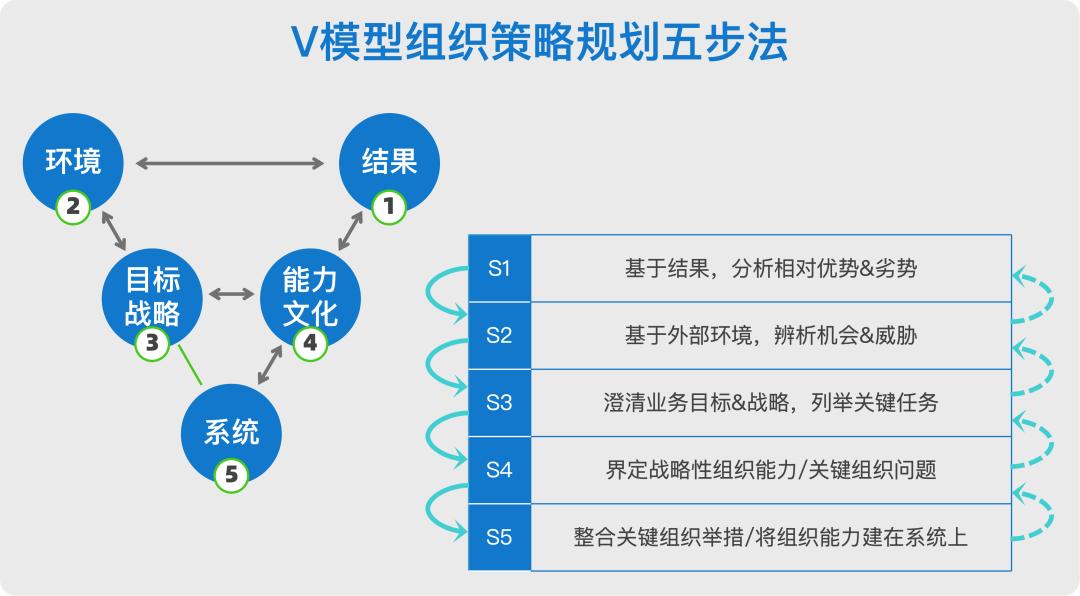
Core Viewpoint - Business strategy remains a high priority for companies, while organizational strategy is often neglected, leading to ineffective execution of business goals [2][11][40] Group 1: Importance of Organizational Strategy - Companies tend to overestimate the value of business strategy while underestimating the importance and difficulty of organizational strategy [2][12] - Without strong organizational support, even the best business strategies can fail [2][11] - A common misconception is that once a business strategy is set, the organization will naturally align with it, which is a dangerous management illusion [11][12] Group 2: Case Study Insights - A company previously focused solely on rapid scale and sales, but shifted to prioritize profit in its new strategy [4][6][7] - Despite the new focus on profit, organizational inertia led to a disconnect between the stated strategy and actual execution, resulting in confusion and inefficiency among teams [8][9][10] - The introduction of a new strategic term, "精耕细作" (fine-tuning), did not lead to necessary organizational restructuring [10][11] Group 3: Organizational Strategy Development - Effective organizational strategy requires clear choices and should not attempt to address every issue at once [16][18] - A focused organizational strategy targets the real problems and needs of the business, rather than getting bogged down in minor issues [19][20] - Organizational strategies can be informed by current challenges or future needs, emphasizing the importance of adaptability [22][23] Group 4: Key Organizational Initiatives - Successful organizational initiatives must be specific, actionable, and aligned with the overall strategy [24][25] - Lack of integration among various organizational initiatives can lead to conflicting actions and inefficiencies [25][26] - The V-model for organizational strategy planning emphasizes the need for a comprehensive approach that includes both business and organizational strategies [30][38] Group 5: Communication and Understanding - Using tools like the "organizational strategy canvas" can help clarify organizational issues and initiatives, reducing misunderstandings [33][34] - The framework of ten organizational systems aids in thinking through and integrating key initiatives [37] Group 6: Responsibility for Organizational Strategy - The responsibility for developing organizational strategy should not rest solely with HR; it requires involvement from the entire executive team [38][39] - External consultants can provide valuable insights and help generate ideas for organizational initiatives [38] Group 7: Final Recommendations - Companies should not treat organizational strategy as a secondary concern but rather as equally important to business strategy [40][41] - A balanced investment in both organizational and business strategies is crucial for successful execution and overall effectiveness [41]
Charles River Laboratories (NYSE:CRL) 2025 Conference Transcript
2025-11-18 12:32
Summary of Charles River Laboratories Conference Call Company Overview - **Company**: Charles River Laboratories (NYSE: CRL) - **Industry**: Contract Research Organizations (CROs) Key Points Demand Environment - The company reported a net book-to-bill ratio of 0.82, unchanged from Q2, primarily due to a lull in biotech during Q3 [4][5] - There has been an improvement in bookings in biotech over the last few months, indicating a positive trend moving into the fall and winter [4][5] - Proposal volume in both biotech and global segments has been strong, providing confidence for future quarters [4] Pricing Strategy - Charles River holds approximately 30% market share in the safety assessment market, with competitors significantly smaller [7] - The company is strategically using pricing to maintain market share and attract new clients, especially in a softer demand environment [8][9] - Pricing has stabilized, with no significant headwinds anticipated in the safety assessment business [10] Discovery Services - Discovery services represent about 10% of the DSA segment and have been soft due to tight biotech funding [11] - The company expects a rebound in discovery services as biotech funding improves [11] Sales Strategy - The DSA business operates holistically, allowing for better utilization of resources and maximizing client wallet share [14][15] - The sales strategy is not heavily dependent on pull-through from discovery services due to the small size of the discovery segment [13] China Market Dynamics - About 30% of all programs are now in-licensed from China, which poses minimal preclinical work for Charles River [18] - The company is monitoring the trend of drug discovery moving to China and the competitive landscape with local providers [19][20] - Charles River is interested in both servicing Western companies and the domestic Chinese market, but is cautious due to geopolitical pressures [21] Non-Human Primate (NHP) Market - NHP shipments were pulled forward from Q4 to Q3, with stable supply chains established [22][23] - The company has closed investigations by the DOJ and SEC, indicating no concerns regarding animal welfare [24] Research Models Segment - North America has seen a decline in research model volumes, primarily driven by the biotech segment, while Europe and China have held up better [28][30] - The company believes that research model volumes will rebound with improved biotech funding [30] Cost-Saving Initiatives - Charles River announced an additional $70 million in cost savings, building on a previous $225 million initiative [31] - Cost-saving measures include site consolidations, efficiency improvements in G&A, and digital automation [31] Acquisition Strategy - The company has a clear roadmap for acquisitions, focusing on core business areas to enhance client wallet share, particularly in bioanalytical services and potential opportunities in China [36] Additional Insights - The company is committed to refining its service portfolio to remain competitive [12] - The strategic review may lead to share repurchases or acquisitions, depending on market conditions [34][36]
