
户外服装

Search documents
麦肯锡前资深顾问:战略规划已死!我用AI做一万次推演,算出一个海外爆款
混沌学园· 2026-02-26 11:57
Core Viewpoint - The traditional strategic planning has become ineffective in the AI era, as companies need to adapt to rapid market changes using AI-driven insights and simulations instead of static reports [1][2]. Group 1: AI Era Cognitive Operating System - The AI era presents challenges where desires and outcomes often misalign, leading to issues stemming from cognitive limitations [5]. - A significant reason for investment failures is the cognitive limitations of entrepreneurs, who often oversimplify complex problems [6][10]. - Complex systems require understanding that multiple variables interact, and problems must be approached with a comprehensive view rather than simplistic solutions [7][9]. - Entrepreneurs must clarify their objectives, as failing to do so can lead to misguided efforts and ultimately business failure [11][12][13]. Group 2: Thinking Traps - Thinking traps contribute to failure logic, necessitating a shift in cognitive patterns to enhance decision-making [14]. - Point-based thinking leads to oversimplified conclusions, while linear thinking can result in reliance on past experiences without adapting to new contexts [21][22]. - Framework thinking can limit insights, as it often involves applying models without understanding their underlying logic [24][25]. - True system thinking transcends frameworks, focusing on the relationships and structures that drive outcomes [30][32]. Group 3: Future Business Compass - A business compass is proposed as a dynamic tool for navigating changing environments, contrasting with static maps that become obsolete [39]. - The business model framework includes four dimensions: unique customer value, unique capabilities, profitability model, and sustainability over time [42][44]. - Value systems focus on identifying and meeting customer needs, while capability systems emphasize the unique operational strengths of a business [46][50]. - The transaction system addresses revenue generation and cost management, while the growth system emphasizes sustainable business development [63][65]. Group 4: AI Empowered Strategy - AI is integral to modern business strategy formulation, enabling comprehensive industry research and competitive analysis [74][76]. - A case study of JOJO&FISH illustrates how AI can identify market opportunities and inform strategic positioning in the fishing apparel sector [79][80]. - The strategic process involves industry research, competitive analysis, capability assessment, market entry strategies, and market simulation using AI [90][95][102]. - AI-driven simulations allow for dynamic adjustments and risk management, enhancing the strategic planning process in uncertain environments [116][118].


一个做户外的人,开始怀疑户外
3 6 Ke· 2026-02-25 11:02
Core Viewpoint - The article discusses the evolving relationship between luxury brands and outdoor apparel, highlighting the challenges and opportunities for Chinese brands in a market increasingly influenced by Western fashion and outdoor trends [1][3][71]. Group 1: Industry Trends - Luxury brands like Prada and Armani are increasingly involved in outdoor events, blurring the lines between fashion and outdoor apparel [3]. - The outdoor industry in China is experiencing rapid growth, with over 24,000 new outdoor companies established recently, indicating a shift towards a more fashionable approach to outdoor gear [8]. - The outdoor apparel market is becoming more competitive, with brands focusing on marketing strategies and celebrity endorsements to capture consumer attention [38][46]. Group 2: Challenges for Chinese Brands - Chinese outdoor brands often rely on foreign technologies and materials, which raises questions about their identity and competitiveness in the global market [6][69]. - The perception of outdoor apparel as functional is diminishing, with a growing emphasis on aesthetics and marketing rather than performance [36][38]. - There is a concern that Chinese brands may struggle to compete with established luxury brands that target affluent consumers who view outdoor activities as a lifestyle choice [71]. Group 3: Product Development and Design - The design process in the outdoor apparel industry has shifted, with a focus on quick market responses rather than thorough testing and functionality [50][51]. - Innovations in product design, such as the development of versatile clothing that can serve multiple purposes, are becoming more common, but may sacrifice functional integrity [28][40]. - The importance of understanding consumer needs and the context of use is emphasized, as mismatched designs can lead to poor market performance [44][46]. Group 4: Cultural and Market Insights - The article highlights the cultural significance of outdoor apparel and the need for Chinese brands to develop a unique identity that resonates with local consumers [71][74]. - The narrative around outdoor products is shifting from functionality to lifestyle branding, which may dilute the original purpose of outdoor gear [36][38]. - The need for a comprehensive understanding of the outdoor market and its history is crucial for developing a coherent strategy for Chinese brands [63][67].

2026开年冷思考:为什么你制定的年度战略,在AI面前像一张“废纸”?
混沌学园· 2026-02-12 11:57
Core Viewpoint - The article emphasizes the challenges entrepreneurs face in transforming good ideas into viable business systems, particularly in the context of rapid changes brought about by AI technology. It highlights the need for a new strategic approach that goes beyond traditional methods and emphasizes understanding market demands and creating unique value propositions [3][4][25]. Group 1: Entrepreneurial Challenges - 99% of entrepreneurs fail not due to lack of effort or funding, but because their failures are often predetermined from the start [3]. - A significant portion of business plans submitted lacks a true understanding of business models, often relying on the "business model canvas" which indicates superficial engagement with the concept [3][28]. - Many entrepreneurs misinterpret market characteristics as opportunities, failing to recognize that consumer behavior does not always align with brand perceptions [18]. Group 2: Strategic Insights - The first step in strategic implementation is understanding the "why" behind actions, as many startups fail due to a lack of market demand [16]. - Traditional strategic planning is becoming obsolete in an era of high uncertainty, necessitating a shift from long-term predictions to adaptable design strategies [25]. - Entrepreneurs must transition from merely mastering existing tools to creating their own frameworks that address unique market challenges [26][29]. Group 3: AI and Business Systems - AI can significantly enhance strategic planning and execution, as demonstrated by the case of JOJO&FISH, which utilized AI to identify market gaps and optimize marketing strategies without incurring advertising costs [30][39]. - The ability to leverage AI for market analysis and consumer insights is crucial for identifying untapped opportunities and developing competitive advantages [32][36]. - A comprehensive AI strategy toolkit can empower entrepreneurs to transform scattered ideas into cohesive, profitable business systems [45]. Group 4: Practical Applications - The article outlines a practical approach to strategy formulation, emphasizing the importance of system thinking in addressing business challenges [40][41]. - Entrepreneurs are encouraged to adopt a dynamic and self-evolving business system to avoid chaos and collapse [42]. - The course offered aims to equip participants with a new cognitive operating system and a flexible business compass to navigate the complexities of modern entrepreneurship [50].

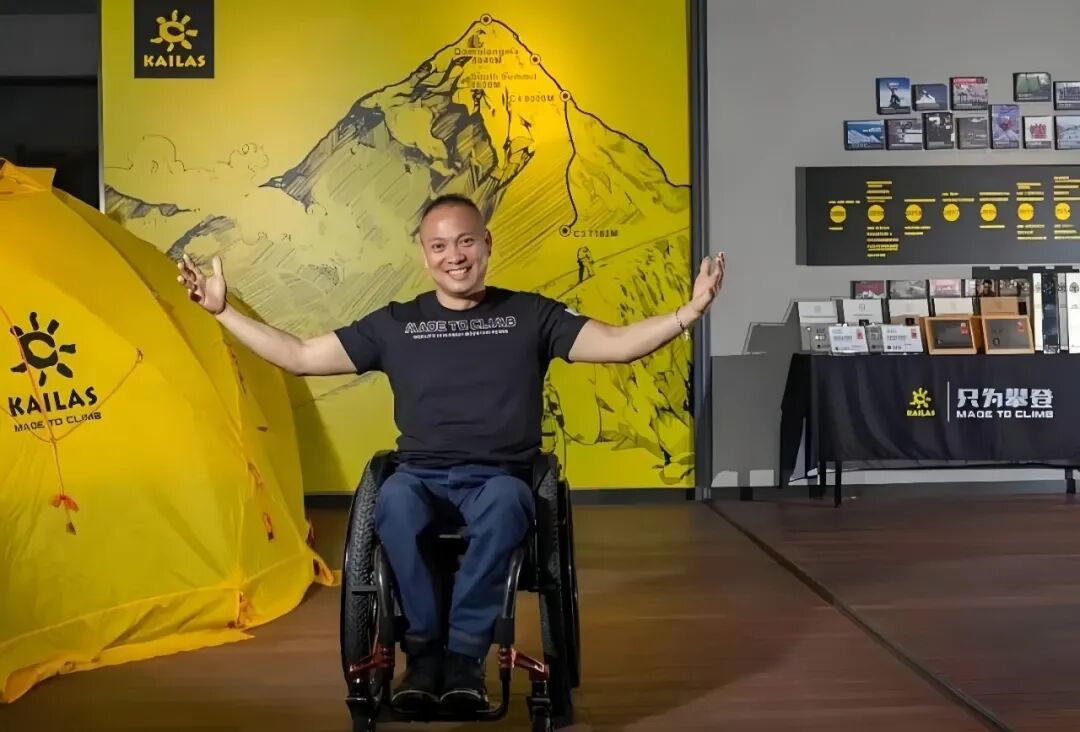
凯乐石创始人钟承湛没解开的难题
3 6 Ke· 2026-01-08 10:06
Core Viewpoint - Kailas, a brand known for its outdoor apparel, faces controversy over its pricing strategy, which has outpaced the perceived value by consumers, highlighting a disconnect between price increases and consumer expectations [1] Group 1: Company Background and Challenges - Founder Zhong Chengzhan has struggled with the balance between professional and mass-market products, leading to a series of strategic dilemmas throughout the company's history [2] - The company experienced rapid growth from 2006 to 2011, with a compound annual growth rate of 90%, significantly outpacing the industry average [3] - In 2012, the outdoor apparel market growth rate dropped from 50.91% to 34.94%, marking a shift to a prolonged low-growth phase [4] Group 2: Product Strategy and Market Response - Kailas attempted a professional product upgrade in 2012, increasing the use of imported materials to about 70%, but faced market rejection due to high prices [3] - The brand's shift to mass-market products in response to market pressures led to a perception of "professionalism lacking quality" among core climbing customers [6] - In 2015, after a significant personal setback for the founder, the company faced management challenges and a decline in orders, leading to a contentious internal debate over product strategy [8][12] Group 3: Recent Developments and Future Directions - In 2019, after experiencing its first significant loss, the company shifted focus back to professional products, emphasizing high quality and brand integrity [14][15] - The introduction of a new management team in 2020 aimed to align the company's direction with a focus on professional outdoor gear, leading to a significant revenue increase in 2023 [16] - Despite recent growth, challenges remain in maintaining brand value and consumer trust, particularly in balancing high-end positioning with market expectations [18]
一个鼓励「不买」的品牌,如何年入15亿美元?|New Look 专访
36氪未来消费· 2025-12-19 02:05
Core Viewpoint - The article discusses the possibility of a modern enterprise driven by mission rather than profit, using Patagonia as a case study of a company that integrates environmental values into its core operations while navigating the challenges of profitability and sustainability [5][6]. Group 1: Patagonia's Business Model - Patagonia has a unique business model that challenges the traditional profit-maximization premise by embedding its values into the company's structure, donating 1% of revenue to environmental causes and even transferring 98% of its ownership to a nonprofit organization [5][6]. - The company generates approximately $1.5 billion in annual revenue and has a valuation exceeding $3 billion, while maintaining a commitment to environmental responsibility [6]. - Patagonia's leadership emphasizes that the company does not plan to become a multinational corporation to avoid dilution of decision-making power [6][40]. Group 2: Environmental Challenges - Patagonia faces inherent contradictions in its mission: to protect the planet while continuing to produce goods that inevitably contribute to pollution [6][7]. - The company acknowledges that growth in business operations leads to increased carbon footprints, and it is actively seeking ways to balance business growth with environmental stewardship [19][36]. - Patagonia's product footprint vice president, Matt Dwyer, highlights the difficulty of achieving sustainability goals while maintaining product demand, stating that the best environmental protection may involve reducing consumption [7][36]. Group 3: Product Development and Sustainability - Patagonia conducts lifecycle assessments for its products, evaluating greenhouse gas emissions, water usage, and waste, and is willing to cancel products that do not meet environmental standards [23][24]. - The company focuses on using recycled materials and improving supply chain practices to reduce environmental impact, with significant efforts directed towards sourcing materials like recycled fishing nets and organic cotton [28][30]. - Dwyer emphasizes that the company must consider the entire lifecycle of products, including the manufacturing process, to effectively reduce pollution [25][30]. Group 4: Market Position and Future Outlook - Patagonia's strategy includes a focus on product quality and customer experience, with a commitment to continuous improvement in sustainability practices [55][56]. - The company is cautious about expanding into new markets or product lines, preferring to concentrate on existing sports and outdoor activities to maintain product leadership [52][53]. - Patagonia's approach to environmental responsibility is seen as a complex balance of business needs and ethical considerations, with ongoing discussions about the impact of product offerings on the environment [45][46].

思凯乐暴走甲冲锋衣:以“软弹硬壳”重新定义都市户外装备
Sou Hu Wang· 2025-10-22 10:27
Core Insights - The article highlights the launch of the new "暴走甲" series four-in-one down jacket by the domestic outdoor brand 思凯乐, which aims to bridge urban and outdoor needs with innovative design and technology [1][3][16] Group 1: Market Trends - The Chinese outdoor market is undergoing a transformation, with an increasing number of urban outdoor enthusiasts seeking versatile clothing that can be worn in both urban and outdoor settings [3] - 思凯乐 has identified this market demand and positioned "暴走甲" as a solution that caters to the needs of consumers who desire clothing suitable for various environments [3] Group 2: Product Features - The "暴走甲" jacket features a modular design that allows wearers to quickly separate the outer jacket from the inner lining, adapting to temperature changes [11] - It offers four different wearing styles: as a standalone outer jacket, as an insulated inner down jacket, as a reversible piece, and as a complete protective system when combined [11] - The inner lining is made from high-quality 90% white goose down with a fill power of 700, ensuring effective insulation [11] Group 3: Technology and Innovation - The core competitive advantage of the "暴走甲" jacket lies in its proprietary Citywtex soft-shell technology, which balances protection and comfort [6][15] - The Citywtex fabric consists of 86% nylon and 14% spandex, providing durability and elasticity, while achieving a waterproof rating of 20,000mm and breathability of 10,000g/m2/24h, surpassing industry standards [7][15] - The jacket's durability is further evidenced by its abrasion resistance, with testing showing it can withstand over 600,000 cycles of wear [15] Group 4: Strategic Development - 思凯乐 is committed to technological advancement, as demonstrated by the introduction of the "暴走甲" and the upcoming "黄金甲PRO" [16] - The brand's product lineup is expanding to include various styles that cater to different user needs, from outdoor enthusiasts to urban dwellers [16] - Collaborations with experiential marketing initiatives, such as "俞你同行," enhance product testing and consumer engagement, reinforcing the brand's connection with its audience [16]

伯希和冲刺IPO:安徽“70后”夫妻白手起家、年销17亿元,顶流明星成毅代言
Mei Ri Jing Ji Xin Wen· 2025-09-23 01:20
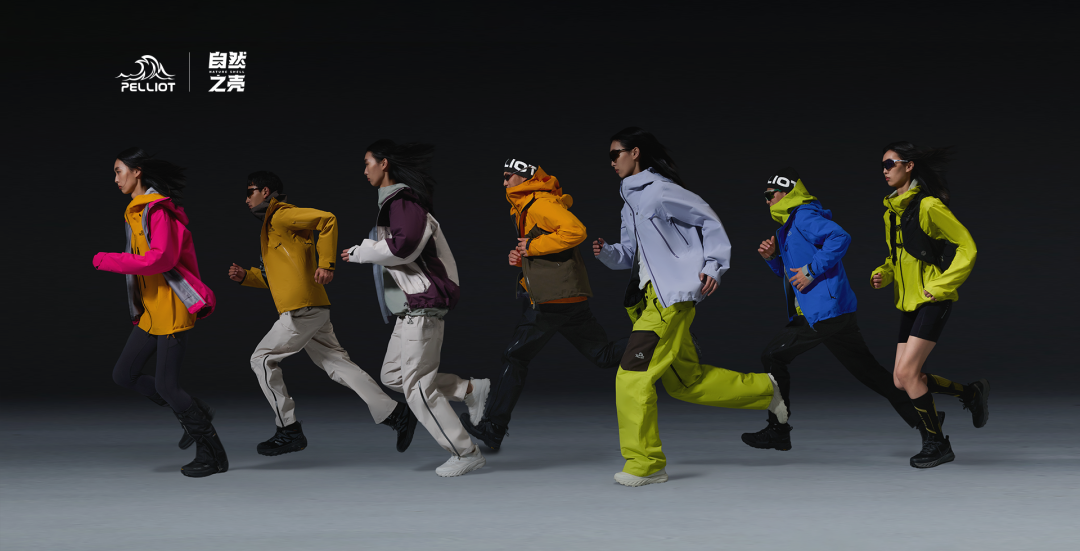
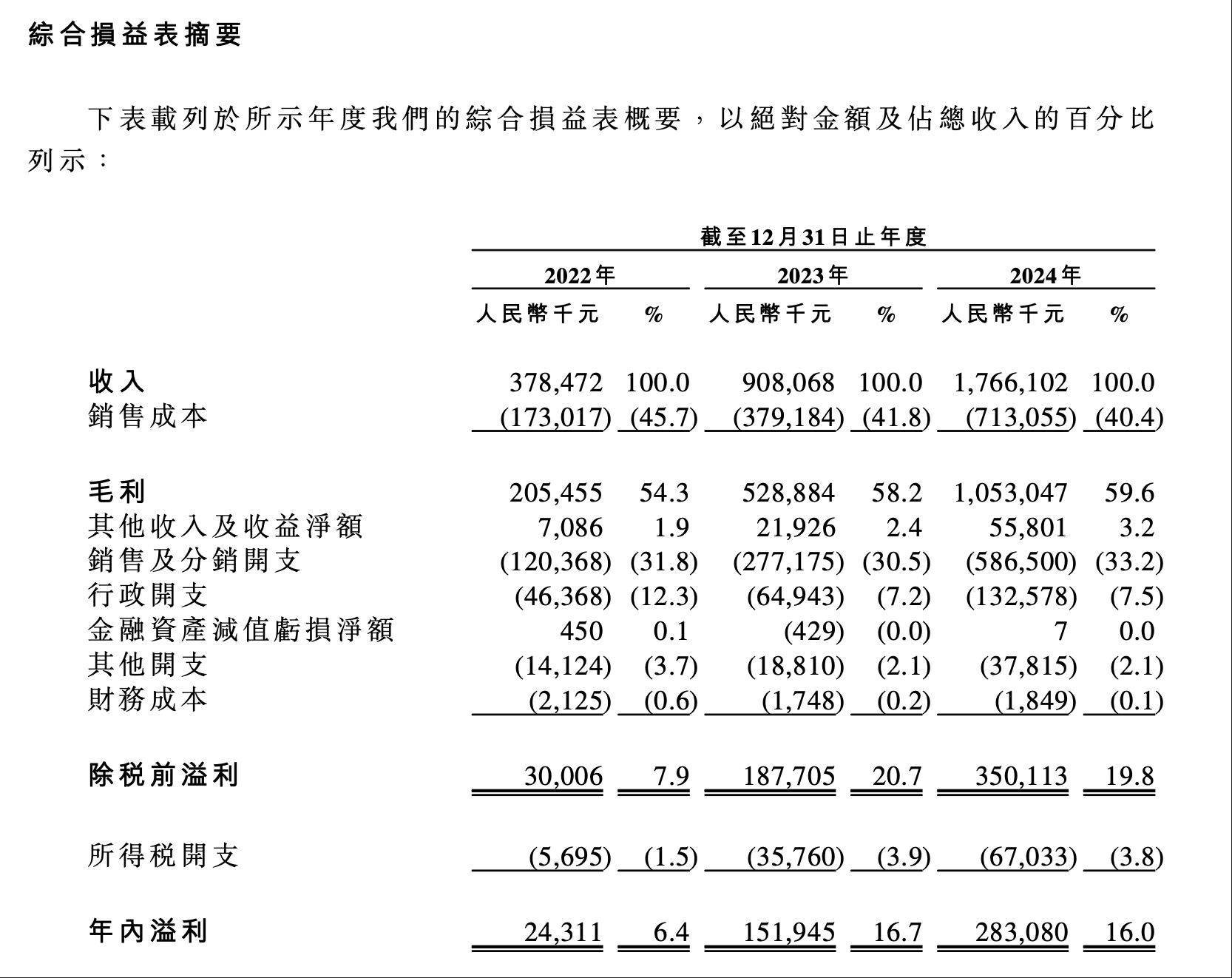
Core Viewpoint - The company PELLIOt, founded by a couple in 2012, is preparing for an IPO with a revenue of 1.7 billion RMB, leveraging a "value-for-money" strategy in the outdoor apparel market [1][3]. Company Overview - PELLIOt was established in 2012 as a small outdoor goods trading company and has evolved into a brand known for its affordable outdoor apparel [4][5]. - The founders, Liu Zhen and Hua Jingling, are outdoor enthusiasts who have successfully expanded their business by focusing on product development and brand marketing [5]. Financial Performance - The company's projected revenues for 2022, 2023, and 2024 are 378 million RMB, 908 million RMB, and 1.766 billion RMB, respectively [3][4]. - Gross profit margins are expected to improve from 54.3% in 2022 to 59.6% in 2024, indicating efficient cost management [4]. - Net profit is projected to grow from 24.31 million RMB in 2022 to 283.08 million RMB in 2024 [4]. Market Positioning - PELLIOt has positioned itself in the market by offering products at a price point significantly lower than competitors, such as Arc'teryx, while maintaining comparable quality [3][4]. - The brand has gained recognition as a "value alternative" to high-end outdoor apparel, appealing to cost-conscious consumers [3][10]. Investment and Growth - The company has attracted significant investment, including 400 million RMB in 2023 and 288 million RMB in 2024, raising its valuation to 2.8 billion RMB [7]. - Major investors include Tencent, which acquired a stake for 300 million RMB, highlighting the brand's growth potential [7]. Brand Controversy - The brand name "PELLIOt" has faced criticism due to its association with a historical figure known for cultural appropriation, raising questions about its branding strategy [9]. - This controversy may impact consumer perception and brand identity in the long term [9]. Future Strategy - The IPO proceeds will be used for product development, brand promotion, and expanding offline retail presence, with plans to open over 60 new stores in the next three years [10]. - Analysts suggest that while the "value alternative" strategy is effective in the short term, establishing a unique brand identity will be crucial for long-term success [10].
冲锋衣1件几百元,“始祖鸟平替”冲刺IPO!安徽“70后”夫妻白手起家,年销17亿元,顶流明星成毅代言
Mei Ri Jing Ji Xin Wen· 2025-09-22 13:51
Core Viewpoint - The recent "Ancient Bird" fireworks incident has drawn public attention, while the domestic outdoor brand "Bershka," known as the "alternative to Ancient Bird," has initiated its IPO process in Hong Kong [1] Company Overview - Bershka was founded in 2012 by a couple from Anhui, initially starting as a small outdoor goods trading company before expanding into proprietary brand products [4][6] - The company has achieved significant revenue growth, with projected revenues of 3.78 billion RMB in 2022, 9.08 billion RMB in 2023, and 17.66 billion RMB in 2024 [4][5] Financial Performance - The gross profit margins for Bershka are projected to be 54.3% in 2022, 58.2% in 2023, and 59.6% in 2024, indicating a positive trend in profitability [4][5] - Net profit is expected to grow from 24.31 million RMB in 2022 to 151.94 million RMB in 2023, and further to 283.08 million RMB in 2024 [4][5] Market Positioning - Bershka has positioned itself in the market by offering professional-grade performance at prices below 1,000 RMB, significantly lower than similar products from Ancient Bird [3] - The brand has successfully captured the mass market by focusing on affordable pricing while maintaining quality and trendy designs [3][12] Investment and Growth - The company has attracted significant investment, with a valuation reaching 2.8 billion RMB after multiple funding rounds, including a notable investment from Tencent [8] - The IPO proceeds are intended for product development, brand promotion, and channel expansion, with plans to open over 60 new offline stores in the next three years [12] Brand Challenges - The brand name "Bershka" has faced controversy due to its association with a historical figure linked to cultural heritage loss, which has sparked discussions on social media [11] - The competitive landscape in the outdoor apparel industry is intense, with potential risks of market share loss to larger competitors [9] Future Outlook - Analysts suggest that while the "alternative" strategy has been effective in the initial market expansion, Bershka needs to establish stronger brand independence and recognition for long-term success [12] - The company's ability to balance quality and price will be crucial in navigating the evolving consumer market dynamics in China [12]
“70后”夫妻店、腾讯入股……“始祖鸟平替”伯希和冲刺港股IPO
Sou Hu Cai Jing· 2025-09-22 07:25
Core Viewpoint - The recent "Arcteryx" incident has drawn public attention, while the domestic outdoor brand "Pelliot," known as the "Arcteryx alternative," has initiated its IPO process in Hong Kong, aiming to leverage its story and annual revenue of 1.7 billion RMB to enter the capital market [1]. Group 1: Company Overview - Pelliot was founded in 2012 by a couple from Anhui, initially starting as a small outdoor goods trading company before expanding into proprietary brand products [5]. - The company has positioned itself in the market by offering professional-grade performance at prices below 1,000 RMB, significantly lower than similar products from Arcteryx [1][2]. - Pelliot's revenue for 2022, 2023, and 2024 is projected to be 378 million RMB, 908 million RMB, and 1.766 billion RMB, respectively, with gross margins increasing from 54.3% in 2022 to 59.6% in 2024 [3][4]. Group 2: Product Strategy - Pelliot has adopted a strategy of aligning its product design and functionality with Arcteryx, using similar waterproof and breathable materials, and incorporating fashionable elements into its designs [2]. - The brand has successfully gained recognition as the "Arcteryx alternative" by offering affordable products that meet consumer demands for both functionality and style [2]. Group 3: Financial Performance - The net profit for Pelliot is expected to grow from 24.31 million RMB in 2022 to 283 million RMB in 2024, indicating a strong upward trend in profitability [3][4]. - The company has seen significant investment, with a valuation reaching 2.8 billion RMB following multiple funding rounds, including a notable investment from Tencent [6]. Group 4: Market Position and Challenges - Pelliot faces intense competition in the outdoor apparel industry, with larger competitors potentially impacting its market share and profitability [7]. - The brand name "Pelliot" has sparked controversy due to its association with a historical figure known for cultural heritage loss, which has led to discussions on social media regarding its branding strategy [7]. Group 5: Future Prospects - The IPO proceeds will primarily be used for product development, brand promotion, and channel expansion, with plans to open over 60 new offline stores in the next three years [8]. - Analysts suggest that while Pelliot's "alternative" strategy has been effective in initial market expansion, long-term success will depend on establishing a stronger brand identity and value proposition [8].
高温催热“清凉经济”
Jing Ji Ri Bao· 2025-07-13 22:04
Group 1: Cooling Economy Trends - The "cooling economy" is gaining momentum as high temperatures drive demand for cooling products and services, including air conditioning and summer tourism [1][5] - Consumer preferences are shifting towards innovative cooling products, such as new tea drinks and breathable outdoor clothing, reflecting a growing demand for refreshing experiences [2][3] Group 2: Appliance Market Dynamics - The demand for cooling appliances has surged, with significant increases in sales for AI energy-saving air conditioners, central air conditioning systems, and portable fans, with some categories seeing over 220% growth [3][4] - Companies like Haier are focusing on energy efficiency and health features in their products, with sales of energy-efficient air conditioners increasing by 82% in certain regions [3][4] Group 3: Tourism and Summer Activities - Summer tourism is thriving, with various activities being organized to attract visitors, such as camping and music events, enhancing the appeal of summer destinations [5][6] - The government is promoting diverse summer activities and events to stimulate consumption, with initiatives like the "Shanghai Summer" international consumption season and various local tourism campaigns [6]