
业绩逆转

Search documents
481只去年收益告负基金年内业绩转正
Zheng Quan Ri Bao· 2026-02-23 16:15
Group 1 - A total of 481 funds that reported negative returns last year have achieved positive net value growth rates as of February 23, with 19 funds showing a difference in net value growth rates exceeding 20 percentage points [1] - Among these funds, medium to long-term pure bond funds and equity hybrid funds are predominant, accounting for 57.1% (275 funds) and 10.6% (51 funds) respectively [1] - Medium to long-term pure bond funds are characterized by stable operations and low volatility, with their previous negative returns largely influenced by market interest rate fluctuations and liquidity issues [1] Group 2 - The average stock position of the 51 equity hybrid funds reached 88% by the end of last year, providing fund managers with flexibility to switch sectors quickly [1] - The naming of "performance reversal" funds frequently includes terms like "strategy," "value," and "preferred," indicating a strong rotation strategy that combines top-down sector selection and bottom-up stock picking [1] - Most "performance reversal" funds are small-sized, with 15 out of the 19 funds showing a difference of over 20 percentage points having a scale of less than 1 billion yuan [1] Group 3 - Small-sized funds have higher flexibility in adjusting their portfolios, allowing them to quickly build positions in limited-capacity sectors like precious metals and niche manufacturing, which is a key advantage for capturing structural opportunities [2] - The core logic of "performance reversal" funds is characterized by "high turnover + strong rotation," as exemplified by the Jin Ying Transformation Power Mixed Fund, which shifted its holdings from AI applications to new energy midstream equipment companies [2] - High turnover strategies require fund managers to have strong industry judgment and timing skills, as missteps in sector switching can lead to rapid declines in performance [2] Group 4 - Investors are advised to track fund adjustments through regular reports, as consistent successful sector switching may validate the effectiveness of the fund's strategy [3] - Conversely, if a fund fails to demonstrate effective switching, caution in allocation is recommended [3]
强势归来!联合健康Q3交出逆转答卷
Xin Lang Cai Jing· 2025-10-29 10:27
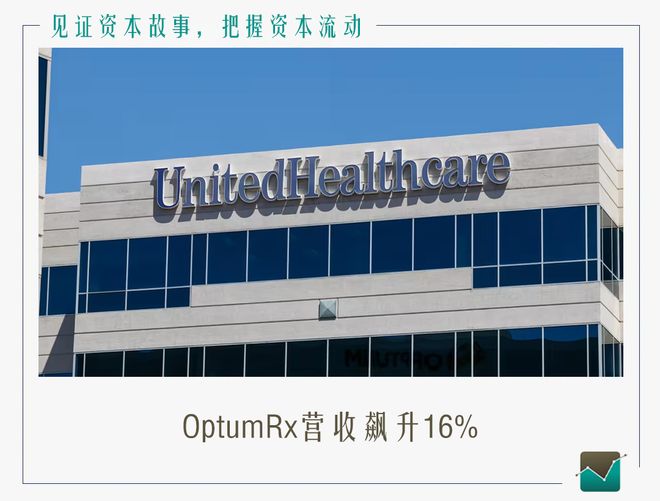
Core Insights - UnitedHealth reported strong Q3 earnings, exceeding market expectations and raising its guidance, indicating a potential recovery from previous lows [3][4][11] - The company’s revenue and profit growth signals a positive trend, with a 12% year-over-year revenue increase and a 4% increase in earnings per share [4][9] - Despite recent stock price recovery, UnitedHealth has significant upside potential in the coming years if operational improvements and customer growth continue [11][12] Financial Performance - Q3 revenue reached $113.161 billion, up from $100.820 billion in the same quarter last year, with a notable 16% increase in the UnitedHealthcare insurance segment [8] - The insurance segment's operating profit fell sharply from $4.2 billion to $1.8 billion, reflecting a profit margin drop from 5% to just over 2% [6][8] - Optum's revenue grew by approximately 8%, with OptumRx generating nearly $40 billion in revenue, a 16% increase year-over-year [5][8] Business Segments - The UnitedHealthcare insurance segment saw a 16% revenue increase, driven by pricing adjustments and a 1.5% increase in customer numbers [4][5] - The Medicare & Retirement segment experienced a significant 24% growth, contributing to the majority of new customers [5] - Optum Health's revenue remained flat at around $25 billion, indicating challenges in that segment [5][6] Profitability Challenges - The overall profit decline is attributed to rising medical costs, which increased by $14 billion, significantly impacting profit margins [8][9] - Management cited unfavorable cost trends and Medicare funding cuts as key factors for the profit pressure [7][9] - Despite the profit challenges, the company raised its adjusted EPS guidance for the year to at least $16.25, slightly above market consensus [9][10] Future Outlook - Analysts predict a significant recovery in profits over the next few years, with EPS expected to reach $26 by 2028 and $32 by 2029 [12] - If UnitedHealth can achieve these targets and maintain a P/E ratio of 18, the stock price could potentially rise to around $580 by 2029, representing a 55% increase from current levels [12] - The current dividend yield stands at 2.4%, adding to the overall attractiveness of the investment [12]


信质集团第三季度净利增近9倍 资产负债率攀升前九月财务费用增40倍
Chang Jiang Shang Bao· 2025-10-16 08:47
Core Viewpoint - The company, Xinzhi Group, reported a significant turnaround in its performance for the third quarter of 2025, with notable increases in net profit despite a slowdown in revenue growth compared to the previous year [1][3]. Financial Performance - For the first three quarters of 2025, the company achieved operating revenue of 4.539 billion yuan, a year-on-year increase of 1.42%, and a net profit attributable to shareholders of 122 million yuan, up 39.49% [1]. - In contrast, for the same period in 2024, the company reported operating revenue of 4.476 billion yuan, a year-on-year increase of 36.38%, but net profits and non-recurring net profits decreased by 48.42% and 47.02%, respectively [1]. - The third quarter of 2025 saw a dramatic increase in net profit, with a year-on-year growth of approximately 896.81% and 832.82% for net profit attributable to shareholders and non-recurring net profit, respectively [2][3]. Market Position and Strategy - Xinzhi Group positions itself as a leading global supplier of motor components, emphasizing its unique competitive advantages in product characteristics and technical services [4]. - The company focuses on the mid-to-high-end specialized production of motor components, serving major domestic and international motor manufacturers and establishing long-term partnerships [4]. Challenges and Financial Health - Despite the positive performance in the third quarter, the company's financial situation remains concerning, with a historical high debt-to-asset ratio of 67.83% as of the end of the third quarter of 2025 [5]. - Financial expenses surged significantly, with a 4012.88% year-on-year increase in financial costs for the first three quarters of 2025, while operating cash flow net amount decreased by 72.9% [5].
