东南亚人群基因组研究

Search documents
适应雨林?古人类混血?东南亚人群基因组被破译
Xin Hua She· 2025-05-15 03:13
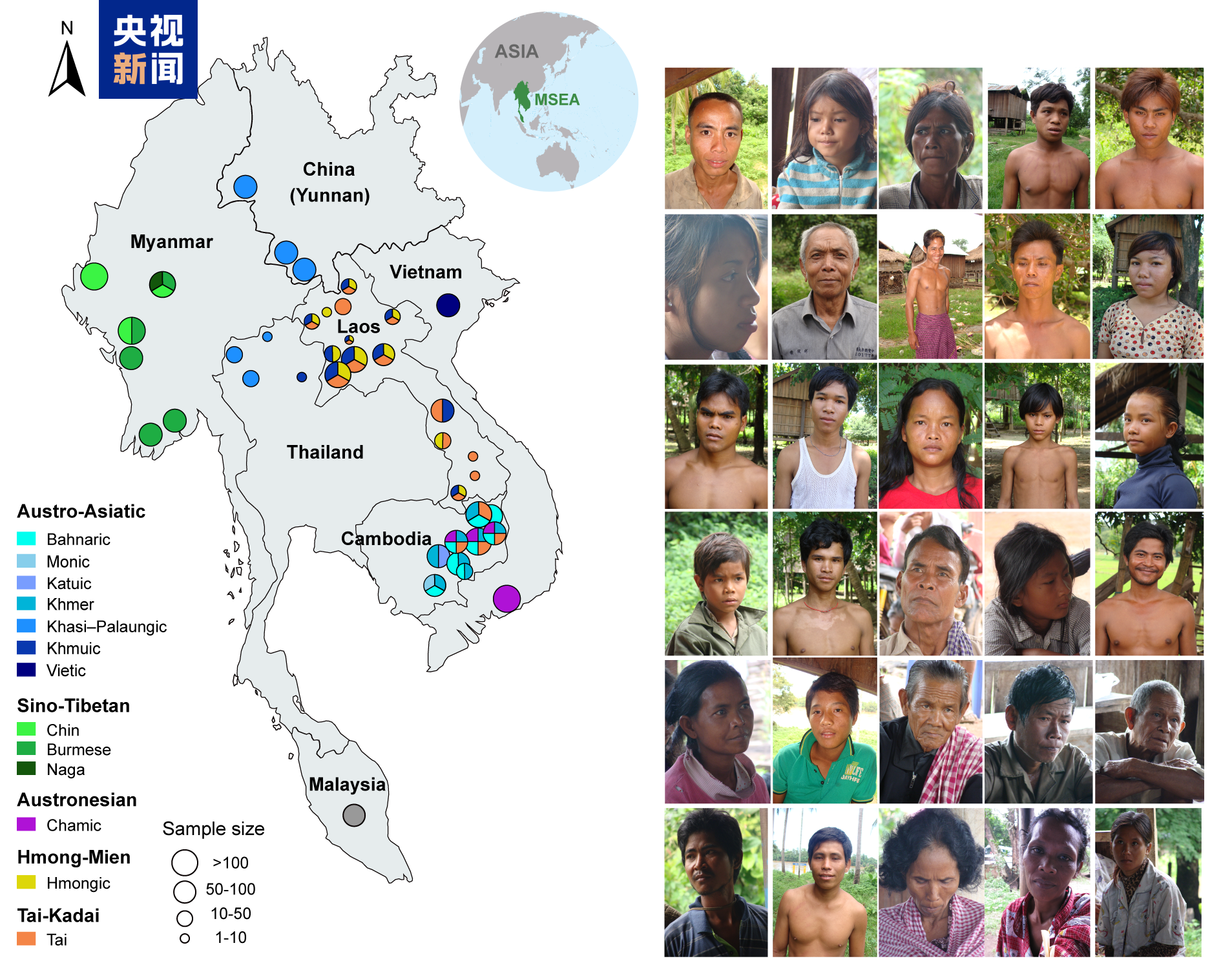
Core Insights - The "Southeast Asian Population Genomics Project" has achieved a milestone breakthrough in the field of genomic research over a span of 10 years, revealing the genetic evolution mysteries of Southeast Asian populations [1] - The project, led by the Kunming Institute of Zoology, Chinese Academy of Sciences, involved collaboration with 34 domestic and international research teams [1] - The research has produced the most comprehensive genomic dataset for Southeast Asian populations, known as SEA3K, through the collection of samples from over 30 ethnic groups across six countries [1] Group 1 - The project has successfully completed whole-genome deep sequencing of 3,023 samples, providing significant insights into the genetic diversity of Southeast Asian populations [1] - The study revealed how ancient population differentiation, mixing, adaptation, and gene flow from archaic humans have influenced the genetic makeup of these populations [1] - Notably, the research identified three instances of Denisovan gene flow into Southeast Asian populations, redefining the geographical boundaries of prehistoric human evolution [1] Group 2 - The team discovered unique genetic mutations in Southeast Asian populations that enable adaptation to tropical environments, such as skin pigmentation regulation and reduced reactions to mosquito bites [1] - The project has officially launched its second phase, aiming to construct a high-resolution genomic map covering a population of 10,000 across Southeast Asia [1][2]
东南亚人群基因密码破译,填补“最后一块拼图”
Guan Cha Zhe Wang· 2025-05-14 23:07
Core Insights - Southeast Asia is a crucial region for human evolution and cultural exchange, with nearly 300 million people and high genetic diversity, yet it has been underrepresented in genomic studies, making it a "last piece of the puzzle" in global population genomics [1] Group 1: Research Initiative - The Chinese Academy of Sciences Kunming Institute of Zoology has initiated the "China-Southwest and Southeast Asia Anthropology Joint Research Alliance (CASEAC)" involving 34 research teams from multiple Southeast Asian countries [3] - The research team has collected samples from over 30 ethnic groups across six countries, focusing on the genetic diversity of Southeast Asian populations [4] Group 2: Findings and Contributions - The study completed whole-genome sequencing for 3,023 individuals, creating the most comprehensive dataset of genetic variations in Southeast Asian populations, known as SEA3K [4] - The research reveals the genetic variation patterns influenced by ancient population differentiation, admixture, adaptation, and gene flow from archaic humans like Denisovans, redefining the geographical boundaries of human prehistoric evolution [6] - Key genes related to tropical environmental adaptation were identified, providing insights into the genetic mechanisms behind traits such as dark skin, short stature, and malaria resistance [6] Group 3: Future Directions - Following the success of the SEA3K project, the second phase, SEA10K, has been launched to create a high-resolution genomic map covering the entire Southeast Asia region, aiming to enhance disease control and promote scientific and cultural exchanges [7]

东南亚人群基因密码破译 填补全球人类基因组研究“最后一块拼图”
Yang Shi Xin Wen· 2025-05-14 16:46
Core Insights - The research led by the Kunming Institute of Zoology, Chinese Academy of Sciences, in collaboration with 34 research teams from Southeast Asia, has made significant breakthroughs in understanding the genetic structure and evolutionary history of Southeast Asian populations, marking a major advancement in the field of human genomics [1][3][7] Group 1: Research Achievements - The first phase of the "Southeast Asia Genomic Project" has resulted in the publication of findings in the international journal "Nature," revealing the complex genetic diversity of Southeast Asian populations [1][7] - A comprehensive dataset, SEA3K, was created through the sequencing of 3023 whole genomes, providing the most complete genetic variation map for the region [3][4] Group 2: Scientific and Social Implications - The research fills a critical gap in global genomic studies, particularly in the "southern blind spot," and redefines the global landscape of human diversity research [7] - The findings are expected to support the understanding of human phenotypic and environmental interactions, as well as the genetic basis of tropical diseases, which has significant implications for regional precision medicine and cross-border health governance [7][8] Group 3: Future Directions - The second phase of the "Southeast Asia Genomic Project" has been initiated, aiming to construct a high-resolution genomic map covering the entire Southeast Asia region, which will enhance disease prevention and control efforts and strengthen scientific cooperation in the ASEAN region [6][8]