
中华文明国际传播

Search documents
让沉睡的文物在故事中苏醒——从武王墩考古看历史故事赋能网络文学创作
Xin Hua She· 2026-01-21 21:10
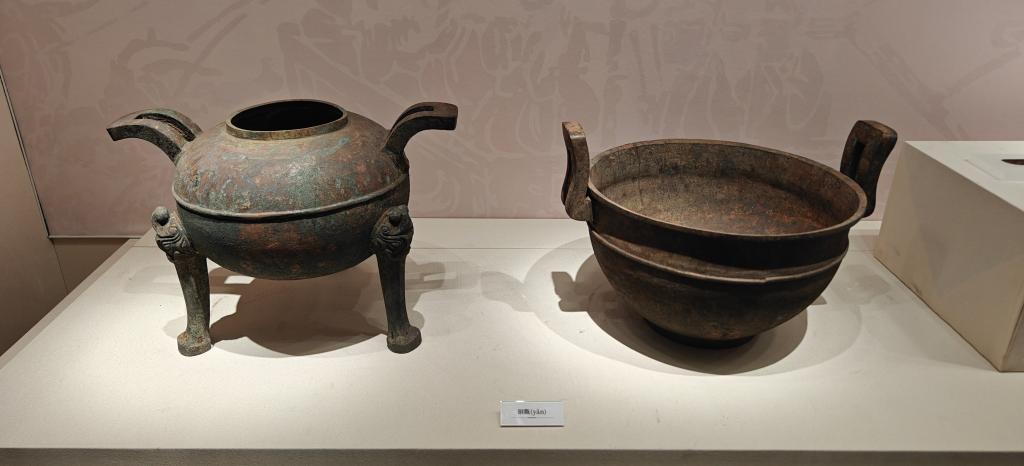
Core Viewpoint - The integration of archaeology and online literature is fostering a dialogue that brings ancient Chinese civilization to life in contemporary narratives, as demonstrated by the event "Crossing the Wu Wang Dun: From Archaeological Site to Literary Scene" held in Beijing and Anhui Huainan [1] Group 1: Historical Discoveries as Creative Material - The archaeological findings at Wu Wang Dun, including bronze vessels and lacquerware, serve as a profound source of inspiration for online writers, allowing them to connect with real historical contexts [2] - Writers express that archaeological artifacts, despite their small size, embody the grandeur of pre-Qin culture, providing essential authenticity for their creative works [2][3] Group 2: Creative Transformation and Depth - The challenge for writers lies in transforming cold cultural symbols into warm, relatable stories that resonate emotionally with readers [4] - Writers are encouraged to delve into the spiritual essence behind artifacts, linking ancient values of perseverance and dedication to contemporary struggles [4] Group 3: Cultural Mission of Online Literature - Online literature is evolving beyond mere appropriation of cultural symbols, aiming to infuse ancient civilization's essence into modern narratives, thus creating compelling stories that reflect contemporary Chinese values [7] - The genre is increasingly focusing on themes relevant to China's modernization efforts, with works highlighting advancements in technology and national spirit [7][8] - Online literature is becoming a significant medium for the international dissemination of Chinese culture, with approximately 200 million active users globally [7]

以信息技术赋能中华文明国际传播(专题深思)
Ren Min Ri Bao· 2025-12-11 22:03
Core Insights - The article emphasizes the importance of enhancing international communication effectiveness, which is a composite capability system consisting of resource integration, content innovation, and audience engagement [1][2][3] - It highlights the need for a comprehensive communication system supported by information technology, focusing on cultural content and global mutual learning to optimize China's international communication effectiveness [2][3][4] Group 1: Technological Impact - The rapid development of new-generation information technologies is reshaping communication logic and expanding communication spaces, providing historical opportunities for the dissemination of Chinese civilization [2][3] - Technologies such as artificial intelligence, big data, cloud computing, and blockchain are shifting international communication from a linear model centered on content output to a networked, algorithm-driven, and ecological model [2][3] Group 2: Digital Infrastructure - A solid digital foundation is crucial for effective cultural dissemination, influencing the breadth, speed, and sustainability of communication [3][4] - The construction of new infrastructures like 5G networks and cloud computing enhances the coverage, stability, and timeliness of international communication while reducing costs and information redundancy [3][4] Group 3: Cultural Expression and Innovation - The development of information technology is reshaping cultural creation methods, injecting innovative power into the global expression of Chinese civilization [4][5] - Digital cultural products have become important carriers for international communication, with examples like the game "Black Myth: Wukong" and the film "The Wandering Earth" showcasing Chinese narratives to global audiences [4][5] Group 4: Collaborative Communication - The proliferation of information technology is facilitating a shift from one-way output to multi-directional interaction in cultural dissemination, creating new digital spaces for mutual learning [5][6] - New media and content platforms in China are leveraging technological innovations to engage in interactive dialogues with overseas users, enhancing understanding and communication [5][6]