
中国城市发展

Search documents
读懂城市发展的“中国视角”(人民时评)
Ren Min Ri Bao· 2025-11-03 22:12
Core Viewpoint - The article emphasizes the importance of high-quality urban development in China, advocating for a people-centered approach that prioritizes public welfare and sustainable practices in urban planning and governance [1][2][3][4]. Group 1: Urban Development Philosophy - The concept of "People's City built by the People, for the People" establishes a new path for urban modernization in China, focusing on public spaces and community needs [1]. - Cities like Shanghai are highlighted for their commitment to using resources for the benefit of the public, showcasing successful initiatives such as the construction of public activity spaces and addressing local issues [1]. Group 2: Practical Implementation - The article discusses the shift from extensive urban expansion to improving existing urban quality, emphasizing the need for intrinsic development that focuses on innovation, livability, beauty, resilience, civilization, and intelligence [3]. - Examples from cities like Chongqing, Fuzhou, and Nanjing illustrate how data-driven management, cultural preservation, and ecological restoration contribute to urban renewal and improved quality of life [3]. Group 3: International Influence - China's urban development strategies, such as the "15-minute community life circle," have gained international recognition, influencing urban planning concepts in cities like Paris and Milan [4]. - The Shanghai Award and related initiatives demonstrate China's commitment to providing international public goods and addressing urbanization challenges, reflecting the country's responsibility on the global stage [4].

2024年最新城市排名出炉:成都成为新一线城市领头羊
Sou Hu Cai Jing· 2025-08-27 13:11
Core Insights - In 2024, Chengdu and Chongqing are recognized as the leading cities in Western China, with Chengdu maintaining its position as the top new first-tier city and Chongqing ranking third [1][6] - The construction of the Chengdu-Chongqing economic circle has revitalized the development of Western China, creating a "one body, two cores, multiple points" structure that accelerates regional economic growth [3][6] - The GDP total and growth rates of the Chengdu-Chongqing region indicate significant economic strength, suggesting that if the two cities had remained unified, their economic power would be even more formidable [3][6] Economic Development - The rise of cities like Suzhou, Wuxi, and Dongguan provides new examples of urban development, successfully entering the second-tier city ranks and exerting pressure on traditional provincial capitals like Shenyang and Harbin [3][5] - The success of these second-tier cities is attributed not only to overall economic growth but also to advancements in new economies and high-tech industries [5][6] - Conversely, the absence of cities like Urumqi, Hohhot, and Yinchuan from the third-tier city rankings highlights a significant development gap compared to coastal regions, indicating a need for more policy support and resource investment [5][6] Urban Development Landscape - The overall urban development in China in 2024 is characterized by diversification, with Chengdu and Chongqing setting benchmarks for Western development and motivating other cities [6] - The emergence of second-tier cities and the relative lag of some third-tier cities underscore the ongoing challenges in China's urban development journey [6] - The ranking of cities includes first-tier cities like Shanghai, Beijing, Shenzhen, and Guangzhou, followed by new first-tier cities such as Chengdu and Chongqing, and a list of second-tier cities that reflects the evolving urban landscape [7]

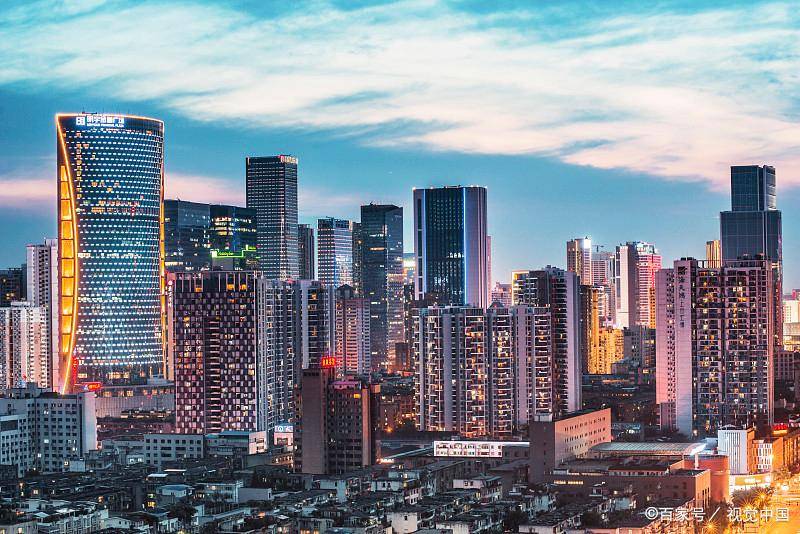
【今晚播出】重新发现城市 |《两说》
第一财经· 2025-06-04 07:44
Core Viewpoint - The article discusses the evolution of cities in China, highlighting the contrasting dynamics between large cities and smaller ones, and the implications for urban development in the new era [1] Group 1: Reasons for City Existence - Cities exist for various reasons including defense, trade, resource aggregation, production efficiency, and cultural exchange [1] Group 2: Current Urban Dynamics - After 40 years of rapid development, Chinese cities are entering a new phase characterized by the growth of mega-cities and the decline of some smaller urban areas [1] - There is a notable disparity in housing prices, with major cities experiencing prices in the tens of thousands per square meter, while in other regions, similar amounts can purchase entire homes [1] Group 3: Migration Trends - The phenomenon of "escaping from Beijing, Shanghai, and Guangzhou" has become a popular topic among young people, contrasted by the trend of "returning to Beijing, Shanghai, and Guangzhou" [1] Group 4: Future Urban Development - The article raises questions about the future trajectory of urban development in China, focusing on the new stories that will emerge for cities, industries, and residents in this new cycle and rhythm [1]
