中国检察学自主知识体系

Search documents
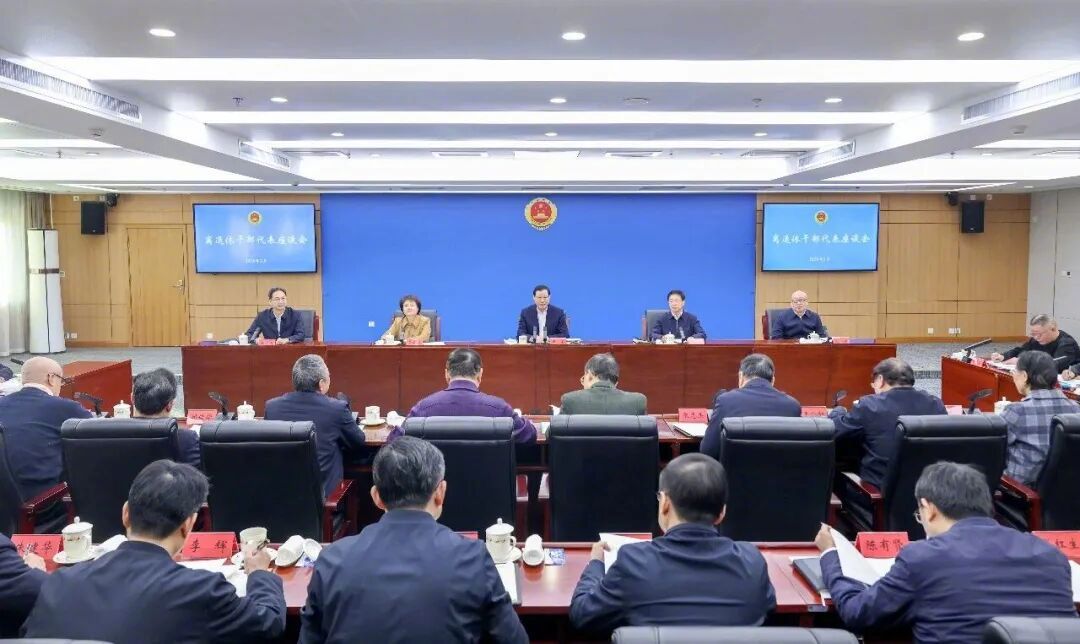
人民检察制度创立95周年,最高检领导与老领导老同志座谈聊了这些事
Xin Lang Cai Jing· 2026-02-04 10:16
Group 1 - The meeting held by the Supreme People's Procuratorate (SPP) focused on the past year's prosecutorial work and gathered opinions and suggestions from retired officials [2][3] - The significance of the meeting is highlighted by the 105th anniversary of the Communist Party of China and the 95th anniversary of the establishment of the people's procuratorial system under the Party's absolute leadership [2] - The SPP leadership emphasized the value of retired officials as a precious resource for the development of the procuratorial cause, acknowledging their contributions and ongoing support [2] Group 2 - Retired officials expressed their support for the past year's prosecutorial work and emphasized the importance of developing and perfecting the socialist procuratorial system with Chinese characteristics [8] - Suggestions included accelerating the establishment of an independent knowledge system for Chinese procuratorial studies and enhancing the implementation mechanisms for the Party's decisions within the procuratorial system [8] - The SPP leadership extended New Year greetings to retired officials, wishing them health and happiness [8][9]

2025年度十大检察新闻
Xin Lang Cai Jing· 2026-02-01 23:26
Group 1 - The Supreme People's Procuratorate emphasizes the importance of strengthening prosecutorial supervision and enhancing public interest litigation as outlined in the 20th Central Committee's recommendations [3][4] - The 2025 annual meeting highlighted the establishment of specialized prosecutorial departments, including the Intellectual Property Procuratorate and the Procuratorial Investigation Department, marking a significant step towards professionalization and systematization of prosecutorial functions [11][12] - The introduction of the Public Interest Litigation Law draft to the National People's Congress signifies a move towards legalizing and institutionalizing the achievements of the public interest litigation system [9][10] Group 2 - The Supreme People's Procuratorate has initiated various special supervision actions, such as monitoring illegal cross-regional law enforcement and ensuring judicial fairness, which have shown significant results in safeguarding public interests [5][7] - The establishment of the "Every Case Must Be Inspected" mechanism aims to enhance case quality management and ensure accountability within the prosecutorial system [19][20] - The 2025 data indicates a 2% increase in prosecutions related to crimes disrupting the socialist market economy, reflecting the ongoing efforts to uphold legal order and protect economic rights [27] Group 3 - The establishment of the "Yuqin Protection Team" in Chongqing, recognized as a model for protecting minors, showcases the commitment of the procuratorial system to safeguard the rights and welfare of vulnerable groups [14][15][16] - The Supreme People's Procuratorate's focus on public interest litigation has led to the handling of over 1.224 million cases from 2015 to 2025, demonstrating the effectiveness of this legal mechanism in addressing social issues [9][24] - The recent forum on Sino-African prosecutorial cooperation highlights the commitment to enhancing international collaboration in legal matters, particularly in combating transnational crime [27][28][29]
冬日迎“新”!续写检学融合的春日篇章
Xin Lang Cai Jing· 2026-01-23 21:55
Group 1 - The Supreme People's Procuratorate has welcomed a new batch of 12 experts and scholars for a one-year full-time position, marking the largest and most diverse group since the program's inception in 2006 [1][2] - The initiative aims to integrate legal theory with judicial practice, promoting the construction of a higher level of socialist rule of law in China, guided by Xi Jinping's thoughts on the rule of law [1][2] - The program emphasizes that the role of experts is not merely ceremonial but involves significant responsibilities and contributions to practical judicial work [2][3] Group 2 - Experts express their commitment to bridging the gap between legal theory and practice, with many planning to engage deeply in judicial processes to enhance their academic research [2][3][4] - The initiative is seen as a valuable opportunity for scholars to transition from theoretical teaching to practical involvement, fostering a collaborative environment between academia and the procuratorial system [3][4][5] - The program is part of a broader effort to develop an independent knowledge system for Chinese procuratorial studies, with universities actively contributing to curriculum and research in this field [4][5][6] Group 3 - The experts aim to produce research that reflects the realities of Chinese procuratorial practices while also contributing to theoretical advancements in the field [5][6][7] - The collaboration is expected to yield practical insights that can inform future developments in the Chinese legal system, enhancing the effectiveness of the procuratorial function [6][7] - The initiative is positioned as a critical step in the evolution of Chinese legal education and practice, with participants committed to delivering impactful results during their tenure [6][7]
加快构建中国检察学自主知识体系助推检察理论与制度完善发展
Xin Lang Cai Jing· 2026-01-09 00:11
Group 1 - The core idea emphasizes the importance of developing a Chinese prosecutorial knowledge system guided by Xi Jinping's rule of law thought, focusing on the overall development, legal construction, and prosecutorial practice, while strengthening cooperation between prosecution and courts [2][3][4] - The theoretical framework of the Chinese prosecutorial knowledge system includes five levels: socialist rule of law theory with Chinese characteristics, legal supervision theory, judicial theory, and prosecutorial theory [3] - The construction of the prosecutorial knowledge system should be based on Marxist epistemology and practical development, aiming to create an independent and unique prosecutorial knowledge system while reducing reliance on foreign academic achievements [4] Group 2 - The modification of the criminal procedure law in 2025 is a focal point for research, particularly in enhancing the legal supervision role of prosecutorial agencies [5][6] - Proposals for optimizing the prosecutorial functions in personal coercive measures include establishing a hearing procedure for arrests and improving the review mechanisms for detention necessity [6] - The construction of legal supervision systems for property coercive measures is crucial, addressing issues of abuse and ensuring that such measures require prior approval from prosecutorial agencies [7] Group 3 - The improvement of the plea bargaining system is suggested to transform the current system into a negotiation framework, emphasizing the need for communication between defendants and their lawyers [8][9] - The establishment of a mechanism for communication between prosecution and courts regarding sentencing guidelines is proposed to enhance the efficiency of the plea bargaining process [9] - The need for a clear definition of the prosecutorial role in the connection between inspection and prosecution is highlighted, ensuring cooperation among various judicial bodies [10] Group 4 - The optimization of criminal prosecution mechanisms is essential, focusing on the supervision of illegal cross-regional law enforcement and ensuring a coordinated approach across different prosecutorial departments [11] - The establishment of a mechanism for discretionary non-prosecution is proposed, allowing for a more flexible approach to minor offenses [11][12] - The activation of prosecutorial investigative powers is suggested to address significant criminal cases directly, streamlining the decision-making process [12] Group 5 - The enhancement of civil prosecution mechanisms includes supporting lawsuits for vulnerable groups and improving the supervision of civil execution [13][14] - The establishment of a comprehensive mechanism for administrative prosecution is emphasized, ensuring a seamless connection between administrative and criminal supervision [15] - The legislative framework for public interest litigation is proposed to solidify existing practices and ensure clarity in prosecutorial responsibilities [16] Group 6 - The development of mechanisms for juvenile prosecution is highlighted, focusing on a comprehensive approach that integrates various forms of prosecution to protect minors' rights [17] - The exploration of foreign-related prosecution mechanisms is necessary to enhance the understanding and application of international law within domestic contexts [18] - The integration of technology in prosecutorial management is emphasized, aiming to improve the efficiency and effectiveness of prosecutorial functions [19] Group 7 - The pursuit of high-quality and efficient case handling is identified as a fundamental value, emphasizing the balance between correctness and justice, as well as effectiveness and efficiency [20] - The "three managements" framework is proposed as a foundational aspect of prosecutorial work, focusing on business management, case management, and quality management to enhance overall prosecutorial performance [21]

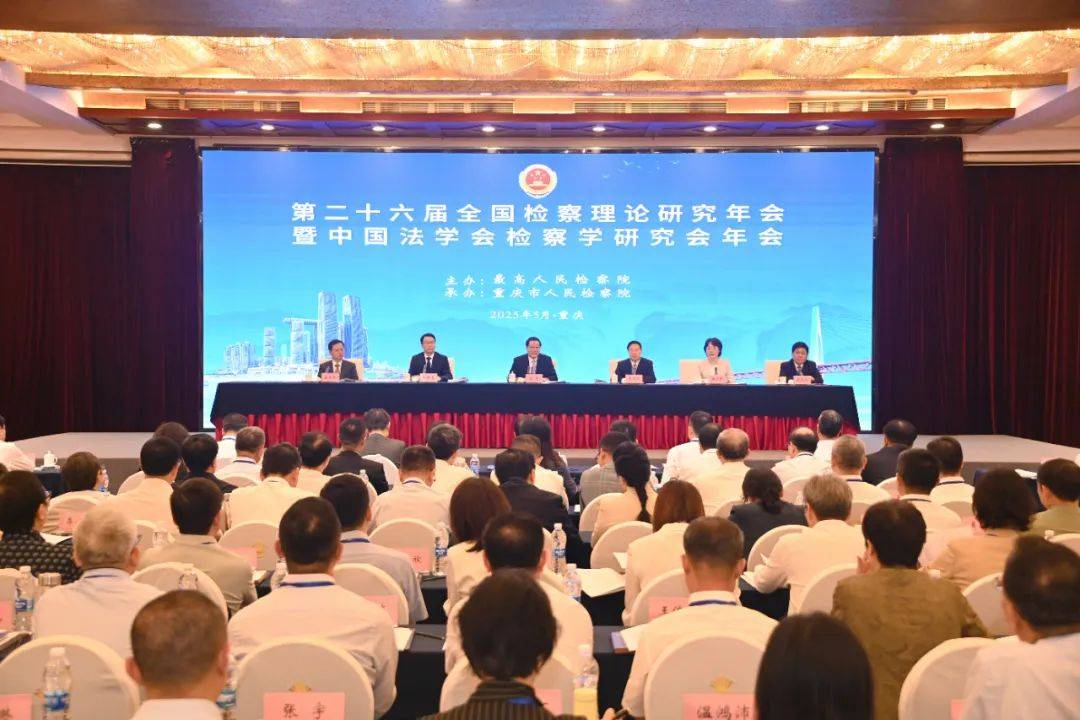
首次提出构建“中国检察学自主知识体系”,这场理论年会意义重大
Sou Hu Cai Jing· 2025-05-23 03:36
Core Insights - The conference focused on the theme of constructing an independent knowledge system for Chinese prosecutorial studies, guided by Xi Jinping's thoughts on the rule of law [3][4] - The event highlighted the importance of integrating theoretical innovation with practical breakthroughs in the field of prosecution [3][4] Summary by Sections Importance of Constructing an Independent Knowledge System - The construction of an independent knowledge system for Chinese prosecutorial studies is essential for adhering to the path of socialism with Chinese characteristics [8] - It is a necessary requirement for improving the socialist prosecutorial system [8] - This initiative responds to the evolving needs of prosecutorial practice [8] - It is also vital for the prosperity of prosecutorial theoretical research [8] Components of the Knowledge System - The independent knowledge system should encompass five main areas: socialist rule of law theory, socialist legal supervision theory, socialist judicial theory, socialist prosecutorial theory, and the theory of modernized prosecution with Chinese characteristics [7] - The core concepts of this system are "prosecution" and "judiciary," with foundational categories being "legal supervision" and "rule of law supervision" [7] Academic Contributions and Discussions - The conference featured academic reports emphasizing the need for a rich and logically coherent theoretical and academic system [7] - Discussions included the necessity of a unified approach that incorporates subjectivity, locality, inclusivity, and innovation in the construction of the knowledge system [10] - The importance of aligning the knowledge system with the broader development agenda and legal construction was emphasized [13] Practical Implications - The conference underscored the significance of grounding theoretical research in practical judicial experiences to build a robust independent knowledge system [15][16] - Participants highlighted the role of grassroots prosecutorial practice as a fertile ground for developing the knowledge system [16]