
中成药说明书规范

Search documents
不良反应等尚不明确的中成药或被调出医保
21世纪经济报道· 2026-02-12 10:32
Core Viewpoint - The National Healthcare Security Administration (NHSA) is set to adjust the National Medical Insurance Drug List in 2026, focusing on optimizing the review process and ensuring alignment with the current healthcare fund's payment capacity and drug supply situation [1][7]. Group 1: Drug List Adjustment Principles - The adjustment will adhere to the principles of steady progress and continuous optimization, emphasizing transparency and scientific evaluation in the review process [1][5]. - Traditional Chinese medicine (TCM) products with unclear adverse reactions will be prioritized for removal from the list [1][7]. Group 2: Reference Drug Communication Method - The NHSA has introduced a trial method for reference drug communication, which will allow for the selection of reference drugs to assess the value of new drug applications [3][5]. - This method aims to enhance the preparation of economic and clinical data by allowing early application for reference drug determination [5]. Group 3: Focus on Traditional Chinese Medicine - TCM products will be a key focus in the upcoming adjustments, particularly those with "unclear" labels in their instructions regarding contraindications and adverse reactions [5][7]. - From July 1, 2026, TCM products with unclear safety information will not be approved for re-registration, impacting those already on the list [5][11]. Group 4: Increase in Drug Applications - The number of drug applications for the National Medical Insurance Drug List has surged, with a projected increase of 30% to 40% in 2025 compared to 2024, and further growth expected in 2026 [6]. - The rapid approval of innovative drugs, with 76 new first-class innovative drugs approved in 2025, contributes to this increase [6]. Group 5: Regulatory Trends and Challenges - The tightening of regulations around TCM products indicates a rising barrier to entry, with a focus on eliminating products that lack clinical efficacy and have unclear safety profiles [11][12]. - The NHSA has been actively conducting price governance actions against TCM products that are overpriced without unique therapeutic effects, leading to their potential exclusion from reimbursement [12].

中成药说明书“尚不明确”?那就再见吧
Qi Lu Wan Bao· 2026-02-01 16:27
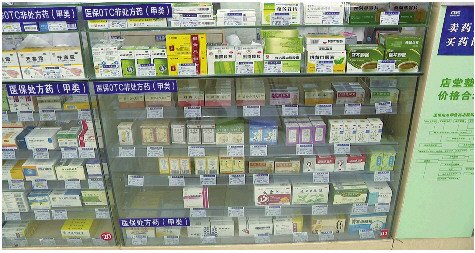
Policy Regulations - The new regulation, effective from July 1, 2023, mandates that any traditional Chinese medicine (TCM) with "unclear" labels in contraindications, adverse reactions, or precautions will not be re-registered after three years [3][4] - The regulation aims to enhance the management of TCM throughout its lifecycle, requiring holders to monitor and evaluate safety risks and update labels accordingly [3][4] Market Situation - Despite the impending deadline, some commonly used TCMs still carry "unclear" labels, indicating a need for compliance [5][6] - A survey of pharmacies revealed that several TCM products, including those from well-known brands, still have safety information marked as "unclear" [6][7] Industry Response - Pharmaceutical companies are actively working to revise their product labels in compliance with the new regulations, with many already completing updates for core products [9] - Companies like Rongchang Pharmaceutical and Yiling Pharmaceutical have reported that they are updating their product information to eliminate "unclear" labels and enhance consumer understanding [9] Industry Outlook - The new regulation is seen as a necessary shift from quantity expansion to quality prioritization in the TCM industry, promoting safer medication practices [10] - The implementation of this policy is expected to phase out low-quality products lacking safety data, thereby concentrating resources on higher-quality enterprises and products [10]
更好保障公众安全用中药
Ren Min Ri Bao· 2026-01-28 22:12
Core Viewpoint - A significant number of traditional Chinese medicine (TCM) products are expected to exit the market due to new regulations from the National Medical Products Administration, which will require clearer safety information in product instructions by July 1, 2026 [1] Group 1: Regulatory Impact - The new regulation aims to improve the clarity of contraindications, adverse reactions, and precautions in TCM product instructions, addressing the current issue of many entries marked as "unclear" [1] - Experts believe that this regulation will not lead to a mass withdrawal of TCM products but will facilitate the orderly exit of "zombie approvals" that have low clinical value and have not been produced for a long time [1] Group 2: Industry Transformation - The regulation is expected to enhance patient safety through clearer risk warnings, improve quality control of TCM, and promote a shift from quantity expansion to quality prioritization in the industry [1] - This shift will encourage resources to concentrate on companies with high clinical value, strong research foundations, and superior quality systems, fostering a high-quality transformation of the TCM industry [1] Group 3: Recommendations for Pharmaceutical Companies - Pharmaceutical companies are advised to prioritize the review of main products, conduct real-world studies, literature reviews, and necessary toxicology tests, and revise product instructions accordingly [2] - Companies should also establish robust pharmacovigilance systems to ensure drug safety and compliance with regulations, while evaluating and canceling low-value approvals to focus on high-quality products that meet clinical needs [2] Group 4: Understanding TCM - There is a need to recognize the fundamental differences in treatment logic between TCM and Western medicine, with TCM's efficacy heavily relying on syndrome differentiation [2] - Classic formulations with proven efficacy and a long history of use generally have lower risks and are easier to revise, while products with unclear sources and arbitrary formulations require more attention [2] Group 5: Broader Responsibilities - To ensure effective use of TCM, both companies and the medical sector must enhance their capabilities in syndrome differentiation and avoid empirical prescribing that deviates from syndrome-based treatment [3] - Public education is essential to improve understanding of TCM and promote safe medication practices, contributing to the orderly development of the TCM industry [3]