
中成药质量提升

Search documents
超75%中成药打响“保命战”
Guo Ji Jin Rong Bao· 2026-02-09 08:49
Core Viewpoint - A significant number of traditional Chinese medicine (TCM) products are at risk of being eliminated from the market due to new regulatory requirements that will take effect in July 2026, which mandate clearer safety information in product descriptions [3][10]. Industry Overview - The new regulations, effective from July 2023, require that any TCM product with unclear safety information (labeled as "unclear") will not be eligible for re-registration after July 1, 2026 [3][10]. - Approximately 75% of TCM products currently on the market have safety information marked as "unclear," which poses a substantial risk of elimination for these products [5][10]. Market Impact - The impending regulatory changes are expected to lead to a significant reshuffling of market shares within the TCM industry, as many companies may not be able to meet the new requirements [10][11]. - Notable products facing potential withdrawal include those with substantial sales figures, such as Longmu Bone Strengthening Granules, which is projected to exceed 1 billion yuan in retail sales in 2024 but has unclear safety information [7][10]. Regulatory Context - The regulatory changes aim to enhance the quality of TCM products rather than a blanket elimination of all products, allowing companies to submit additional research and safety reports to comply [10][12]. - The policy encourages companies to invest in research and development to clarify the efficacy and safety of their products, thereby improving the overall scientific standards of TCM [12][13]. Future Developments - Many leading TCM companies have already begun to prepare for compliance with the new regulations, with some having successfully updated their product safety information [14]. - The regulatory framework is expected to foster a more competitive environment, potentially benefiting companies that can adapt and innovate while disadvantaging those that cannot meet the new standards [11][12].

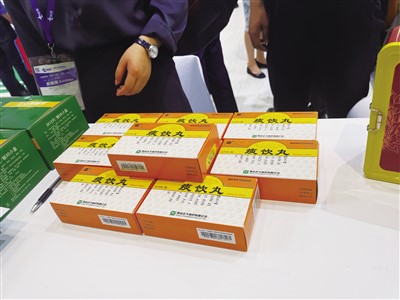
中成药即将告别“尚不明确”
Ke Ji Ri Bao· 2026-01-29 02:17
Core Viewpoint - The implementation of the new regulation by the National Medical Products Administration (NMPA) will phase out traditional Chinese medicine (TCM) products with ambiguous safety information, marking a significant shift towards quality over quantity in the TCM industry [1][4]. Group 1: Regulation Impact - The new regulation, referred to as the "life and death clause" for TCM, will take effect on July 1, 2026, and will disallow re-registration of TCM products that have any safety information marked as "unclear" after a three-year grace period [1][4]. - Over 70% of the approximately 57,000 approved TCM products currently have safety information issues, which will lead to a significant reduction in market products, estimated at 30%-40% [2][4]. Group 2: Consumer Safety - Existing TCM products, such as Ban Lan Gen and Lianhua Qingwen, will not be directly affected by the new regulation, allowing consumers to continue using them [3]. - Companies are proactively investing in post-marketing safety evaluations to ensure compliance with the new standards before the deadline [3]. Group 3: Industry Transformation - The regulation signifies a transition for the TCM industry from a focus on quantity to prioritizing quality, with an expected 20%-30% of TCM approvals likely to exit the market in the next 3-5 years [4]. - The cost of compliance for companies may increase due to the need for safety evaluations, but this is not expected to lead to widespread price hikes for TCM products [5][6]. Group 4: Market Dynamics - The market concentration is expected to increase as low-market-share products exit, allowing leading companies to fill the gap with quality products [6]. - The NMPA has established communication mechanisms to support companies in their research efforts and expedite the review process for critical products [6].