连花清瘟胶囊

Search documents
面向大海 承古启新(深度观察)
Ren Min Ri Bao· 2026-02-27 06:14
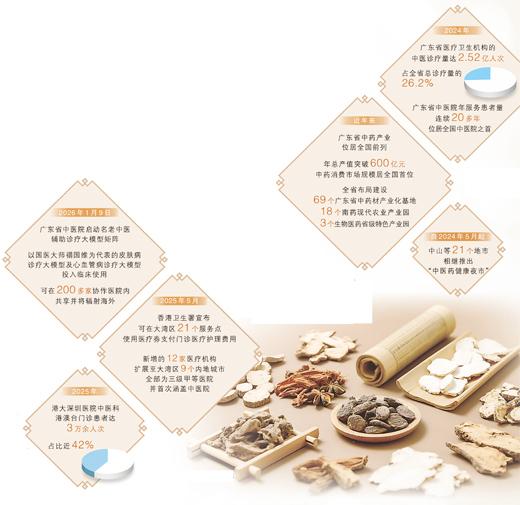
Core Viewpoint - The Chinese medicine industry is experiencing significant growth and modernization, driven by government support and innovative practices, particularly in Guangdong Province, which aims to promote traditional Chinese medicine (TCM) globally [1][2][4]. Group 1: Government Support and Initiatives - President Xi Jinping emphasized the importance of inheriting and innovating TCM, highlighting it as a treasure of Chinese civilization during his visits to Macau and Zhuhai [1][2]. - Guangdong Province has implemented various measures to promote the inheritance and innovation of TCM, establishing a comprehensive reform demonstration zone for TCM and aiming to create a TCM hub in the Greater Bay Area [1][2]. Group 2: TCM Practices and Popularity - In Guangdong, TCM is deeply integrated into daily life, with many residents familiar with herbal remedies and health practices [2][4]. - The Guangdong Provincial Hospital of Traditional Chinese Medicine has seen a significant increase in TCM consultations, with 252 million visits in 2024, accounting for 26.2% of the total medical consultations in the province [4]. Group 3: Innovative TCM Therapies - The Guangdong Provincial Hospital has introduced unique therapies such as bee therapy, which combines acupuncture and bee venom for treating various ailments [5][6]. - The hospital has also been active in preserving and promoting traditional TCM techniques through initiatives like the "杏林寻宝" program, which has introduced numerous unique therapies and trained over 330 practitioners [6][7]. Group 4: TCM Industry Development - Guangdong's TCM industry is one of the largest in China, with an annual output value exceeding 60 billion yuan, and the province is home to 69 TCM industrialization bases [12]. - The province is recognized for its rich medicinal plant resources, with over 4,500 species, contributing to its leading position in the national TCM market [12]. Group 5: Integration of Technology and TCM - The Guangdong Provincial Hospital has launched a smart pharmacy service that utilizes technology to enhance the preparation and delivery of herbal medicines, significantly reducing human error [7]. - AI-driven models have been developed to assist in TCM diagnosis and treatment, leveraging the expertise of renowned TCM practitioners [8][9]. Group 6: Internationalization of TCM - The Guangdong-Macao Traditional Chinese Medicine Technology Industrial Park serves as a strategic point for the internationalization of TCM, facilitating collaboration and product registration in Portuguese-speaking countries [17][19]. - Successful registration of TCM products in international markets, such as the "华佗再造丸," demonstrates the potential for TCM to penetrate global healthcare markets [20].

天士力复方丹参滴丸出海美国再受挫
Xin Lang Cai Jing· 2026-02-09 13:03
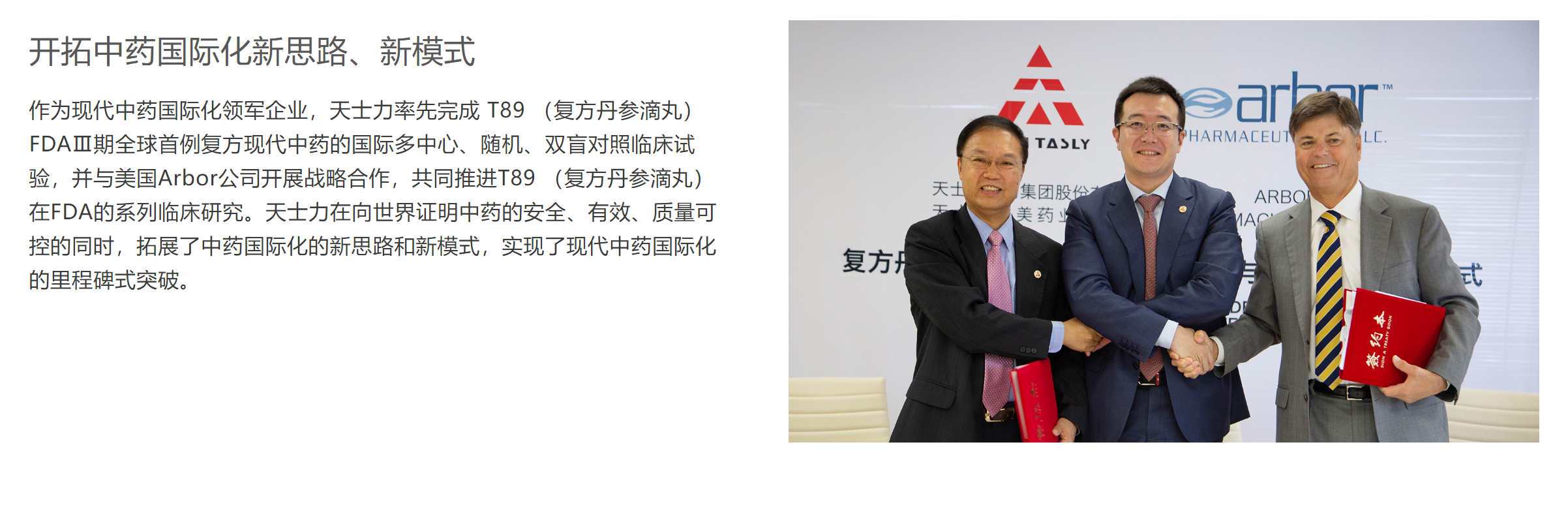
Core Viewpoint - Tianshili has terminated its collaboration with Arbor Pharmaceuticals, impacting the U.S. market expansion plan for its compound Danshen dripping pill (T89), which was a key project for the internationalization of traditional Chinese medicine [1][4]. Group 1: Collaboration Termination - The termination of the partnership with Arbor was due to Arbor's acquisition by Azurity and subsequent business adjustments, leading to the end of the U.S. market cooperation plan for T89 [1][4]. - Tianshili will receive a payment of $7.5 million as part of the termination agreement and will regain exclusive sales rights for T89 in the U.S. [1][4]. - The company stated that this termination will not significantly impact its project advancement, production operations, or financial status [1][4]. Group 2: Historical Context of T89 - The internationalization of T89 began in 1998 when it was officially approved for clinical research by the U.S. FDA [3]. - T89 received FDA approval for indications related to chronic stable angina and acute altitude sickness in 2006 and 2018, respectively [4]. - Tianshili and Arbor signed a licensing agreement in September 2018, with Arbor committing up to $23 million for research and obtaining exclusive sales rights for T89 in the U.S. [4]. Group 3: Clinical Trials and Regulatory Challenges - Tianshili has accumulated significant overseas clinical trial experience prior to the collaboration with Arbor, having completed a large-scale Phase III clinical trial [4][5]. - The success of T89's U.S. market entry hinges on obtaining regulatory approval based on clinical data, with the product still awaiting approval [5][6]. - Tianshili is currently conducting two Phase III clinical trials for T89, with the results of the second trial being crucial for U.S. approval [6][9]. Group 4: Company Performance and Market Position - Tianshili is a leading company in the modern Chinese medicine sector, listed on the Shanghai Stock Exchange since 2002 [7]. - T89 is Tianshili's most recognized product, achieving sales of over 3.3 billion yuan in 2015 and maintaining its position as the top-selling traditional Chinese medicine product for 13 consecutive years [8]. - The company has faced declining revenues since 2020, with total revenue of 8.236 billion yuan in 2025, a decrease of 3.08% year-on-year, and a net profit decline of 24.06% [11].

中药怎样才能“支棱起来”?
虎嗅APP· 2026-02-04 10:14
Core Viewpoint - The Chinese medicine industry is currently facing significant challenges, including regulatory changes that may lead to the elimination of many traditional Chinese medicine products, but this could also serve as an opportunity for industry upgrade and quality improvement [7][9][33]. Group 1: Industry Performance and Market Sentiment - After the "924" market trend in 2024, the Shenwan Chinese Medicine Index has been adjusted and has continued to consolidate, with a cumulative decline of over 10% [3]. - Even with performance forecasts indicating profit growth for Chinese medicine companies, the market has not responded positively, as seen with WoHua Pharmaceutical's net profit doubling yet experiencing a 6.01% drop in stock price the following day [4]. - The recent negative sentiment in the market is largely due to the impending withdrawal of a large number of traditional Chinese medicine products, as new regulations require clearer safety information on product labels [7][8]. Group 2: Regulatory Changes and Industry Impact - The new regulations state that any traditional Chinese medicine product with unclear safety information will not be approved for re-registration after July 1, 2026, affecting approximately 57,000 existing products, with over 70% facing safety information issues [7]. - The industry is experiencing a "compliance storm," which is seen not merely as a phase of elimination but as a catalyst for quality improvement and modernization of traditional Chinese medicine [9][11][33]. Group 3: Strategies for Development - To survive, companies must focus on supplementing safety data and revising product labels to ensure compliance with new regulations [15][16]. - Many leading companies have already completed the revision of their core products' labels, indicating a proactive approach to compliance [19]. - The compliance costs associated with these changes are manageable for companies with market support, as evidenced by several firms maintaining profitability despite the regulatory pressures [22][24]. Group 4: Innovation and Future Growth - Beyond compliance, companies need to invest in innovative research and development to ensure long-term growth, especially in a challenging market environment characterized by price reductions and weak consumer demand [27]. - New drug classifications in traditional Chinese medicine include ancient classic formulas, improved formulations, and innovative drugs, with the latter representing the highest potential for future competitiveness [28][30]. - Companies like Kangyuan Pharmaceutical and Shenwei Pharmaceutical are leading in innovation, having received multiple approvals for new products, indicating a focus on future growth opportunities [30][31].



中成药即将告别“尚不明确”
Ke Ji Ri Bao· 2026-01-29 02:17
Core Viewpoint - The implementation of the new regulation by the National Medical Products Administration (NMPA) will phase out traditional Chinese medicine (TCM) products with ambiguous safety information, marking a significant shift towards quality over quantity in the TCM industry [1][4]. Group 1: Regulation Impact - The new regulation, referred to as the "life and death clause" for TCM, will take effect on July 1, 2026, and will disallow re-registration of TCM products that have any safety information marked as "unclear" after a three-year grace period [1][4]. - Over 70% of the approximately 57,000 approved TCM products currently have safety information issues, which will lead to a significant reduction in market products, estimated at 30%-40% [2][4]. Group 2: Consumer Safety - Existing TCM products, such as Ban Lan Gen and Lianhua Qingwen, will not be directly affected by the new regulation, allowing consumers to continue using them [3]. - Companies are proactively investing in post-marketing safety evaluations to ensure compliance with the new standards before the deadline [3]. Group 3: Industry Transformation - The regulation signifies a transition for the TCM industry from a focus on quantity to prioritizing quality, with an expected 20%-30% of TCM approvals likely to exit the market in the next 3-5 years [4]. - The cost of compliance for companies may increase due to the need for safety evaluations, but this is not expected to lead to widespread price hikes for TCM products [5][6]. Group 4: Market Dynamics - The market concentration is expected to increase as low-market-share products exit, allowing leading companies to fill the gap with quality products [6]. - The NMPA has established communication mechanisms to support companies in their research efforts and expedite the review process for critical products [6].
超4万批文面临出清考验 中药即将告别“尚不明确〞
Zhong Guo Jing Ji Wang· 2026-01-29 00:58
Core Viewpoint - The new regulation from the National Medical Products Administration (NMPA) will eliminate ambiguous safety information in traditional Chinese medicine (TCM) product labels, significantly impacting over 70% of existing TCM approvals by 2026 [1][2]. Group 1: Background and Current Situation - The regulation, referred to as the "life and death clause" for TCM, will take effect on July 1, 2026, and aims to address the lack of safety information in TCM product labels [1]. - Currently, there are approximately 57,000 approved TCM products in China, with over 40,000 labels indicating "unclear" safety information in categories such as contraindications and adverse reactions [2]. Group 2: Impact on TCM Products - The regulation is expected to reduce the number of marketable TCM products by 30%-40%, primarily affecting those with unclear clinical value and high safety risks [2]. - Existing products on the market, such as Ban Lan Gen and Lianhua Qingwen, will not be directly affected and can continue to be used by consumers [3]. Group 3: Industry Transformation - The regulation signifies a shift in the TCM industry from quantity expansion to quality prioritization, addressing issues of low clinical value and redundancy among TCM products [4]. - An estimated 20%-30% of TCM approvals may exit the market in the next 3-5 years due to the new registration requirements [4]. Group 4: Cost Implications for Companies - Companies will face increased research costs to comply with the new safety evaluation requirements, which can range from hundreds of thousands to millions of yuan per product [6]. - Despite the increased costs, experts believe that this will not lead to a significant rise in TCM prices due to market competition and the potential for cost dilution through scale production [7]. Group 5: Long-term Industry Outlook - The regulation is seen as a necessary step for the modernization of TCM, aligning with international practices for drug safety information [7]. - The NMPA has established communication mechanisms and support channels to assist companies in meeting the new requirements, particularly for urgently needed products [7].
热点回应丨超4万批文面临出清考验 中药即将告别“尚不明确〞
Ke Ji Ri Bao· 2026-01-28 15:06
Core Viewpoint - The new regulation from the National Medical Products Administration (NMPA) will eliminate ambiguous safety information in traditional Chinese medicine (TCM) product labels, significantly impacting over 70% of existing TCM approvals by 2026 [1][2]. Group 1: Background and Purpose of the Regulation - The regulation aims to address the safety information gaps in TCM product labels, promoting high-quality development in the TCM industry [2]. - Approximately 57,000 TCM approvals exist in China, with over 40,000 labels indicating "not clear" for contraindications, adverse reactions, or precautions [2]. - The regulation will primarily affect TCM products with unclear clinical value and high safety risks, as well as traditional formulations lacking modern research data [2]. Group 2: Impact on Existing Products - Current TCM products in circulation, such as Ban Lan Gen and Lianhua Qingwen, will not be directly affected, allowing consumers to continue using them [3]. - The regulation applies to the re-registration process, meaning existing stock can still be sold legally [3]. - Leading companies like Yiling Pharmaceutical and Baiyunshan Pharmaceutical Group are proactively investing in post-market safety evaluations to meet the new standards [3]. Group 3: Industry Transformation - The regulation signifies a shift in the TCM industry from quantity expansion to quality prioritization, addressing issues of low clinical value and redundancy among TCM products [4]. - An estimated 20%-30% of TCM approvals may exit the market in the next 3-5 years due to the new standards [4]. Group 4: Cost Implications for Companies - Companies may face increased research costs for safety evaluations, typically ranging from hundreds of thousands to millions of yuan per product [6]. - However, this is not expected to lead to significant price increases for TCM products due to market competition and the potential for cost dilution through scale production [6]. - The top 100 TCM products account for over 60% of the market share, indicating that leading companies with solid research foundations can manage the costs effectively [6]. Group 5: Support Mechanisms - National and provincial drug regulatory authorities have established communication mechanisms and green channels to support companies in conducting necessary research and expedite the review of supplementary applications for urgently needed products [7].
中药行业全景图:短期承压分化,长期求变提质
Lian He Zi Xin· 2026-01-06 11:07
Investment Rating - The report indicates a cautious investment outlook for the Chinese traditional Chinese medicine (TCM) industry, highlighting short-term pressures and long-term quality improvement opportunities [2]. Core Insights - The TCM industry is experiencing stable demand due to an aging population, with the market size expected to exceed 700 billion yuan by 2024, reflecting a year-on-year growth of approximately 6.6% [4][11]. - The financial performance of TCM listed companies is under pressure, with high sales expenses eroding profits and increasing internal differentiation among companies [11][25]. - The competitive landscape is characterized by a high concentration of revenue and profits among the top tier of companies, which hold over half of the industry's income and profits due to proprietary formulas and brand advantages [20][22]. Industry Overview - The TCM industry has a well-established supply chain, with stable demand driven by an increasing elderly population, projected to reach 220 million by the end of 2024, a 1.36% increase from 2023 [4]. - The industry is facing significant price fluctuations due to inventory destocking, upstream capacity changes, and downstream procurement policies [4][5]. - The TCM manufacturing sector consists of approximately 5,000 companies, primarily located in regions such as Jilin, Guangdong, Anhui, and Henan [4]. Financial Performance of TCM Companies - As of 2024, there are 70 listed TCM manufacturing companies, with an average annual revenue of about 340 billion yuan and an average profit of around 34 billion yuan [11][13]. - The overall profit margin for TCM companies is below 20%, indicating a challenging financial environment [11]. - The sales gross margin for sample companies remains stable at around 55%, while the sales expense ratio is approximately 24% [14][18]. Competitive Landscape - The first tier of TCM companies, including Yunnan Baiyao and Tongrentang, dominate the market, accounting for over 52% of total revenue and profits [22][25]. - The second tier includes regional leaders with a more diverse product range, while the third tier consists of smaller companies with concentrated product lines [23][24]. - The financial data shows that the first tier companies have significantly higher equity scales, providing a solid foundation for market expansion and R&D [26]. Industry Policies - Recent policies emphasize innovation and quality improvement in the TCM sector, with initiatives aimed at enhancing regulatory frameworks and promoting high-quality development [27][28]. - The government has outlined plans to establish national laboratories and improve the quality of TCM products through stricter regulations [28][29]. TCM Procurement Situation - The gradual implementation of TCM procurement policies has led to significant price reductions, with the average price drop reaching 68% in recent rounds of procurement [31][34]. - The procurement process is designed to promote standardization and quality control, which may lead to increased market concentration among leading companies [31][40]. - The report notes that the procurement policies have created challenges for TCM companies, particularly regarding profitability due to cost pressures [40]. TCM Innovation Drug Development - The TCM sector has seen a surge in innovation, with a notable increase in clinical trial applications and new drug approvals, particularly in areas such as digestion and respiratory health [41][42]. - The number of IND applications for TCM has grown significantly, indicating a robust pipeline for future product development [42][43].


正确使用中成药治感冒
Xin Lang Cai Jing· 2026-01-06 00:56
Core Viewpoint - The article emphasizes the importance of correctly selecting traditional Chinese medicine (TCM) for treating colds, as improper use can delay recovery and increase the risk of adverse reactions [1]. Group 1: Types of Colds - Colds can be categorized based on the type of wind and other pathogens or the individual's constitution, including wind-cold, wind-heat, summer-damp, and deficiency colds [1]. - Wind-cold colds are characterized by symptoms such as severe chills, mild fever, and nasal congestion, typically treated with warming and dispersing methods [2]. - Wind-heat colds present with more severe fever and throat pain, requiring cooling and dispersing treatments [3]. - Summer-damp colds occur in warmer months, often due to dampness and cold exposure, with symptoms including headache and gastrointestinal discomfort [4]. - Deficiency colds are common in the elderly or those with weakened immune systems, presenting with fatigue and recurrent colds [6]. - Seasonal colds, akin to influenza, have acute onset and strong contagiousness, necessitating detoxifying treatments [7]. Group 2: Common TCM Treatments - For wind-cold colds, common TCM remedies include: - Ganmao Qingre Granules, which contain ingredients like Schizonepeta and mint, effective for symptoms like headache and nasal discharge [2]. - Zheng Chaihu Granules, which help alleviate fever and body aches [2]. - Tongxuan Liupai Pills, suitable for coughs associated with wind-cold [2]. - For wind-heat colds, treatments include: - Yin Qiao Jie Du Tablets, effective for fever and sore throat [3]. - Shuanghuanglian Oral Liquid, which addresses symptoms of fever and cough [3]. - Sangju Ganmao Tablets, suitable for initial symptoms of wind-heat colds [3]. - For summer-damp colds, common remedies are: - Huoxiang Zhengqi Water, which helps with symptoms like nausea and abdominal discomfort [5]. - Baoji Pills, effective for gastrointestinal symptoms associated with summer-damp colds [5]. - For deficiency colds, Yipingfeng Granules are commonly used to strengthen the immune system [6]. - For seasonal colds, Lianhua Qingwen Capsules are recommended for their detoxifying properties [7]. Group 3: Medication Considerations - Patients should choose appropriate dosage forms of TCM based on personal needs, such as granules for children or capsules for those sensitive to taste [8]. - It is crucial to avoid overlapping medications with similar ingredients to prevent adverse reactions [8]. - Special populations, including children, pregnant women, and the elderly, should use medications cautiously and under guidance [8].
重点监测21种药品
Xin Lang Cai Jing· 2026-01-04 19:01
Core Viewpoint - The Qinghai Provincial Market Supervision Administration is implementing a comprehensive price monitoring system for pharmaceuticals to regulate market prices and ensure compliance with pricing laws [1][2] Group 1: Price Monitoring and Regulation - A price monitoring network has been established covering 137 retail pharmacies across 8 cities and 45 counties in Qinghai, focusing on 21 key medications [1] - The monitoring system aims to dynamically track market price trends and act as an early warning mechanism [1] - Regulatory measures have been strengthened to prevent price fraud, including mandatory price labeling and prohibiting additional charges [1] Group 2: Enforcement Actions - A total of 17 price-related illegal cases have been investigated, resulting in the confiscation of illegal gains amounting to 6,117.62 yuan and fines totaling 63,200 yuan [2] - Special research teams have been formed to conduct on-site investigations in various regions to guide pharmaceutical businesses in setting reasonable price margins [2] Group 3: Collaborative Governance - The administration is breaking down departmental barriers to enhance collaboration with healthcare insurance and drug supervision departments, establishing mechanisms for information sharing and joint enforcement [2] - Regular meetings and data sharing are being utilized to improve regulatory efficiency and transition from isolated actions to collaborative governance [2] - The market supervision department plans to intensify enforcement efforts and improve cooperation among departments to maintain stable pharmaceutical market prices [2]
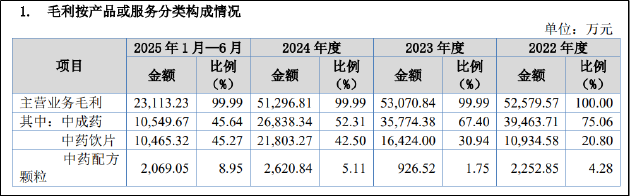
济人药业改道北交所:前次问询“已读不回”巨额推广费成谜 核心产品量价齐跌分红额却逐年走高
Xin Lang Cai Jing· 2025-12-31 07:26
Core Viewpoint - Anhui Jiren Pharmaceutical Co., Ltd. has had its IPO application accepted by the Beijing Stock Exchange, following a previous unsuccessful attempt to list on the Shanghai Stock Exchange due to unanswered inquiries [1][9]. Financial Performance - The company reported revenues of 1.025 billion yuan, 1.134 billion yuan, 1.23 billion yuan, and 837 million yuan for the years 2022 to 2025, with a decline in revenue and profit of 6.05% and 15.45% respectively in the first half of 2025 compared to the previous year [2][10]. - The revenue from traditional Chinese medicine (TCM) decoction pieces accounted for the highest proportion of income, increasing from 43.96% in 2022 to 66.61% in 2025 [2][10]. Product Dependency - The company heavily relies on its core product, the Shufeng Jiedu Capsule, which accounted for 95% of its revenue, with sales declining from 503 million yuan in 2022 to 136 million yuan in the first half of 2025 [4][12]. - The average price of the core product has also decreased, indicating a downward trend in both sales volume and pricing [4][12]. Cost Structure - The company incurred significant sales expenses, totaling 862 million yuan from 2022 to 2025, with academic promotion costs making up 72.6% of these expenses [5][13]. - Research and development (R&D) investment has been low, with only 92 million yuan spent over three and a half years, leading to a low R&D expense ratio of 2.27% in 2024 [5][13]. Ownership and Dividend Policy - The company is controlled by the family of the actual controller, Zhu Yuexin, who holds 87.06% of the shares, with the family collectively owning 99.12% [6][15]. - Despite financial pressures, the company has maintained a policy of increasing cash dividends, distributing a total of 68 million yuan over the reporting period [6][15].