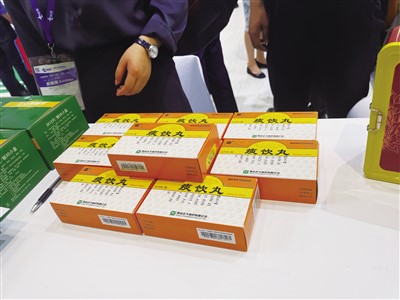
黄芪颗粒

Search documents
超75%中成药打响“保命战”
Guo Ji Jin Rong Bao· 2026-02-09 08:49
Core Viewpoint - A significant number of traditional Chinese medicine (TCM) products are at risk of being eliminated from the market due to new regulatory requirements that will take effect in July 2026, which mandate clearer safety information in product descriptions [3][10]. Industry Overview - The new regulations, effective from July 2023, require that any TCM product with unclear safety information (labeled as "unclear") will not be eligible for re-registration after July 1, 2026 [3][10]. - Approximately 75% of TCM products currently on the market have safety information marked as "unclear," which poses a substantial risk of elimination for these products [5][10]. Market Impact - The impending regulatory changes are expected to lead to a significant reshuffling of market shares within the TCM industry, as many companies may not be able to meet the new requirements [10][11]. - Notable products facing potential withdrawal include those with substantial sales figures, such as Longmu Bone Strengthening Granules, which is projected to exceed 1 billion yuan in retail sales in 2024 but has unclear safety information [7][10]. Regulatory Context - The regulatory changes aim to enhance the quality of TCM products rather than a blanket elimination of all products, allowing companies to submit additional research and safety reports to comply [10][12]. - The policy encourages companies to invest in research and development to clarify the efficacy and safety of their products, thereby improving the overall scientific standards of TCM [12][13]. Future Developments - Many leading TCM companies have already begun to prepare for compliance with the new regulations, with some having successfully updated their product safety information [14]. - The regulatory framework is expected to foster a more competitive environment, potentially benefiting companies that can adapt and innovate while disadvantaging those that cannot meet the new standards [11][12].

四川首富的百利天恒,正遭戴维斯双杀!
Xin Lang Cai Jing· 2026-02-09 06:53
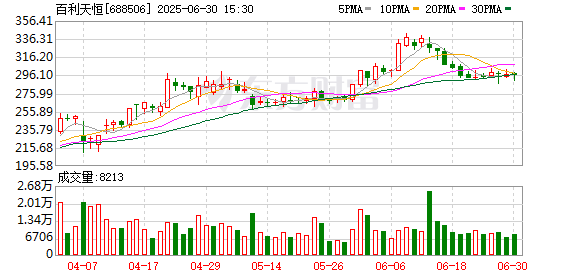
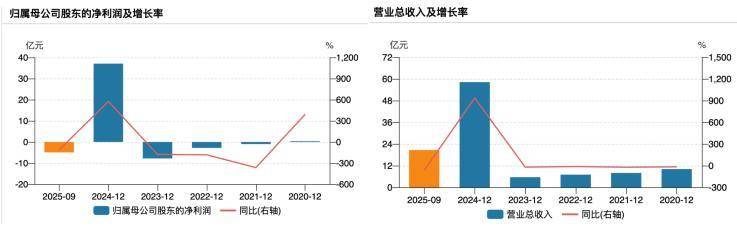
Core Viewpoint - Baili Tianheng is facing dual pressures of declining performance and stock price due to the shrinkage of its traditional business and the high costs associated with innovative drug development [3][23][25]. Group 1: Performance Fluctuations - Baili Tianheng's 2025 performance forecast indicates an expected revenue of approximately 2.5 billion yuan, a year-on-year decrease of about 57.06%, and a net profit loss of approximately 1.1 billion yuan, a decrease of about 129.67% [5][24]. - In contrast, the company reported a profit of 3.7 billion yuan in 2024, which significantly contributed to its previous financial success [5][24]. - The company's stock price has also seen a significant decline following the poor performance forecast, reflecting market concerns [25][39]. Group 2: Business Transition - The company has historically relied on chemical generic drugs and traditional Chinese medicine, but these segments are now experiencing a decline in revenue and profit margins [8][28]. - From 2022 to 2024, the revenue from chemical drug formulations decreased from 535 million yuan to 322 million yuan, with profit margins dropping from 74.92% to 52.75% [8][28]. - The innovative drug pipeline, while promising, has not yet generated significant revenue, leading to a reliance on licensing income, which was notably high at 5.332 billion yuan in 2024 [9][29]. Group 3: Financial Pressure and Funding Gaps - The company reported a net cash flow from operating activities of -1.892 billion yuan in the first three quarters of 2025, a stark contrast to the 4.059 billion yuan generated in 2024 [13][34]. - As of the end of Q3 2025, accounts receivable rose to 1.867 billion yuan, significantly higher than the 119 million yuan at the end of 2024, indicating increasing financial strain [13][34]. - Baili Tianheng anticipates a total funding gap of approximately 4.819 billion yuan from 2025 to 2027, necessitating external financing to support its operations and innovative drug development [14][36]. Group 4: Shareholder Actions and Market Confidence - A significant shareholder, OAP III (HK) Limited, announced plans to reduce its stake by up to 1% due to personal financial needs, which may impact market confidence [39]. - The stock has experienced a cumulative decline of 31% from its peak in September 2025 to February 2026, reflecting ongoing market skepticism regarding the company's future prospects [39].

三力制药20260129
2026-01-30 03:11
Summary of Sanli Pharmaceutical Conference Call Company Overview - **Company**: Sanli Pharmaceutical - **Core Products**: Kaohoujian series, particularly the pediatric version with over 80% coverage in secondary hospitals [2][4] Industry Insights - **Market Focus**: The company aims to enhance coverage in grassroots medical institutions, which could significantly boost sales if products are included in the essential drug list [2][4] - **OTC Business Development**: Sanli is focusing on developing its OTC business, segmented into respiratory and elderly care lines to meet market demands [2][6] Financial Projections - **2026 Revenue Forecast**: Expected total revenue of approximately 1.9 to 2 billion CNY, with contributions from: - Respiratory line: 1.2 to 1.3 billion CNY - Supplement line: 400 to 500 million CNY - Other product lines: 100 to 200 million CNY - **2025 Performance Outlook**: Anticipated revenue of 1.6 to 1.7 billion CNY due to low incidence of respiratory diseases and inventory pressure [3][21] Product Pipeline and R&D - **Essential Drug List Candidates**: Four products are potential candidates for the essential drug list, with the pediatric Kaohoujian having the highest probability of inclusion [4][13] - **Innovation Strategy**: The company has shifted focus from classic formulas to innovative traditional Chinese medicine, collaborating with research institutions on multiple projects expected to yield results in six to eight years [11][24] Market Strategy - **Sales Channel Expansion**: Sanli has transitioned from prescription sales to a multi-channel sales approach, including partnerships with top national chains and an emphasis on O2O (online-to-offline) retail strategies [6][18] - **Grassroots Market Potential**: The company aims to increase its market share in grassroots settings, currently at 5% to 8%, with a target of 20% to 30% for successful products [15] Competitive Landscape - **Impact of Drug List Adjustments**: Inclusion in the essential drug list could significantly enhance market penetration and prescription volumes for key products [12][14] - **Response to Price Reductions**: The company does not view price reductions from centralized procurement as detrimental, as it can reduce sales expenses to maintain profit margins [17] Operational Readiness - **Capacity and Distribution**: Preparations for the new essential drug list have been ongoing since 2018, focusing on channel development and distribution team enhancements [16] - **Integration of Acquisitions**: The integration of acquired companies is nearly complete, with a unified sales strategy across the OTC business [22] Challenges and Risks - **Inventory Management**: The company has faced inventory pressures due to low disease incidence, impacting financial performance in 2025 [20] - **Market Competition**: The company acknowledges the competitive landscape in the orthopedic and gynecological sectors, which are not yet significant revenue contributors [7] Conclusion Sanli Pharmaceutical is strategically positioned to enhance its market presence through innovative product development, expansion into grassroots healthcare, and a robust OTC strategy. The potential inclusion of key products in the essential drug list could further drive growth, despite current challenges related to inventory and market competition.

三力制药“劳模”董秘卸任,最年轻女高管上位
Sou Hu Cai Jing· 2026-01-14 01:36
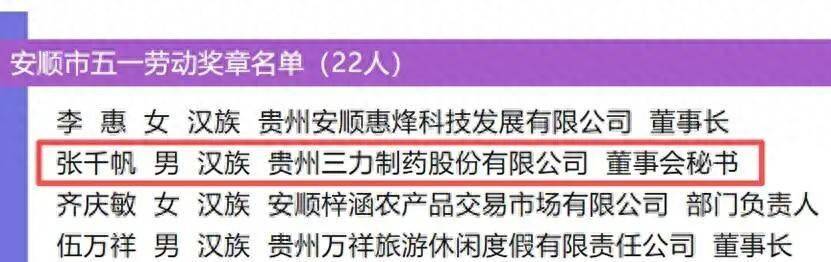
Core Viewpoint - The appointment of Ju Lingke as the new Secretary of the Board at Sanli Pharmaceutical marks a significant transition in the company's governance, as she takes over from Zhang Qianfan, who held multiple roles and is now focusing on strategic and operational aspects of the company [1][9][18]. Group 1: Leadership Transition - Ju Lingke, a 34-year-old with a master's degree, has a clear career trajectory starting from financial institutions and moving to Sanli Pharmaceutical, where she has rapidly advanced from a financial manager to the Secretary of the Board in just over two years [4][6][7]. - Zhang Qianfan, the previous Secretary, had been in the role for nearly 11 years and will continue to serve as a director and vice chairman, indicating a strategic shift to allow him to focus on broader company operations [8][9]. - The company is undergoing a critical self-adjustment phase, and Ju Lingke's role will be pivotal in managing internal operations and external communications [1][18]. Group 2: Company Profile and Performance - Sanli Pharmaceutical specializes in the research, production, and sales of traditional Chinese medicine, with key products including various herbal formulations [20]. - The company's major shareholder, Zhang Hai, holds 40.91% of the shares, indicating a strong control over the company [21]. - Recent financial performance shows a decline, with revenue of 1.038 billion yuan for the first three quarters of 2025, down 28.24% year-on-year, and a net profit of 80.79 million yuan, down 58.39% year-on-year [23]. Group 3: Regulatory and Compliance Issues - Sanli Pharmaceutical has faced regulatory challenges, including a credit rating of "general" dishonesty due to past issues involving kickbacks related to its products [23][24]. - The company has engaged in a significant transaction with Hainan University, acquiring a candidate drug for Alzheimer's disease for 200 million yuan, which is seen as a strategic move into innovative pharmaceuticals [22].
三力制药:与海南大学签署总额2亿元技术转让合同
Zhong Zheng Wang· 2025-12-22 11:53
Core Viewpoint - Sanli Pharmaceutical has signed a technology transfer contract with Hainan University for the acquisition of the compound HXW2324 and related patent application rights, aiming to enhance its innovative drug product portfolio and align with its long-term strategic goals [1] Group 1: Technology Transfer Agreement - The total transfer price for the invention patent rights or patent application rights is set at 200 million yuan, which includes a milestone payment of 20 million yuan (tax included) and a sales commission of 180 million yuan (tax included) [1] - The compound HXW2324 is a preclinical candidate for developing new treatments for Alzheimer's disease [1] Group 2: Company Background and Financials - Sanli Pharmaceutical's main business includes the research, production, and sales of pharmaceuticals, with key products such as throat spray for children, Qi Jiao Sheng Bai capsules, and others [1] - In the first three quarters of this year, the company achieved operating revenue of 1.038 billion yuan and a net profit attributable to shareholders of 81 million yuan [1]
三力制药与海南大学签署技术转让合同,拓展创新药产品布局
Zheng Quan Shi Bao Wang· 2025-12-22 10:32
Core Viewpoint - The company has signed a technology transfer contract with Hainan University to acquire the patent application rights for the HXW2324 compound, aimed at developing a new treatment for Alzheimer's disease, enhancing its innovative drug product portfolio and market competitiveness [1][2]. Group 1: Technology Transfer Agreement - The total transfer price for the patent rights is set at 200 million RMB, which includes a milestone payment of 20 million RMB and a sales commission of 180 million RMB [2]. - The initial milestone payment of 3 million RMB is contingent upon Hainan University conducting efficacy studies on the HXW2324 compound using three classic Alzheimer's disease animal models, with results needing mutual agreement for further research [2][3]. Group 2: Project Terms and Conditions - The project can be terminated by either party if deemed unnecessary, and sales commissions will be paid at a rate of 2 RMB per box (including VAT) until the total sales commission reaches 180 million RMB or five years have passed since the first commission withdrawal [3]. - The company has indicated that the contract's execution will not significantly impact its financial status or operating performance for the current year, although drug development is inherently risky and subject to various unpredictable factors [3]. Group 3: Company Strategy and Brand Image - The company has changed its stock abbreviation from "Guizhou Sanli" to "Sanli Pharmaceutical" to better reflect its main business and strengthen its brand image [4]. - The company has established a biopharmaceutical fund with a total scale of 500 million RMB, focusing on equity investment projects in biotechnology and health management, aiming to build a comprehensive investment ecosystem in the innovative drug sector [4].
四川新首富豪赌创新药:叫停港股IPO,百利天恒的“输血”与“造血”困局
Sou Hu Cai Jing· 2025-12-10 08:43
Core Viewpoint - Baili Tianheng's market value has surged from billions to trillions, making its founder Zhu Yi the richest person in Sichuan, but the company faces significant performance volatility and relies heavily on licensing income from BMS [1][6]. Group 1: Company Performance - Baili Tianheng's revenue is almost entirely dependent on licensing income from BMS, leading to a sharp decline in revenue due to a lack of new large licensing confirmations [1][6]. - The company reported a net profit of 3.708 billion yuan in 2024, ranking sixth in the pharmaceutical industry, but this was primarily due to a significant licensing deal with BMS for the drug iza-bren [6][7]. - Despite a recovery in the third quarter with a $250 million milestone payment, the company still recorded a loss of 494 million yuan in the first three quarters of the year [1][6]. Group 2: IPO and Market Strategy - Baili Tianheng has delayed its Hong Kong IPO, a rare move in the market, due to concerns about potential share price drops amid a sluggish sentiment in the biotech sector [2][3]. - The company has attempted to list on the Hong Kong Stock Exchange three times, with the latest attempt being postponed just days before the deadline [2][3]. - The expected pricing range for the H-shares is between 347.5 and 389 HKD, which is almost at par with A-shares, making it less attractive for international investors looking for arbitrage opportunities [2][3]. Group 3: Research and Development - The company has significantly increased its R&D investment, with R&D expenses reaching 746 million yuan in 2023, accounting for 132.81% of revenue [7]. - The anticipated drug iza-bren is crucial for the company's future, with expectations for it to be the first to market in China next year, potentially changing the company's reliance on licensing income [7]. - Baili Tianheng's traditional pharmaceutical business is facing challenges due to price reductions from centralized procurement, leading to declines in revenue and profit margins [7].
百利天恒“增收不增利”迷局:一次性License-out收益“撑”季报,研发困局与传统产品疲软揭示长期隐忧
Hua Xia Shi Bao· 2025-10-31 15:13
Core Viewpoint - The recent quarterly performance of the company appears to show growth, but a deeper analysis reveals that this growth is primarily supported by one-time collaboration revenue, raising concerns about the company's long-term profitability and operational status [2][5]. Financial Performance - In Q3, the company reported a revenue of 1.895 billion yuan, a year-on-year increase of 1625.08%, and a net profit of 623 million yuan, up 203.74% year-on-year [2]. - However, the cumulative revenue for the first three quarters was 2.066 billion yuan, a year-on-year decline of 63.52%, with a net profit of -495 million yuan, down 112.16% year-on-year [3]. Revenue Sources - The significant revenue increase in Q3 was largely due to a milestone payment of 250 million USD (approximately 1.895 billion yuan) from a collaboration with Bristol-Myers Squibb, categorized as a one-time license-out revenue with minimal costs [5]. - The high R&D expenses, amounting to 1.77 billion yuan in the first three quarters, accounted for 85.8% of total revenue, indicating that for every 1 yuan of revenue, 0.86 yuan was spent on R&D [5][7]. R&D Challenges - The company is facing a vicious cycle of increasing R&D investment without substantial revenue conversion, as only 3 out of 15 drugs in development have reached Phase III trials [7]. - The high proportion of R&D expenses is attributed to declining revenue rather than an increase in R&D intensity, leading to operational risks [7]. Traditional Business Struggles - The company's traditional products, such as propofol emulsion and astragalus granules, are experiencing revenue declines due to price reductions from national procurement policies and increased competition [9]. - The revenue from propofol emulsion is projected to drop from 314 million yuan in 2022 to 132 million yuan in 2024, with a corresponding decrease in gross margin from 76.77% to 32.32% [9]. - The market penetration of the company's traditional products has decreased from 18% in 2022 to 9% in 2024, facing competition from leading companies like Heng Rui Pharmaceutical and Yangtze River Pharmaceutical [9]. Operational Efficiency Issues - The company is experiencing inventory turnover issues, with inventory turnover days reaching 313.37 days, significantly higher than the industry average of 60-90 days [10]. - There has been a noticeable decline in operational efficiency, with accounts receivable turnover days increasing from 60.65 days in 2021 to 128.4 days by Q3 2025 [10].

贵州三力20251016
2025-10-16 15:11
Summary of Guizhou Sanli Conference Call Company Overview - Guizhou Sanli primarily operates in the pharmaceutical industry, focusing on both hospital and over-the-counter (OTC) sales channels. The sales distribution is approximately 60%-70% from hospital channels and 30%-40% from OTC channels [2][4]. Key Points and Arguments - **Sales Channels**: The OTC channel is currently under pressure from retail pharmacies, which may limit short-term revenue growth. However, it holds significant long-term potential as a growth driver [2][3]. - **Acquisitions**: The company has expanded its product matrix through acquisitions of subsidiaries such as Dechangxiang, Haosite, Hanfang Pharmaceutical, and Wudi Pharmaceutical. This strategy enhances market competitiveness and covers various therapeutic areas including gynecology and orthopedic conditions [2][5][10]. - **Core Product Performance**: The core product, Kaihoujian, is crucial for revenue, with significant contributions from both children’s and adult formulations. The company aims to expand its presence in the OTC market while also pushing for inclusion in the essential drug list to boost hospital sales [4][7][8]. - **Financial Performance of Subsidiaries**: - Hanfang Pharmaceutical generates approximately 300-400 million yuan in revenue with a net profit of 40-60 million yuan. - Dechangxiang has around 100 million yuan in revenue and a net profit of about 15 million yuan. - Wudi Pharmaceutical focuses on orthopedic products, with revenue between 20-30 million yuan and a net profit of 3-5 million yuan [2][9][10]. Future Growth Drivers - The future growth of Kaihoujian is expected to come from: - Expanding the children’s formulation in the OTC market. - Enhancing the adult formulation's coverage across all sales channels. - Successful inclusion in the essential drug list, which would significantly increase hospital market penetration [7][8]. Key Factors for Future Development - The ability of Kaihoujian to be included in the essential drug list is critical for increasing market share. - The development of the OTC channel, including coverage in chain pharmacies and grassroots medical institutions, is essential. - Effective integration of newly acquired subsidiaries to improve overall productivity and profitability is vital for long-term success [8][11]. Challenges - Guizhou Sanli faces significant challenges from pressure in the OTC retail sector, which is expected to limit short-term revenue and profit growth. The company must closely monitor the impact of essential drug list adjustments and the integration of acquired subsidiaries to achieve expected returns [3][11].
从盈利37亿元到亏损5.3亿元,百利天恒的“一次性收入”游戏还能玩多久
Hua Xia Shi Bao· 2025-06-30 11:19
Core Viewpoint - The company, Baili Tianheng, has faced significant volatility in its financial performance, primarily due to reliance on non-recurring income, raising concerns about the sustainability of its profit model [2][3][4]. Financial Performance - In 2024, Baili Tianheng reported a net profit of 3.7 billion yuan, a dramatic increase from a loss of 780 million yuan in the previous year, attributed to an 800 million USD upfront payment from Bristol-Myers Squibb (BMS) [2]. - However, in Q1 2025, the company's revenue plummeted by 98.77% to 67 million yuan, with a net loss of 531 million yuan, highlighting the instability of its earnings [4]. Revenue Structure - The company's revenue is primarily derived from chemical and traditional Chinese medicine preparations, with the leading product, Propofol emulsion injection, experiencing a significant decline in revenue due to national procurement policies [5][6]. - Propofol emulsion injection's revenue fell from 212 million yuan in 2023 to 132 million yuan in 2024, a decrease of approximately 38% [6][7]. Market Competition - The company faces increasing competition in the pharmaceutical market, particularly from new drugs like Remimazolam, which offers superior efficacy and lower side effects compared to Propofol [8]. - The traditional Chinese medicine segment has remained relatively stable, but rising raw material costs have pressured profit margins [8]. Research and Development - Baili Tianheng's R&D investment as a percentage of revenue has been low, with figures of 53.32%, 132.81%, and 24.78% from 2022 to 2024, indicating a lack of commitment to innovation compared to industry peers [10][11]. - The average R&D expenditure ratio for comparable companies in 2024 was 53%, suggesting that Baili Tianheng is significantly lagging behind [11]. Challenges Ahead - The company is grappling with multiple challenges, including severe earnings volatility, declining traditional business, and insufficient innovation, raising questions about its future sustainability [12].