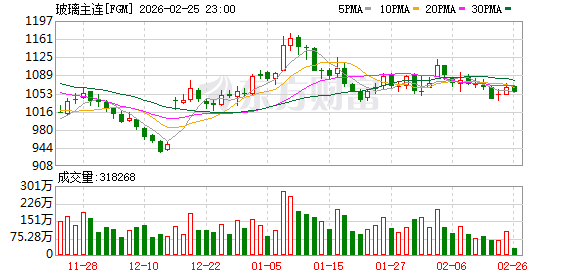
中游库存消化

Search documents
春节假期玻璃企业密集提价,原因为何?
Qi Huo Ri Bao· 2026-02-26 00:31
Core Viewpoint - The glass industry is experiencing a wave of price increases driven by supply-side constraints and market sentiment, despite being in a traditional off-peak season for demand [1][3]. Group 1: Price Increase Dynamics - Multiple mainstream glass companies have raised factory prices by 20 to 40 yuan per ton since the end of the Spring Festival holiday, indicating a strong industry signal [1]. - The price increase is primarily driven by supply-side shrinkage expectations, with production lines being shut down due to ongoing industry losses and concerns over concentrated production halts in Hubei [1][2]. - The glass industry's demand typically fluctuates seasonally, with January and February being the weakest months; however, recent supply reductions have provided some support for current prices [1][2]. Group 2: Regional Price Variations - Price increases are not uniform across regions; Hebei's glass producers are cautious due to high midstream inventory levels, while Hubei's producers are more aggressive in raising prices due to environmental regulations and anticipated supply reductions [2]. - Non-core regions like East and South China are maintaining stable prices, focusing on inventory digestion rather than following the price hikes [2]. Group 3: Market Outlook and Risks - Industry experts express skepticism about the sustainability of the recent price increases, citing unresolved demand issues and potential supply recovery as key factors that could lead to price corrections post-holiday [3][4]. - Analysts predict that the market may revert to fundamental-driven pricing after an initial post-holiday price increase, with high inventory levels and weak downstream demand posing risks to sustained price growth [4][5]. - The future trajectory of glass prices will depend on the realization of supply-side shrinkage and the speed of inventory digestion in the midstream sector [6][7].
春节假期玻璃企业密集提价 几个意思?
Qi Huo Ri Bao· 2026-02-26 00:25
Core Viewpoint - The glass industry is experiencing a price increase driven by supply-side constraints and market sentiment, despite being in a traditional off-peak season for demand [2][4]. Group 1: Price Increase Dynamics - Multiple mainstream glass companies have raised factory prices by 20 to 40 yuan per ton since the end of the holiday, indicating a strong industry signal [2]. - The price increase is primarily driven by expectations of supply contraction due to ongoing industry losses leading to production line repairs and a significant drop in daily melting capacity to a near five-year low [2][4]. - The glass industry typically sees seasonal demand fluctuations, with January and February being the weakest months; however, recent supply reductions have provided some support for current prices [3][4]. Group 2: Regional Price Variations - Price increases are not uniform across regions; Hebei's glass producers are cautious due to high midstream inventory levels, while Hubei's producers are more aggressive in raising prices due to environmental regulations and anticipated supply reductions [3]. - Non-core regions like East and South China are maintaining stable prices, focusing on inventory management rather than following the price increase trend [3]. Group 3: Future Market Outlook - Industry experts express skepticism about the sustainability of the recent price increases, citing potential demand recovery issues and high inventory levels that could lead to price corrections post-holiday [4][5]. - The market is currently in a recovery phase, but uncertainties remain regarding the actual demand from downstream processing plants and the pace of inventory digestion [5][6]. - Key factors influencing future price movements include the realization of supply-side contraction, the speed of inventory clearance, and the recovery of downstream operations [6].