中美稀土争端

Search documents
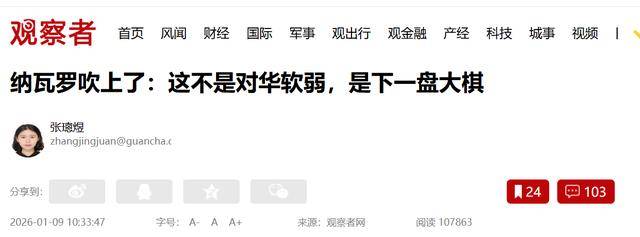
特朗普顾问摊牌:美国在用时间换稀土,目的是废除中国稀土王牌
Sou Hu Cai Jing· 2026-01-11 02:42
Group 1 - The core viewpoint is that the U.S. is strategically engaging with China regarding rare earths to buy time while working on alternative supply chains and innovations to reduce dependency on China [1][3] - Navarro's comments suggest that the U.S. is not genuinely softening its stance but is instead using diplomacy to stabilize rare earth supplies from China while preparing to break free from this reliance [3][5] - The U.S. is facing a significant challenge as it currently imports 75% of its rare earths from China, and rebuilding a domestic supply chain could take at least 15 years and require substantial financial investment [8][10] Group 2 - The U.S. is attempting to form a coalition with allies to create a supply chain that does not rely on China, indicating a shift towards international collaboration in rare earth sourcing [11][13] - Despite these efforts, the U.S. remains heavily dependent on Chinese supplies, and any disruption could severely impact its industries [13][16] - China's recent price increases for rare earths signal its awareness of the geopolitical dynamics and its control over the market, reinforcing its strategic position [16][18] Group 3 - The competition over rare earths is not just a resource battle but also encompasses technology and strategic positioning, highlighting the complexity of U.S.-China relations [18] - Both countries are in a state of interdependence, where U.S. high-tech industries rely on Chinese supply chains, while China needs Western technology for its industrial upgrades [18]