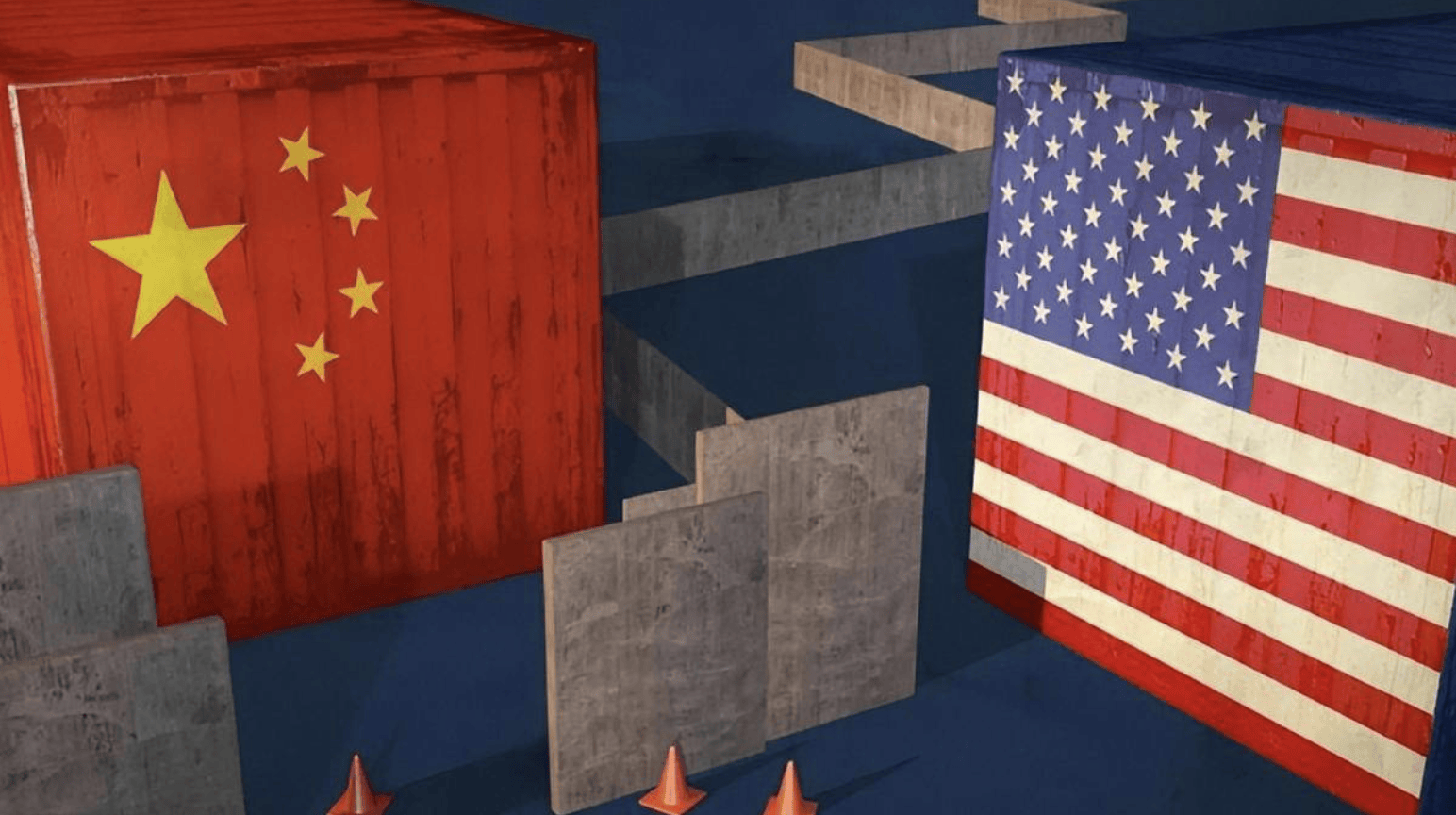
中美芯片博弈

Search documents
短短24小时,特朗普计划加征新税,给中方18个月期限,中方全球发声
Sou Hu Cai Jing· 2025-12-27 23:37
Group 1 - The U.S. government announced a 0% tariff on Chinese semiconductors, delaying actual tariffs until June 2027, indicating a political maneuver rather than a genuine trade war escalation [1][3][5] - The U.S. is concerned about rising inflation and the impact of tariffs on domestic industries reliant on Chinese chips, particularly in the automotive and electronics sectors [3][12] - The announcement reflects a strategy of "strategic ambiguity," aiming to project strength domestically while avoiding direct conflict with China [5][12] Group 2 - China's strong response is backed by significant trade surpluses, with a record surplus exceeding $1 trillion in the first 11 months of 2025, undermining U.S. expectations of reshaping trade dynamics through tariffs [7][15] - China has made substantial progress in semiconductor self-sufficiency, increasing its self-sufficiency rate from 15% in 2018 to 26% in 2023, particularly in mature process chips [9][13] - U.S. tech companies face a dilemma, needing to balance government restrictions with the necessity of the Chinese market, as evidenced by NVIDIA's recent licensing situation [11][12] Group 3 - The ongoing chip competition has exposed fractures in U.S. alliance strategies, with countries like South Korea receiving exemptions to continue expanding in China [13] - China's advancements in semiconductor technology, including the development of the RISC-V architecture and competitive pricing in silicon wafers, position it favorably in the global market [13][15] - China's export diversification strategy has reduced its reliance on the U.S. market, with exports to the U.S. now accounting for only 14.7% of total exports, enhancing its resilience in trade negotiations [15]

美国不愿看到的情况出现了!比尔盖茨一语中的?中国不再依赖美芯
Sou Hu Cai Jing· 2025-09-29 05:21
Core Viewpoint - The article discusses the ongoing technological and economic competition between the U.S. and China, particularly focusing on the semiconductor industry, highlighting how U.S. restrictions have inadvertently accelerated China's technological advancements [1][5][12]. Group 1: U.S.-China Semiconductor Competition - The technological rivalry between the U.S. and China began in 2018, centered around semiconductors, which are crucial for national security and various consumer technologies [3]. - U.S. actions, including export restrictions on semiconductor technology, are seen as counterproductive, potentially harming the U.S. semiconductor industry more than benefiting it [5][12]. - The U.S. restrictions have led to a significant increase in China's focus on self-reliance in semiconductor technology, with a reported self-sufficiency rate of nearly 70% in mature chips [10]. Group 2: Impact of U.S. Restrictions - Prominent figures like Bill Gates have warned that U.S. efforts to contain China could backfire, igniting innovation within China's semiconductor sector [5][8]. - Despite initial setbacks from U.S. restrictions, Chinese companies like Huawei have made significant strides in developing their own technologies, including the Kirin chip and Harmony OS [10]. - The market share of U.S. companies in China has declined, with Nvidia reportedly losing 10% of its market share and over $10 billion in revenue due to export restrictions [12]. Group 3: Future Outlook - The article suggests that the current challenges faced by Chinese tech companies will eventually lead to a brighter future, as they continue to innovate and reduce dependency on U.S. technology [12]. - China's advancements in AI and semiconductor technology are closing the gap with U.S. companies, indicating a shift in the global tech landscape [8].