中证5000指数

Search documents
期指 调整或是买入时机
Qi Huo Ri Bao· 2025-11-25 07:15
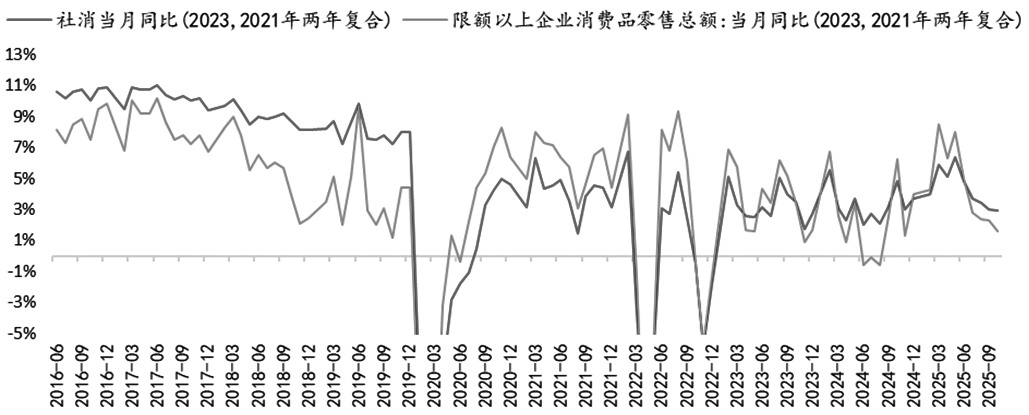
Group 1 - The A-share market has recently experienced significant adjustments due to three main reasons: a decline in domestic economic data from September to October, a stronger US dollar index affecting market risk appetite, and year-end pressures leading to a slowdown in capital inflow [1][5][6] - Economic data for October shows a continued weakening trend, with industrial value-added growth at 4.9%, retail sales down by 0.1 percentage points to 2.9%, and a decline in manufacturing investment growth [5][6] - The People's Bank of China (PBOC) has indicated that the most significant pressure points for the economy have likely passed, suggesting a lower probability of interest rate cuts in the fourth quarter, with more substantial easing measures expected in early 2026 [5][6][10] Group 2 - The US Federal Reserve's shifting expectations regarding interest rate cuts have created confusion in the market, with the dollar index rising, which has negatively impacted the Hong Kong stock market and indirectly affected A-shares [6][10] - A-share financing has seen a slight net outflow, with the total financing amount decreasing from 2.48 trillion yuan to 2.47 trillion yuan, although the proportion of financing balance to A-share market capitalization has increased [7] - The investment strategy for November and December is expected to focus on individual stocks rather than indices, with an emphasis on sectors with strong fundamentals and high dividend yields [8][10] Group 3 - Long-term projections for the A-share market in 2026 suggest a bullish outlook, with the CSI 300 index expected to rise by 15% to 22%, supported by both liquidity injections and improving fundamentals [10] - The anticipated nominal growth rate in 2026, despite a potential decline in actual GDP growth, is expected to drive earnings growth for the CSI 300 index by 5% to 6% [10]