
主机战争

Search documents
拳打索尼,脚踢微软:Steam 游戏机发布,主机战争进入下半场?
3 6 Ke· 2025-11-13 09:01
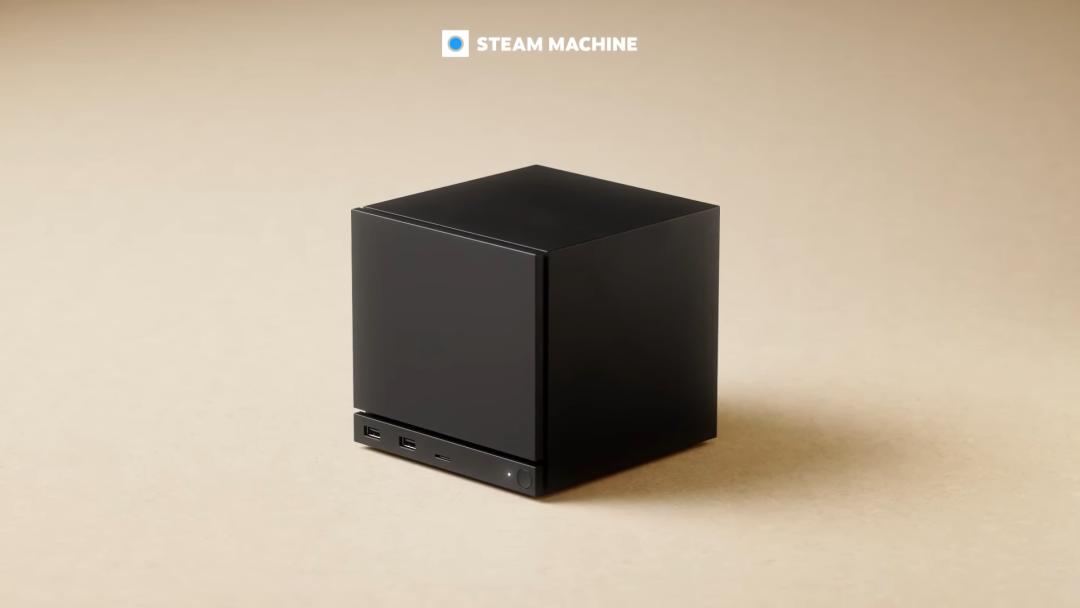
Core Viewpoint - Valve has re-entered the gaming hardware market with the new Steam Machine, which is expected to compete effectively against existing consoles like the PS5, despite its smaller size and lower power consumption [1][25]. Group 1: Product Overview - The new Steam Machine is a compact gaming console built on AMD architecture, available in two storage options: 512GB and 2TB [6][10]. - It features a 6-core, 12-thread AMD Zen 4 processor and an AMD RDNA3 GPU with 28 compute units, along with 16GB of DDR5 RAM and 8GB of GDDR6 VRAM [8][10]. - The Steam Machine has a thermal design power (TDP) of approximately 110W, making it an energy-efficient option [9][10]. Group 2: Market Positioning - Valve aims to bridge the gap between PC and console gaming by allowing the Steam Machine to run all Steam games, thus eliminating the need for separate devices for PC and console gaming [19][25]. - The pricing strategy suggests that the Steam Machine will be competitively priced compared to similar PC configurations, with expectations of a price range between $700 and $1000 [25]. Group 3: Competitive Landscape - The introduction of the Steam Machine signifies a shift in the gaming industry, where the focus is moving from exclusive console content to a broader PC gaming ecosystem [25][42]. - Valve's strategy reflects a growing trend where game sales are prioritized over hardware sales, indicating a potential end to traditional console wars [25][42]. Group 4: Additional Hardware - Alongside the Steam Machine, Valve introduced the Steam Frame, a lightweight wireless VR headset designed for game streaming, and a new Steam Controller with enhanced durability and functionality [26][28][39]. - The Steam Frame features advanced streaming capabilities and is expected to be priced below $999, with a release planned for 2026 [31][41].

游戏的后主机时代
Jing Ji Guan Cha Wang· 2025-06-13 15:10
Core Insights - Nintendo's new console, Switch 2, is set to launch on June 5, 2025, marking a significant moment in the gaming industry as it transitions into a "post-console war" era [1][6][20] - The company aims to leverage its strong IPs and family-oriented gaming experiences to maintain its market position and attract new users [3][5][15] Product Launch and Financial Expectations - Nintendo plans to sell 15 million units of Switch 2 in the fiscal year 2025, projecting a 13% increase in operating profit to 320 billion yen [2] - The new console is priced at $449.99, reflecting hardware upgrades and increased production costs compared to the original Switch [2][5] Game Content Strategy - Nintendo is focusing on a strong launch lineup, including new titles from popular franchises like Mario and Zelda, to ensure a successful debut for Switch 2 [3][16] - The company is also emphasizing cross-generational gaming experiences, allowing existing Switch users to access their game libraries on the new console [15][16] Industry Positioning and Competitive Landscape - The gaming industry is witnessing a shift from traditional hardware competition to a focus on ecosystem richness and user engagement [20][22] - Nintendo's strategy diverges from competitors Sony and Microsoft, who are heavily invested in high-performance hardware and third-party game exclusives [7][10][12] Future Directions and Innovations - Nintendo is exploring new revenue streams beyond hardware sales, including movies, theme parks, and merchandise, which have shown significant growth [17][18] - The company is cautiously entering subscription services and cloud gaming, indicating a willingness to adapt to changing market trends [19][20]
