主题交易策略

Search documents
经历三年AI狂热后,华尔街开始审慎评估盈利能力
Huan Qiu Wang· 2026-01-04 01:23
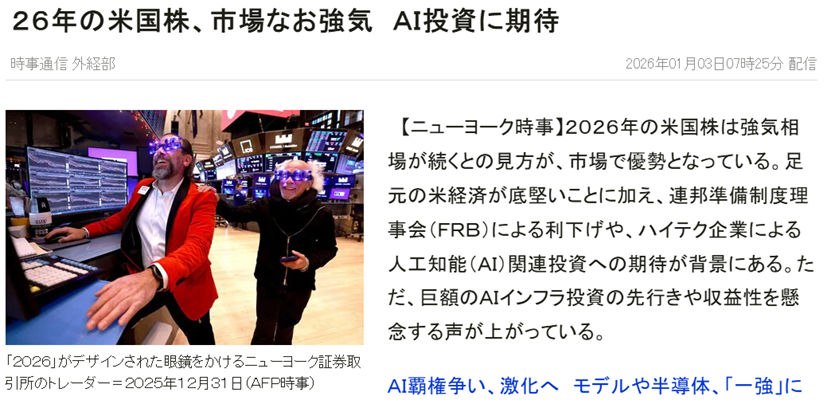
Group 1 - Goldman Sachs' trading division is shifting its focus for 2026 U.S. stock investments from infrastructure to actual productivity enhancement through AI applications [1] - The three main trading strategies identified by Goldman Sachs include going long on companies using AI to enhance productivity, going short on discretionary consumer goods companies targeting low-income groups, and a pair trade of going long on quality AI stocks while shorting weak AI stocks [1] - Analysts suggest that this shift reflects a more cautious market assessment of which companies can truly convert AI technology into profitability after three years of AI enthusiasm [1] Group 2 - The general consensus in the market is that the U.S. stock market will continue to strengthen in 2026, supported by a robust U.S. economy, anticipated interest rate cuts by the Federal Reserve, and expectations for corporate investments in AI [1] - Concerns are emerging regarding the profitability and prospects of massive investments in AI infrastructure, which may impact market sentiment [1] - Analysts in Japan express uncertainty about whether AI can deliver returns that match the substantial investments made, emphasizing the importance of companies securing ongoing funding for investments [3] Group 3 - Major U.S. tech unicorns, including SpaceX, OpenAI, and Anthropic, are preparing for IPOs, potentially starting in 2026, with SpaceX currently valued at $800 billion and OpenAI at $500 billion, aiming for a new funding round with a target valuation of $750 billion or higher [3] - Anthropic is also in discussions for a new funding round with a target valuation exceeding $300 billion [3]