
义

Search documents
公道与民心方为太平底色
Xin Lang Cai Jing· 2026-02-12 23:44
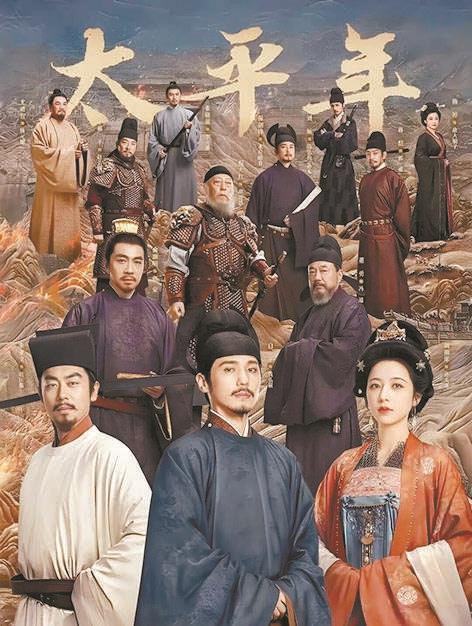
Core Viewpoint - The historical drama "Tai Ping Nian" is noted for its high fidelity to historical events, focusing on the chaotic period of the Five Dynasties and Ten Kingdoms, highlighting the brutality and moral decay of the era [2][3]. Group 1: Historical Context - The series depicts the fragmentation of power following the fall of the Tang Dynasty, showcasing various factions vying for control, with the throne changing hands frequently, reflecting a time where might dictated legitimacy [2][3]. - The narrative illustrates the abandonment of Confucian values such as "benevolence and righteousness," replaced by a harsh reality where power becomes the only law [2][4]. Group 2: Power Dynamics - The show emphasizes the necessity of power in restoring order during the collapse of the old regime, with scenes depicting the brutal enforcement of discipline within the military and the management of famine-stricken populations [3][4]. - It highlights the use of severe measures to maintain order, as seen when leaders resort to executions to quell unrest, indicating that without such authority, stability would be unattainable [3][4]. Group 3: Justice and Morality - The drama presents a critique of the misuse of laws as tools for power struggles, suggesting that regulations should not merely serve the interests of the powerful but should embody inherent justice [6][7]. - Characters like Feng Dao and Shen Wenqi exemplify loyalty and righteousness, standing out in a time when such virtues are rare, underscoring the moral dilemmas faced in a lawless society [6][7]. Group 4: The Role of "Yi" (Righteousness) - The concept of "Yi" is portrayed as essential, representing loyalty and integrity, which are crucial in a chaotic environment where many abandon these principles for survival [6][7]. - The series argues that true justice requires a moral foundation behind laws, advocating for a system where rewards and punishments are justly administered, rather than based on personal whims [7].

东西问丨余德烁:为何说儒学是当代世界不可忽视的思想智慧?
Xin Lang Cai Jing· 2026-01-16 11:54
Core Perspective - Confucianism, as a significant ancient Chinese philosophy, has maintained its relevance over thousands of years, shaping Chinese culture and increasingly demonstrating its contemporary value and global significance in the context of ecological crises and ethical vacuums [3][4]. Group 1: Confucian Values - The core values of Confucianism are encapsulated in the five constants: benevolence (仁), righteousness (义), propriety (礼), wisdom (智), and trustworthiness (信) [4]. - Confucianism emphasizes ethical practice and social participation, advocating for personal moral cultivation to promote harmony in families, societies, and nations [4][5]. Group 2: Contemporary Relevance - In modern society, Confucianism's emphasis on benevolence in governance is seen as a necessary moral remedy, urging that governance should prioritize human-centric approaches and compassion [5]. - The rise of utilitarianism in contemporary values often sacrifices moral and emotional aspects, leading to social alienation, which Confucianism addresses by promoting a more humane path [7]. Group 3: East-West Comparative Insights - Confucianism contrasts with Western individualism by emphasizing collective ethics and hierarchical relationships, providing a more compassionate alternative to the efficiency-driven mindset prevalent in modern society [7][10]. - The Confucian principle of governance by virtue suggests that moral character and leadership are essential for effective governance, offering a valuable perspective amidst global political trust crises [7][10]. Group 4: Global Civilization Dialogue - Confucianism's concepts of harmony and coexistence can contribute to resolving conflicts between civilizations, advocating for mutual respect and cultural inclusivity [9][10]. - The philosophy encourages a balance between individual freedom and social responsibility, addressing issues of social fragmentation and spiritual loneliness in some Western societies [10]. Group 5: Future Directions - Promoting successful cross-civilization cooperation, such as Confucianism's "harmony in diversity," can provide shared wisdom for contemporary global governance challenges [12][13]. - The future of human civilization should focus on the integration of technological advancement with moral development, fostering a multi-faceted coexistence of diverse cultures [13].
子路与宁武子:《论语》里的两种从政典范
Xin Lang Cai Jing· 2025-12-19 19:25
Core Viewpoint - The article discusses the Confucian perspective on the political conduct of scholars, emphasizing the importance of moral responsibility and the wisdom of choosing when to serve or withdraw from political life [1][5]. Group 1: Confucian Political Philosophy - The Confucian ideal suggests that scholars should serve when the world is just and withdraw when it is not, reflecting a strong sense of social responsibility [1][5]. - The concept of "义" (righteousness) is central to Confucian thought, indicating that serving in government is a moral obligation, even in the face of adversity [3][8]. Group 2: Character Analysis of Key Figures - Zilu is portrayed as a model of bravery and integrity, yet his inflexibility is criticized by Confucius, who believes he is not suited for political office [2][4]. - Ning Wuzi, in contrast, is praised for his ability to adapt to circumstances, demonstrating wisdom in both action and restraint during times of national crisis [4][5]. Group 3: Practical Wisdom in Governance - The article highlights the importance of practical wisdom in governance, suggesting that true righteousness involves understanding the context and making appropriate decisions [6][8]. - Confucius's teachings advocate for a balanced approach to governance, where one should act according to the situation, embodying the principle of "义" in a practical manner [8].