
二十八星宿

Search documents
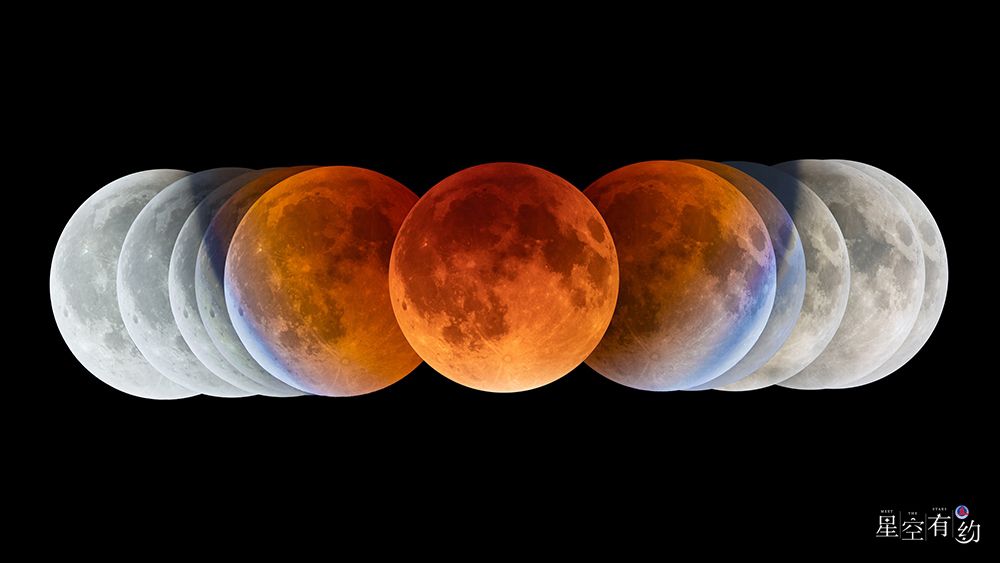
星空有约丨元宵“红月亮”、年度最小下弦月将亮相3月天宇
Xin Hua She· 2026-02-27 07:45
Core Viewpoint - The March astronomical events feature a significant total lunar eclipse on the Lantern Festival, enhancing the romantic atmosphere with the combination of "lanterns" and the "red moon" [2]. Group 1: Lunar Events - The total lunar eclipse, referred to as the "red moon," will occur on March 3 during the Lantern Festival, lasting approximately 1 hour and visible across the country [2]. - On March 2, a lunar occultation of the star Xuanyuan 14 will take place, marking the last opportunity for the public to see this event with the naked eye in the next nine years [2]. - The largest waxing crescent moon of the year appeared on February 24, with the smallest waning crescent moon set to be visible on March 11 [4]. Group 2: Cultural Significance - March 20 marks the "Dragon Raises Its Head" festival, where the star Aldebaran will rise from the eastern horizon, symbolizing the awakening of the dragon [4]. - The ancient Chinese divided the night sky into twenty-eight lunar mansions, with the eastern dragon representing a significant cultural symbol [6]. Group 3: Additional Astronomical Events - On March 20, if the weather permits, the public can witness the beautiful "star and moon fairy tale" with Venus accompanying the moon [6]. - On March 23, the crescent moon will be seen alongside the Pleiades star cluster, providing an opportunity for public observation [9]. - On March 26, Jupiter will be in close proximity to the moon, offering a clear view of this "star-moon dialogue" [9].

如果文物会说话丨AI复活700多年前的“星宿天团”
Xin Hua She· 2025-10-19 10:38
Core Viewpoint - The article highlights the significance of the Yuhuang Temple in Shanxi's Jincheng as a national key cultural relic protection unit and its role as a key filming location for the game "Black Myth: Wukong" [2]. Group 1: Cultural Significance - The Yuhuang Temple features numerous colorful sculptures related to celestial phenomena, serving as a "planetarium" of ancient Chinese sculpture [2]. - The most notable aspect is the sculpture of the 28 lunar mansions, which has a history of at least 700 years [2]. - In ancient Chinese astronomy, the stars along the ecliptic and near the equator were divided into 28 parts, collectively known as the 28 mansions, with each direction (East, South, West, North) containing seven mansions [2]. Group 2: Modern Engagement - The 28 lunar mansions are being brought into the modern era through live streaming, allowing discussions about ancient astronomy [2].
星空有约|端午夜12点可赏“飞龙在天”
Xin Hua She· 2025-05-29 04:31
Core Viewpoint - The article discusses the astronomical event of the "Flying Dragon in the Sky" that coincides with the Dragon Boat Festival, highlighting the visibility of the seven stars of the Eastern Dragon constellation and their significance in Chinese astronomy [1][2]. Group 1: Astronomical Event Details - The "Dragon Head" star, Jiao, will rise to the southern zenith around 9 PM on the evening of the Dragon Boat Festival, with the entire "Dragon" constellation becoming visible around midnight [1][2]. - Compared to last year, the date of the Dragon Boat Festival is 11 days earlier this year, resulting in a later appearance of the "Flying Dragon in the Sky" by approximately 40 minutes [2]. - The visibility of the "Dragon" constellation is not limited to the Dragon Boat Festival night; it can be observed in different positions throughout the summer [2]. Group 2: Historical and Cultural Context - The seven stars of the Eastern Dragon represent different parts of the dragon, with each star symbolizing a specific body part, creating a vivid image of a dragon [1]. - The ancient Chinese recorded the "Flying Dragon in the Sky" phenomenon during the Dragon Boat Festival, which is influenced by the precession of the equinoxes and the Gregorian calendar [1].