
天象

Search documents
星空有约丨元宵“红月亮”、年度最小下弦月将亮相3月天宇
Xin Hua She· 2026-02-27 07:45
Core Viewpoint - The March astronomical events feature a significant total lunar eclipse on the Lantern Festival, enhancing the romantic atmosphere with the combination of "lanterns" and the "red moon" [2]. Group 1: Lunar Events - The total lunar eclipse, referred to as the "red moon," will occur on March 3 during the Lantern Festival, lasting approximately 1 hour and visible across the country [2]. - On March 2, a lunar occultation of the star Xuanyuan 14 will take place, marking the last opportunity for the public to see this event with the naked eye in the next nine years [2]. - The largest waxing crescent moon of the year appeared on February 24, with the smallest waning crescent moon set to be visible on March 11 [4]. Group 2: Cultural Significance - March 20 marks the "Dragon Raises Its Head" festival, where the star Aldebaran will rise from the eastern horizon, symbolizing the awakening of the dragon [4]. - The ancient Chinese divided the night sky into twenty-eight lunar mansions, with the eastern dragon representing a significant cultural symbol [6]. Group 3: Additional Astronomical Events - On March 20, if the weather permits, the public can witness the beautiful "star and moon fairy tale" with Venus accompanying the moon [6]. - On March 23, the crescent moon will be seen alongside the Pleiades star cluster, providing an opportunity for public observation [9]. - On March 26, Jupiter will be in close proximity to the moon, offering a clear view of this "star-moon dialogue" [9].

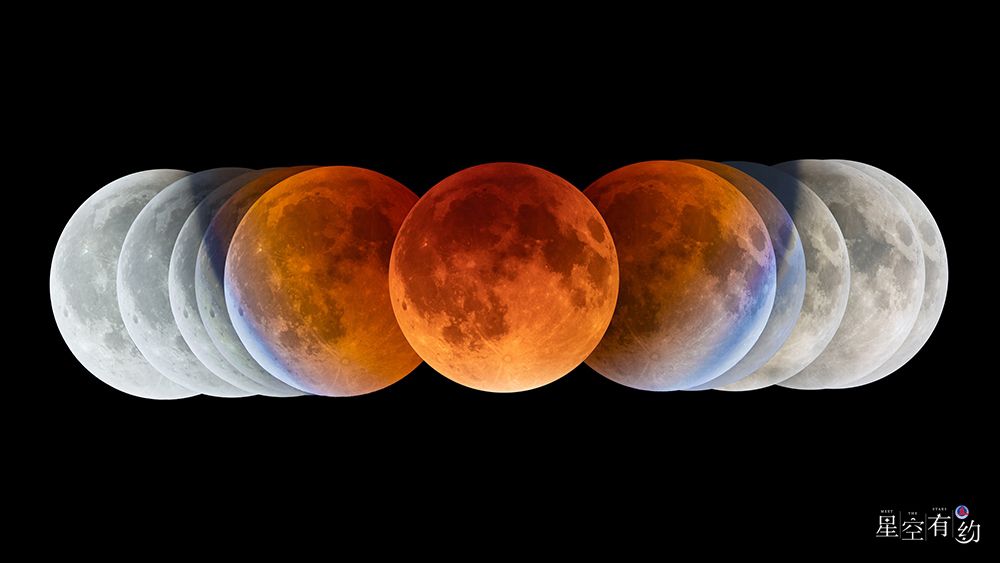
星空有约|元宵“红月亮”、年度最小下弦月将亮相3月天宇
Xin Hua She· 2026-02-27 06:20
Core Viewpoint - The article highlights the astronomical events occurring in March, particularly the total lunar eclipse on the Lantern Festival, which is expected to be a significant spectacle for the public to enjoy [3]. Group 1: Lunar Events - The total lunar eclipse, referred to as the "red moon," will be visible for about one hour on March 3, coinciding with the Lantern Festival, making it a romantic occasion [3]. - On March 2, a lunar occultation of the star Xuanyuan XIV will take place, marking the last visible occurrence of this event in the next nine years [3]. Group 2: Other Astronomical Phenomena - The largest first quarter moon of the year will appear on February 24, followed by the smallest last quarter moon on March 11 [6]. - On March 20, the "Dragon Raises Its Head" event will occur, where the star Aldebaran will rise, resembling a dragon awakening [6][7]. - A beautiful "star-moon fairy tale" featuring Venus and the moon will be visible on the evening of March 20, with improved observation conditions as Venus transitions to an evening star [7]. Group 3: Additional Observations - On March 23, the crescent moon will accompany the Pleiades star cluster, providing an opportunity for public observation [11]. - On March 26, Jupiter will be in close proximity to the moon, offering a clear view of this "star-moon dialogue" [11].
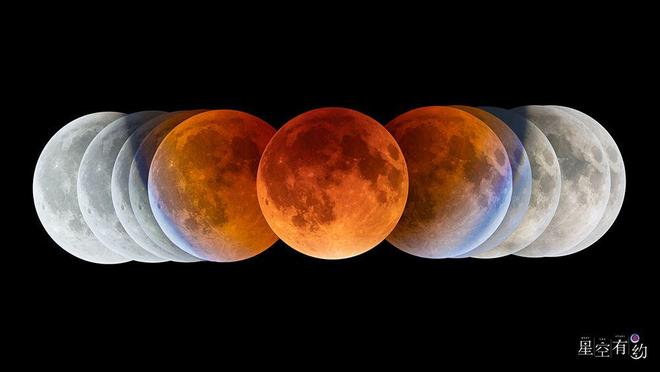
木星冲日+流星雨领衔!一起打开2026年天象剧场丨1月追星日历
Xin Lang Cai Jing· 2025-12-31 06:33
Group 1 - The article highlights the astronomical events occurring in January 2026, including significant celestial phenomena such as the Quadrantids meteor shower, conjunctions of Jupiter and the Moon, and the opposition of Jupiter [2][3][4][5]. - The Quadrantids meteor shower on January 4 is noted for its high activity but will be adversely affected by moonlight due to the full moon [2]. - The highlight of the month is the Jupiter opposition on January 10, where Jupiter will be at its brightest, making it an ideal time for observation and photography [3]. Group 2 - On January 23, Saturn will be in conjunction with the Moon, providing a visually appealing event, although Saturn's rings may not be prominently visible this year [4]. - The month concludes with Jupiter accompanying the Moon on January 31, offering a more accessible viewing opportunity for stargazers [5]. - The article encourages social gatherings under the night sky to celebrate the new year and make wishes, emphasizing the beauty and wonder of the universe [5].

星空有约|2026年1月天象看点前瞻:超级月亮现身 木星冲日登场
Xin Hua She· 2025-12-30 07:40
Group 1 - The first astronomical event of 2026 is the "Supermoon" occurring on January 3, where the moon will appear in its most perfect round shape at 18:03 [1] - The Quadrantids meteor shower, one of the three major meteor showers in the Northern Hemisphere, will peak on January 4, characterized by medium-speed meteors and bright fireballs [1] - Observing the meteor shower may be challenging due to the bright moonlight from the full moon occurring simultaneously, making it less favorable for general public viewing [1] Group 2 - A lunar occultation of the star Xuanyuan 14 will take place on the night of January 6 to the early morning of January 7, visible in most northern regions of China [2] - Jupiter will reach opposition on January 10, becoming exceptionally bright at magnitude -2.7, making it easily visible to the naked eye [2] - Following the opposition, Jupiter will be accompanied by a nearly full moon at the end of January, creating a visually stunning "star-moon fairy tale" in the night sky [2]
10月30日新闻夜览
Sou Hu Cai Jing· 2025-10-30 12:25
Group 1 - The Ministry of Commerce emphasizes the importance of the results from economic and trade consultations with the U.S. and expresses hope for effective implementation to enhance certainty and stability in China-U.S. economic cooperation and the global economy [1] Group 2 - The Central Commission for Discipline Inspection has publicly reported two typical issues related to reducing formalism and alleviating burdens on grassroots levels [2] Group 3 - In the first three quarters, revenue from large-scale cultural enterprises in China grew by 7.9%, driven significantly by the cultural service industry and the rapid development of new cultural business formats [7] Group 4 - A report indicates that China's share of globally recognized "hot" papers has surpassed 50%, reaching 53.2%, maintaining the top position worldwide, while the number of highly cited papers ranks second globally, with a narrowing gap with the U.S. [8] Group 5 - The Shenzhou-20 mission is expected to set a new record for the longest duration of a Chinese astronaut crew in space, currently at 188 days, with smooth progress reported for the mission [11] Group 6 - A research team from the Nanjing Institute of Geology and Palaeontology has discovered a complex three-dimensional animal burrow fossil dating back approximately 550 million years, marking it as one of the oldest known complex animal cave fossils [14] Group 7 - The Federal Reserve has lowered the federal funds rate target range by 25 basis points to between 3.75% and 4.00%, with Chairman Powell indicating that further rate cuts in December are not guaranteed, amidst increasing internal divisions and uncertainties in economic data [21]

星空有约|金木极近、英仙座流星雨极大等天象将在8月“上线”
Xin Hua She· 2025-07-29 04:36
Group 1 - The August "Starry Sky Theater" program features significant astronomical events, including the smallest first quarter moon and the largest last quarter moon of the year, as well as a close encounter between Venus and Jupiter, the Perseid meteor shower, and the best observation conditions for Mercury's western elongation [1][2] - The smallest first quarter moon will occur on August 1 at 20:41, while the largest last quarter moon will take place on August 16 at 13:12, providing opportunities for public observation [1] - On August 12, Venus and Jupiter will come within less than 1 degree of each other, creating a rare close encounter, with the best viewing time being one hour before sunrise [1][2] Group 2 - The peak of the Perseid meteor shower is expected on the night of August 12 to the early morning of August 13, although bright moonlight may hinder visibility [2] - Mercury will reach its best western elongation on August 19, with this being the best observation opportunity of the year, allowing the public to potentially see the planet with the naked eye or binoculars [2] - Additional noteworthy celestial events in August include Saturn's conjunction with Neptune, the opposition of asteroid 2 (Juno), lunar occultation of the Pleiades, and Mars' conjunction with the moon [2]