
二氧化碳封存

Search documents
西北地区最大的新疆油田累计注入二氧化碳突破200万吨
Xin Lang Cai Jing· 2025-11-17 11:08
Core Viewpoint - The largest carbon capture and storage project in Northwest China, located in the Xinjiang oilfield, has successfully injected over 2 million tons of carbon dioxide, marking significant progress in large-scale carbon storage in high-emission areas and promoting oil and gas production alongside green low-carbon development [1] Group 1 - The Xinjiang oilfield is recognized as the largest in Northwest China [1] - The project has achieved a cumulative injection of over 2 million tons of carbon dioxide [1] - This initiative is part of China's efforts to advance large-scale carbon storage in regions with high carbon emissions [1] Group 2 - The project aims to enhance oil and gas production while supporting green low-carbon development [1] - The achievement signifies an important milestone in China's environmental and energy strategy [1]

封碳破亿方
Zhong Guo Zi Ran Zi Yuan Bao· 2025-09-15 08:11
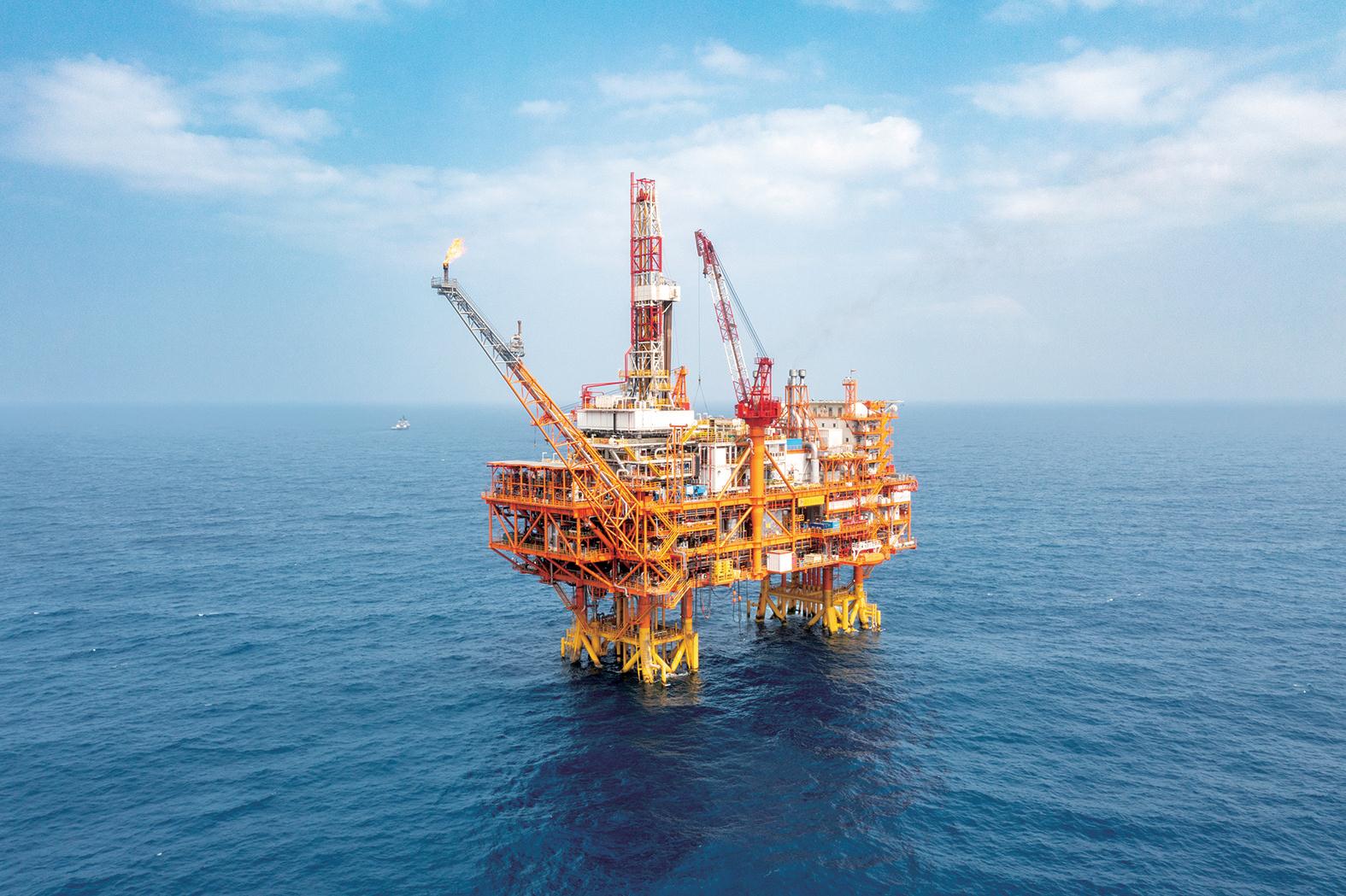
Core Insights - China National Offshore Oil Corporation (CNOOC) has successfully achieved a significant milestone in carbon capture and storage (CCS) with its Enping 15-1 oilfield project, having stored over 100 million cubic meters of carbon dioxide, equivalent to the carbon offset of planting 2.2 million trees [3] Group 1: Project Overview - The Enping 15-1 oilfield is China's first offshore high carbon dioxide content oilfield, which, if developed conventionally, would lead to increased carbon emissions and corrosion of offshore facilities [3] - CNOOC has invested four years in research to implement the first offshore CCS project in China at this oilfield, achieving an annual carbon dioxide storage capacity exceeding 100,000 tons [3] Group 2: Technological Advancements - In May, the first offshore carbon capture, utilization, and storage (CCUS) project was launched at the Enping 15-1 platform, marking a comprehensive upgrade in offshore CCUS technology, equipment, and engineering [3] - The project introduces a new model of marine energy recycling, termed "carbon-driven oil, oil-solid carbon," which enhances oil production while simultaneously achieving carbon dioxide storage [3]


中国首口海上CCUS井开钻,预计十年注入二氧化碳超百万吨
Jie Mian Xin Wen· 2025-03-26 12:55
Core Insights - China's first offshore CCUS well has commenced drilling, with an expected injection of over 1 million tons of carbon dioxide over the next decade [1][2] - The project aims to enhance oil recovery while promoting green and low-carbon development [1] Group 1: Project Details - The CCUS project is located at the Enping 15-1 platform in the Pearl River Mouth Basin, which is currently the largest offshore oil production platform in Asia [1] - The Enping 15-1 oil field is characterized as a high carbon dioxide content oil field, where conventional extraction methods would lead to increased CO2 emissions [1] - The project was initiated at the end of 2023, targeting four "golden layers" for CO2 reinjection located 2.4 kilometers from the platform at depths of 1200 to 1600 meters [1] Group 2: Industry Context - In March 2023, Denmark launched a project for CO2 storage on the seabed, becoming the first country to implement "shore carbon to sea" [2] - Other countries such as Norway, the USA, Brazil, and Japan are also developing various scales of "shore carbon to sea" demonstration projects [2] - China's geological conditions for CO2 storage are favorable, with a potential storage capacity estimated at 25.8 trillion tons [2] Group 3: Current Developments - As of November 2024, China has over 120 operational and planned CCUS demonstration projects, with a CO2 capture capacity of 6 million tons per year [2] - New generation carbon capture technologies are rapidly advancing from pilot testing to industrial demonstration [2]