互联网已死

Search documents
互联网又要“死”了?
3 6 Ke· 2025-10-28 09:41
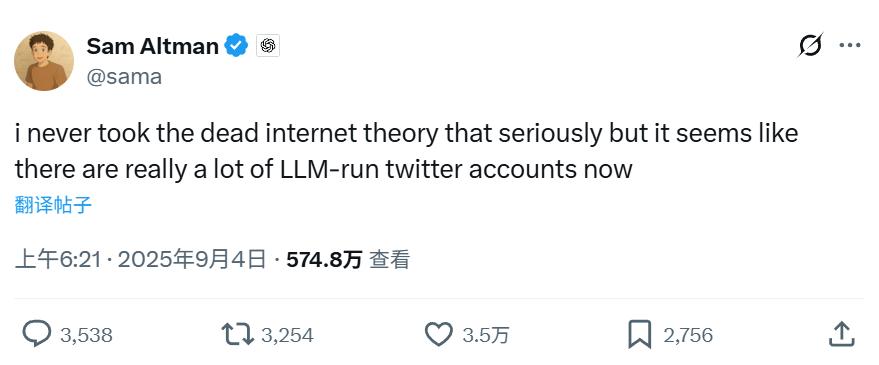
Core Viewpoint - The concept of "the internet is dead" is gaining traction, with industry leaders like Alexis Ohanian and Sam Altman discussing the decline of genuine human activity online and the rise of AI-generated content [2][3]. Group 1: AI-Generated Content (AIGC) Impact - AIGC is pervasive, with examples of AI-generated videos achieving millions of views, indicating a significant shift in content consumption [4]. - The distinction between User-Generated Content (UGC) and AIGC is becoming blurred, raising questions about the relevance of traditional measures of internet vitality [7][10]. - AIGC tools are seen as beneficial for creators, allowing them to realize their creative visions more effectively, akin to how tube paints revolutionized painting for artists in the 19th century [9][10]. Group 2: Concerns and Challenges - There are concerns about the sustainability of AI models trained on synthetic data, which may lead to a decline in content quality and potential model failure [11][13]. - The need for content provenance and authenticity is highlighted, with initiatives like C2PA and digital watermarking being developed to ensure the traceability of AI-generated content [14]. Group 3: Evolution of the Internet - Historical parallels are drawn between the evolution of entertainment technologies and the current state of the internet, suggesting that while UGC may decline, new opportunities will emerge as technology evolves [15][19]. - The ongoing evolution of the internet is framed as a natural process, where new technologies will continue to reshape the landscape, similar to past technological shifts [20].

互联网又要“死”了?
腾讯研究院· 2025-10-28 08:46
Core Viewpoint - The article discusses the notion that the internet is "dead," primarily due to the overwhelming presence of AI-generated content (AIGC) and its impact on user-generated content (UGC) [3][7][30]. Group 1: The State of the Internet - Alexis Ohanian, co-founder of Reddit, claims that much of the internet's content is "dead," highlighting the value of genuine human activity in the current attention economy [3][6]. - Sam Altman, a prominent figure in the AI industry, acknowledges the proliferation of AI-driven accounts on platforms like Twitter, suggesting a shift in content creation dynamics [5][6]. - The article raises the question of whether the internet is truly "dead" or if it is undergoing a transformation due to AIGC [7][8]. Group 2: The Impact of AIGC - AIGC content has become pervasive, with examples of AI-generated videos achieving millions of views, indicating a significant shift in content consumption [8][12]. - The distinction between UGC and AIGC is becoming increasingly blurred, challenging traditional measures of the internet's vitality [12][16]. - AIGC tools are seen as beneficial for creators, allowing them to realize their creative visions more easily, akin to how tube paints revolutionized painting in the 19th century [14][15]. Group 3: Concerns and Future Implications - There are concerns about the sustainability of AI models trained on synthetic data, which may lead to a decline in content quality and relevance [18][20]. - Research indicates that using synthetic data can degrade AI model performance, raising alarms about the future of AI-generated content [21][22]. - The article suggests that if AIGC continues to dominate, it could lead to a scenario where traditional UGC is entirely replaced, potentially validating the "internet is dead" theory [23][28]. Group 4: Historical Context and Evolution - The article draws parallels between the current state of the internet and historical shifts in entertainment, such as the decline of stereoscopic view cards in favor of motion pictures [24][27]. - It posits that technological evolution will always create new opportunities, even if it disrupts existing content creation paradigms [28][30]. - The narrative concludes that while the traditional internet may be changing, a new form of internet, co-created by AI and humans, is emerging [30].