五治融合

Search documents
山东:高质量打造乡村振兴“齐鲁样板”
Xin Lang Cai Jing· 2026-01-26 16:56
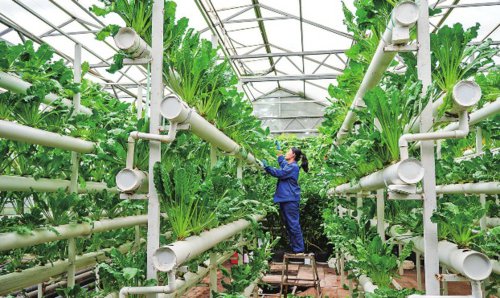
Core Viewpoint - Shandong Province is advancing rural revitalization through a comprehensive plan that includes agricultural modernization, talent development, cultural enrichment, ecological improvement, and organizational strengthening, aiming to enhance the quality of life and economic prosperity in rural areas [3][4][9]. Group 1: Agricultural Modernization - Shouguang City, known as the "Vegetable Capital of China," has implemented advanced agricultural technologies, including smart greenhouses, leading to a 200% increase in labor productivity and an average income increase of over 20,000 yuan per mu for farmers [4]. - The total output value of Shandong's agriculture, forestry, animal husbandry, and fishery is expected to remain above 1.2 trillion yuan for three consecutive years, maintaining its position as the top province in China [4]. - The province has established 19 national modern agricultural industrial parks and 10 advantageous characteristic industrial clusters, with a product monitoring compliance rate of over 97% [4]. Group 2: Talent Development - The "Finding Rural Revitalization Partners" initiative has led to the establishment of 548 projects in 2025, creating over 36,000 jobs and increasing farmers' income by 600 million yuan [6]. - Shandong has recognized 15,000 "local experts" and "field talents" through a new professional title system, enhancing local agricultural expertise [6]. - The "Jia Sixie New Farmer Action" in Shouguang has created a talent pool of over 3,500 agricultural technical talents and 2,700 management talents, facilitating knowledge transfer to other regions [6]. Group 3: Cultural Enrichment - In Qufu, the birthplace of Confucius, initiatives like "One Village, One Confucian Lecturer" and cultural demonstration points have integrated Confucian culture into daily life, enhancing community cohesion [7]. - Shandong has seen a growth of over 10% annually in revenue and profit from "Shandong Handcrafted" enterprises, with non-material cultural heritage becoming a significant source of income [7]. - The province hosted over 5,000 cultural events in 2025, benefiting more than 5.5 million people and promoting cultural vibrancy in rural areas [7]. Group 4: Ecological Improvement - The transformation of Dongping Lake exemplifies the "green water and green mountains are golden mountains and silver mountains" philosophy, with water quality improving from class V to class III through systematic governance [8]. - By 2025, Shandong aims for a rural sewage treatment rate of 68% and over 95% of administrative villages to have harmless waste disposal [8]. - The ecological value generated from tourism in Dongping County has increased significantly, with tourism revenue rising from 31 million yuan in 2004 to 7.843 billion yuan in 2024 [8]. Group 5: Organizational Strengthening - Shandong has enhanced the political and organizational functions of rural grassroots party organizations, achieving a 95.6% rate of village party secretaries also serving as village committee directors [9]. - The "Government Services + Grid" model in Jinan has improved service efficiency, achieving a 100% completion and satisfaction rate for administrative tasks [9]. - The "Ten Thousand Villages Common Prosperity" plan supports 2,700 economically weak villages, promoting collective economic projects and increasing village incomes [10].

行进中国丨“五治融合”绘就乡村治理新画卷
Ren Min Wang· 2025-07-17 02:06
Core Viewpoint - The article highlights the innovative practices in rural governance in Fuxin City, focusing on the integration of moral education, legal governance, and community participation to enhance the quality of life and social order in villages [1][3][11]. Group 1: Moral and Legal Governance - The establishment of a "moral bank" in villages promotes filial piety and community values, with villagers receiving recognition for their contributions [1]. - A points-based system encourages community participation, where villagers earn points for helping others and maintaining cleanliness, which can be exchanged for goods [2][3]. - Villagers are actively involved in revising community rules to promote environmental care and honesty, enhancing self-regulation and management [3]. Group 2: Community Engagement and Participation - Fuxin City has successfully transformed the mindset of residents from "I have to participate" to "I want to participate," leading to the revision of community regulations in 13 pilot villages [3]. - The integration of various community services into a single card system has improved access to government services and support for residents [3]. - The establishment of a recognition system for "good people" and "model villagers" fosters a culture of respect and motivation among residents [6]. Group 3: Conflict Resolution and Legal Framework - A "three-in-one" legal system involving judges, police, and mediators has been implemented to resolve disputes efficiently at the grassroots level [7][8]. - The proactive approach of legal professionals in rural areas has shifted conflict resolution from informal methods to formal legal processes [8]. Group 4: Data-Driven Governance - Fuxin City has developed a monitoring platform for agricultural projects, allowing real-time tracking of maintenance and service needs [9]. - The use of data analytics in governance has improved the precision and efficiency of public services, ensuring that assistance reaches those in need [10]. Group 5: Collaborative Efforts for Rural Revitalization - The city has coordinated resources from 26 departments to support rural revitalization efforts, breaking down silos and fostering collaboration [10][11]. - Partnerships with educational institutions and local governments have enhanced technical support and resource allocation for rural development [11].