亚洲国家群体性崛起

Search documents
海合会国家积极拥抱“一带一路”(环球热点)
Ren Min Ri Bao Hai Wai Ban· 2025-11-18 23:05
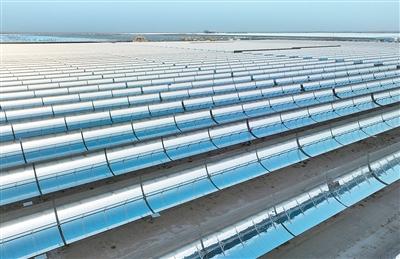
Core Insights - The trade volume between six Gulf countries (UAE, Saudi Arabia, Qatar, Kuwait, Oman, and Bahrain) and China is projected to reach $257 billion in 2024, surpassing the combined trade with the US, UK, and Eurozone, which is estimated at $256 billion. By 2028, this trade volume is expected to grow to $375 billion [4][5][6]. Group 1: Trade and Economic Cooperation - The cooperation between China and Gulf countries has expanded from a focus on energy to include technology, infrastructure, green energy, and aerospace [5][6]. - The implementation of visa-free policies for Gulf countries has facilitated increased personnel exchanges and multi-sector cooperation [5][6]. - The trade volume between China and Gulf countries continues to grow, becoming a significant pillar of cooperation [6][7]. Group 2: Areas of Collaboration - Energy cooperation has shown significant results, with advancements in clean energy technologies such as hydrogen, storage, wind, and solar power [6][7]. - Investment cooperation is on the rise, with Gulf countries increasing their investments in China, showcasing the resilience and potential of their partnership [6][7]. - Innovation cooperation is leading the way in emerging fields like artificial intelligence, 5G, and big data, establishing benchmark cases for multi-sector collaboration [6][7]. Group 3: Strategic Initiatives - All six Gulf countries have signed cooperation documents for the Belt and Road Initiative, with numerous projects underway, such as the Mohammed bin Rashid Al Maktoum Solar Park in the UAE, which has created nearly 50,000 jobs [8][9]. - The mutual benefits of the Belt and Road Initiative are highlighted by the complementary strengths of Gulf countries and China, aiming for economic development and strategic alignment [9][10]. - The cooperation framework has evolved to include multi-level mechanisms such as summits and ministerial meetings, enhancing stability and efficiency in collaboration [7][10]. Group 4: Cultural and Human Exchange - Cultural exchanges are deepening, with initiatives like the establishment of Confucius Institutes in Saudi Arabia and cultural centers in Kuwait, fostering mutual understanding [6][7]. - The cooperation between China and Gulf countries serves as a model for collaboration among countries with different political systems, providing valuable experience for global South cooperation [12][13].