交通肇事罪

Search documents
最高法:严某聪吸毒后驾车撞击他人致死,后驾车逃离连续冲撞多人,共致4人死亡,被判死刑
Xin Lang Cai Jing· 2026-02-13 04:52
Core Viewpoint - The Supreme People's Court of China has released its first batch of guiding cases on criminal traffic safety, specifically focusing on the case of Yan Moucong, who was sentenced to death for endangering public safety through dangerous methods [1][3]. Group 1: Case Background - Yan Moucong purchased drugs and consumed them multiple times before driving, resulting in a fatal accident that killed four individuals and caused significant property damage [2][6]. - The incident occurred on August 22, 2021, when Yan, under the influence of drugs, crashed into multiple vehicles and pedestrians at high speeds, leading to severe injuries and fatalities [2][8]. Group 2: Judicial Outcome - The Guangdong Intermediate People's Court sentenced Yan to death on July 28, 2022, for endangering public safety, a decision upheld by the Guangdong High People's Court and later confirmed by the Supreme People's Court [3][4]. - The Supreme People's Court's final ruling on January 20, 2025, affirmed the death penalty, emphasizing the severity of Yan's actions and their consequences [3][7]. Group 3: Legal Reasoning - The court determined that Yan's actions constituted endangering public safety rather than mere traffic offenses, as he knowingly drove under the influence of drugs, which impaired his ability to operate a vehicle safely [5][6]. - The legal framework indicates that driving under the influence of drugs, especially after experiencing severe hallucinations, demonstrates a willful disregard for public safety, warranting a severe penalty [5][7]. Group 4: Sentencing Justification - The court highlighted the extreme nature of Yan's crimes, including the high number of casualties and the reckless manner in which he operated the vehicle, justifying the application of the death penalty [7][8]. - The ruling reflects a strict approach to drug-related offenses, particularly those that result in significant harm to others, reinforcing the legal stance on public safety [7][8].
为什么金晨肇事逃逸只罚1500元?丨小铭切瓜
Xin Lang Cai Jing· 2026-02-08 06:10
Core Viewpoint - The recent traffic accident involving actress Jin Chen has drawn public attention, with the Zhejiang government issuing a penalty of 1,500 yuan for her hit-and-run incident, which did not constitute a crime [1][2]. Legal Context - Traffic hit-and-run is defined as leaving the scene of an accident to evade legal responsibility, which Jin Chen did by not waiting for police or reporting the incident [1]. - According to Chinese law, hit-and-run does not automatically equate to a criminal offense unless it results in serious injury or death, or involves significant violations of traffic regulations [2]. - Jin Chen's case did not meet the criteria for a traffic crime, as the accident did not cause serious consequences, thus her actions were classified as an administrative violation [2]. Penalty Details - The penalty for Jin Chen was set at 1,500 yuan, which is within the legal range of 200 to 2,000 yuan for such administrative violations [2]. - Additionally, she may face a deduction of 6 points from her driving record as per traffic violation management regulations [2].
一家三口被撞身亡案肇事车司机被判死缓:事发前与女友因“鹦鹉何时开始学舌”吵架;女友曾惊呼并劝阻:我错了,前面有人,慢点
Mei Ri Jing Ji Xin Wen· 2026-01-09 12:32
Core Viewpoint - The court sentenced Liao Mouyu to death with a two-year reprieve for endangering public safety, resulting in the deaths of three individuals due to reckless driving during a peak traffic period [1][2][8]. Summary by Relevant Sections Incident Details - On October 2, 2024, Liao Mouyu drove an electric vehicle at high speed through a busy intersection, leading to a fatal collision with a family crossing the street, resulting in the immediate deaths of three individuals: Hu (31 years old), Wang (30 years old), and Hu (under 1 year old) [1][10]. Legal Findings - The court found that Liao's actions constituted a serious violation of traffic safety regulations, as he knowingly drove at excessive speeds in a densely populated area, which posed a significant risk to public safety [2][5]. - The court determined that Liao's behavior was characterized by indirect intent, as he did not actively seek to harm the victims but acted recklessly under emotional distress [6][8]. Sentencing Rationale - The court's decision to impose a death sentence with a two-year reprieve was based on the severity of the crime, the particularly serious consequences, and Liao's acknowledgment of his actions post-incident, which constituted a form of self-surrender [7][8]. - The court emphasized that Liao's actions were not merely negligent but demonstrated a blatant disregard for public safety, especially given the context of driving during a holiday peak period [5][8]. Public and Legal Reactions - The victims' family expressed a strong desire for justice, indicating they would pursue an appeal against the sentence, reflecting the societal impact and sensitivity surrounding the case [16].


法治在线丨突然开门下车酿悲剧 “开门杀”法律责任如何界定?
Yang Shi Xin Wen· 2025-11-13 07:12
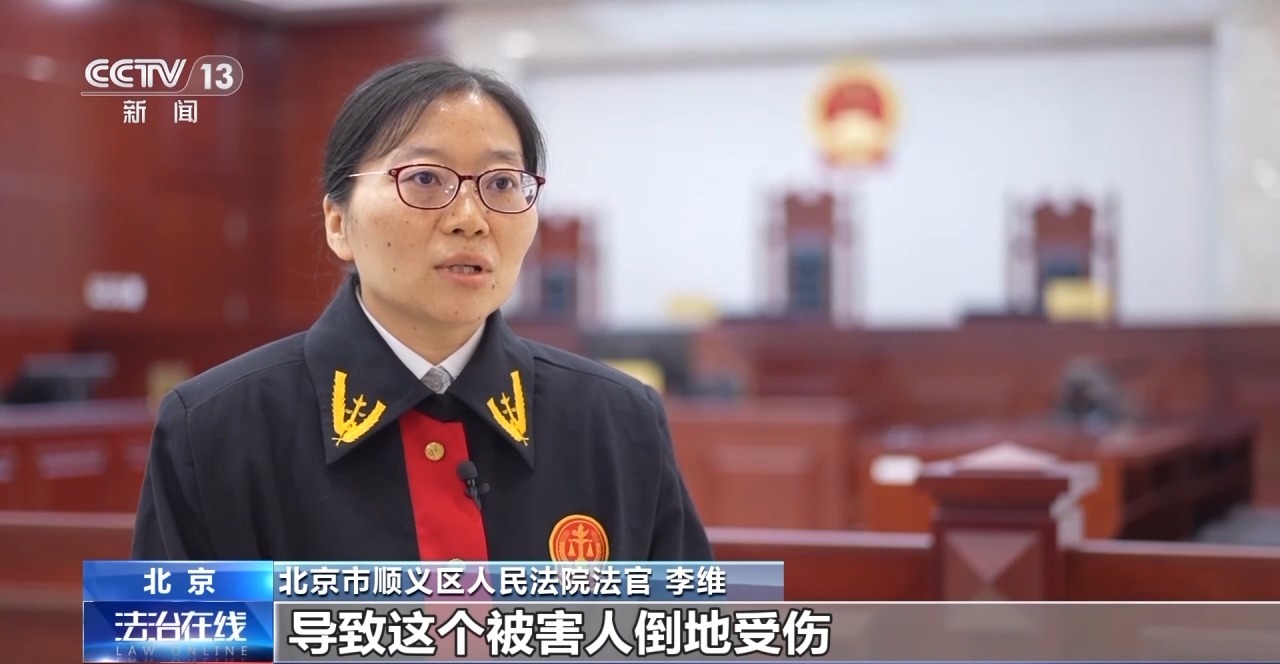
Core Points - The article discusses a tragic incident in Beijing where a driver opened a car door without checking for oncoming traffic, resulting in the death of a cyclist [1][4][6] - The driver, Zhao, was found fully responsible for the accident and was later charged with traffic manslaughter [8][12] - Legal implications of "dooring" incidents are highlighted, including potential criminal charges and insurance liability [19][21] Group 1: Incident Details - The accident occurred on May 21, when a white car parked illegally opened its door, causing a cyclist to crash and sustain severe injuries [1][3] - The cyclist, Zhang, suffered critical brain injuries and died four days later despite medical efforts [4][6] - Zhao, the driver, was found to have parked in a no-parking zone and failed to check for traffic before opening the door, violating traffic safety laws [6][10] Group 2: Legal Proceedings - The case was prosecuted by the Beijing Shunyi District People's Procuratorate, leading to a court hearing on October 16, 2025 [8][12] - Zhao admitted to his actions in court, and the court ruled that his behavior constituted traffic manslaughter, sentencing him to one year and two months in prison [12][18] - Legal experts noted that in severe cases of "doorings," the responsible party could face various charges depending on the circumstances [14][16] Group 3: Insurance and Liability - The Supreme People's Court issued a draft opinion to clarify liability in "dooring" incidents, stating that both drivers and passengers can be held responsible [19][21] - The draft allows victims to claim insurance from the vehicle's liability coverage without being hindered by the passenger's status [21][25] - Insurance companies are granted the right to seek compensation from passengers who exhibit gross negligence, balancing victim compensation and risk management [25][27] Group 4: Prevention Methods - The article suggests methods to prevent "dooring" incidents, such as the "Dutch reach" technique, which involves using the hand furthest from the door to open it [28][30] - Another recommended method is the "two-stage door opening," where the door is first opened slightly to check for traffic before fully opening [31][33] - Pedestrians and cyclists are advised to maintain a safe distance from parked vehicles and be cautious when approaching them [35]
假期前看看醉驾案例:视情节、后果等有可能触犯最高死刑的犯罪
Xin Jing Bao· 2025-09-28 04:39
Core Viewpoint - The article discusses the legal implications and recent changes in the handling of drunk driving cases in China, emphasizing the need for stricter enforcement and public awareness as the holiday season approaches [1][2]. Summary by Sections Legal Framework - Drunk driving can lead to various charges, including a maximum of 6 months of detention for dangerous driving, up to 15 years for traffic accident crimes, or even death penalty for endangering public safety [1]. - The Supreme People's Court and other authorities have optimized the standards for drunk driving offenses, resulting in a significant decrease in case occurrences and prosecutions [2]. Changes in Drunk Driving Standards - The new guidelines introduced in late 2023 adjust the previous strict liability standard of "over 80 mg" to a more nuanced approach considering specific circumstances [2]. - Blood alcohol content (BAC) thresholds are now categorized into three ranges: 80-150 mg (no criminal charges if no aggravating circumstances), 150-180 mg (eligible for probation), and over 180 mg (subject to imprisonment) [2]. Case Examples - **Case 1**: A driver, after causing an accident and fleeing, was charged with endangering public safety due to reckless behavior, resulting in a sentence of 1 year and 8 months [3]. - **Case 2**: A driver who caused two accidents and fled was sentenced to 5 months of detention and fined 9,000 RMB, highlighting the strict penalties for repeat offenders [4][5]. - **Case 3**: A driver with a BAC of 103.1 mg, who had a prior drunk driving offense, was sentenced to 1 month and 15 days of detention, demonstrating the impact of prior offenses on sentencing [6]. - **Case 4**: A driver who attempted to evade police checks and collided with a police vehicle was sentenced to 1 month and 15 days of detention, emphasizing the seriousness of obstructing law enforcement [7][8]. - **Case 5**: A driver who misled police about his identity and had a BAC of 100 mg was sentenced to 1 month of detention, showcasing the consequences of obstructing investigations [9][10]. - **Case 6**: A driver operating a vehicle not permitted by their license was sentenced to 2 months of detention, reinforcing the importance of adhering to licensing regulations [11].
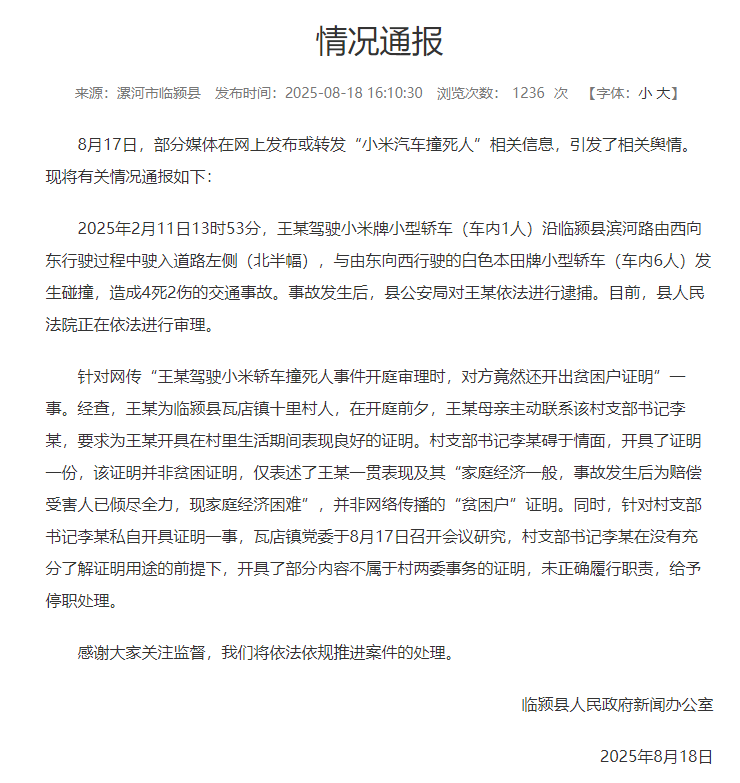
小米汽车司机超车致4死,审理时开出贫困证明?律师:认可概率小
Qi Lu Wan Bao Wang· 2025-08-19 12:38
Core Viewpoint - The incident involving a Xiaomi SU7 car in Henan, which resulted in four deaths and two injuries, has sparked significant public discussion regarding the legal implications and the handling of the case by authorities [1][3]. Group 1: Incident Details - On February 11, 2025, a 28-year-old driver, Wang, was involved in a high-speed collision while driving a blue Xiaomi car at approximately 133-134 km/h, violating traffic laws and causing a multi-vehicle accident [1]. - The accident resulted in four fatalities and two injuries, with the victims including a family of six in the Honda vehicle involved in the crash [1]. Group 2: Legal Proceedings - The local government confirmed that Wang is fully responsible for the accident, and criminal proceedings have been initiated against him, with the court hearings already underway [1]. - Wang's defense included a claim of financial hardship, which was presented through a document from a village official, although this document was not an official poverty certificate [1][3]. Group 3: Legal Expert Opinions - Legal expert Zhao Guangxu noted that the distinction between charges of traffic manslaughter and endangering public safety hinges on the driver's intent and behavior [3]. - Zhao emphasized that claims of financial hardship are unlikely to significantly influence the court's decision, as they are considered discretionary rather than statutory factors in criminal cases [3].