
产业化能力

Search documents
再获数亿投资,山东未来机器人要成为深海赛道的“硬核巨鲸”?
Sou Hu Cai Jing· 2026-01-28 11:55
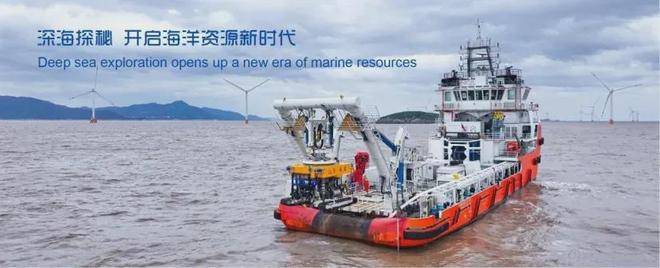
Group 1: Company Overview - Shandong Future Robot Co., Ltd. has completed a B-round financing of several hundred million RMB, with participation from institutions such as Jianyuan Fund and Zhongxin Capital [1] - The company aims to use the funds for the development of next-generation core technologies, global market channel expansion, and scaling up production capabilities [1][7] Group 2: Market Growth and Demand - The underwater robotics market, particularly for ROVs, is experiencing significant growth due to increasing demand in marine resource development and underwater infrastructure maintenance [3] - The Chinese underwater robotics market is expected to exceed 30 billion RMB by 2027, while the global deep-sea robotics market is projected to reach 420 billion RMB by 2028 [3] Group 3: Technological Advancements - The company has achieved breakthroughs in key technologies such as deep-sea pressure resistance and long-distance signal transmission, enabling self-control of core components [4][6] - Shandong Future Robot has developed a full-chain independent development model, covering core components, control systems, and complete machine design [6] Group 4: Product and Certification - The company's products include work-class ROVs, deep-sea trenching equipment, and deep-sea mining robots, with a maximum diving depth of 6,000 meters [6] - The products have received international certifications such as CE and FCC and have participated in national research projects [6] Group 5: Future Focus and Challenges - The company plans to enhance its industrialization capabilities, focusing on engineering, mass production, and market capabilities [7] - Establishing brand recognition and service systems in international markets poses a significant challenge for the company [7] - The company aims to balance standardization and customization in high-quality mass production, which is crucial for deep-sea equipment [7]


资本赋能商业航天:让技术优势实现商业价值
Zheng Quan Shi Bao· 2025-11-19 18:12
Core Insights - The "14th Five-Year Plan" has identified commercial aerospace as a strategic emerging industry, leading to a surge in investment and financing in this sector [1] - The commercial aerospace industry is transitioning from a technology validation phase to a stage focused on industrialization and market integration, driven by urgent launch demands and the need for a complete industrial chain [2][3] - The capital market's role is evolving from merely being a compliance gatekeeper to acting as an industry accelerator, emphasizing the importance of companies that can convert technological strengths into industrial capabilities [3][6] Investment and Financing Trends - Investment activity in the commercial aerospace sector remains high, with companies like Tianbing Technology and Infinite Aerospace securing funding for various sub-sectors including rocket and satellite manufacturing [1] - The China Securities Regulatory Commission has included commercial aerospace in the fifth set of standards for the Sci-Tech Innovation Board, facilitating access to capital for unprofitable hard-tech companies [2] Industrialization Capability Metrics - Three key metrics define industrialization capability: 1. Full-chain technological autonomy, essential for cost reduction and efficiency [4] 2. Scalable manufacturing and launch service capabilities, which are critical for achieving commercial value through frequent and stable launch services [5] 3. Rapid iteration and trial-error capabilities, necessary for learning and optimizing performance in a high-risk environment [5] Future Outlook - The ultimate competition in commercial aerospace will hinge on the integration of talent, technology, products, and market capabilities [6] - The next five years will be crucial for China's positioning in the global space economy, with successful IPOs marking the beginning of a new journey rather than an endpoint [6]