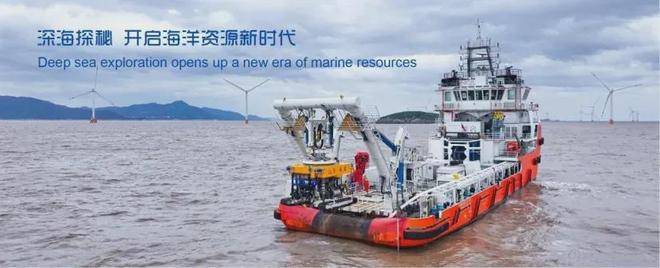
深海采矿机器人

Search documents
再获数亿投资,山东未来机器人要成为深海赛道的“硬核巨鲸”?
Sou Hu Cai Jing· 2026-01-28 11:55
Group 1: Company Overview - Shandong Future Robot Co., Ltd. has completed a B-round financing of several hundred million RMB, with participation from institutions such as Jianyuan Fund and Zhongxin Capital [1] - The company aims to use the funds for the development of next-generation core technologies, global market channel expansion, and scaling up production capabilities [1][7] Group 2: Market Growth and Demand - The underwater robotics market, particularly for ROVs, is experiencing significant growth due to increasing demand in marine resource development and underwater infrastructure maintenance [3] - The Chinese underwater robotics market is expected to exceed 30 billion RMB by 2027, while the global deep-sea robotics market is projected to reach 420 billion RMB by 2028 [3] Group 3: Technological Advancements - The company has achieved breakthroughs in key technologies such as deep-sea pressure resistance and long-distance signal transmission, enabling self-control of core components [4][6] - Shandong Future Robot has developed a full-chain independent development model, covering core components, control systems, and complete machine design [6] Group 4: Product and Certification - The company's products include work-class ROVs, deep-sea trenching equipment, and deep-sea mining robots, with a maximum diving depth of 6,000 meters [6] - The products have received international certifications such as CE and FCC and have participated in national research projects [6] Group 5: Future Focus and Challenges - The company plans to enhance its industrialization capabilities, focusing on engineering, mass production, and market capabilities [7] - Establishing brand recognition and service systems in international markets poses a significant challenge for the company [7] - The company aims to balance standardization and customization in high-quality mass production, which is crucial for deep-sea equipment [7]


再获数亿投资,山东未来机器人要成为深海赛道的“硬核巨鲸”?
机器人大讲堂· 2026-01-28 10:24
Core Viewpoint - Shandong Future Robotics Co., Ltd. has completed a multi-billion RMB Series B financing round, indicating strong investor confidence in the underwater robotics sector and the company's growth potential [1][8]. Financing and Investment - The recent financing round was led by Jianyuan Fund, Zhongxin Juyuan, and Wangsu Investment, following previous strategic investments from China National Petroleum's Kunlun Capital and CICC in 2025 [1]. - The funds will primarily be used for the development of next-generation core technologies, global market channel expansion, and scaling production capabilities [1][9]. Market Growth and Demand - The underwater robotics market, particularly for ROVs (Remotely Operated Vehicles), is experiencing significant growth due to increasing demand in marine resource development and infrastructure maintenance [3]. - The Chinese underwater robotics market is projected to exceed 30 billion RMB by 2027, while the global deep-sea robotics delivery market is expected to reach 420 billion RMB by 2028 [3]. Technological Advancements - The company has achieved breakthroughs in deep-sea pressure resistance, long-distance signal transmission, and hydraulic power technologies, enabling self-sufficiency in core components [4][7]. - Shandong Future Robotics has adopted a fully autonomous development model, covering everything from core components to complete machine design [7]. Product Offerings and Capabilities - The company's products include work-class ROVs, deep-sea trenching equipment, deep-sea mining robots, and underwater engineering construction equipment, with a maximum diving depth of 6,000 meters [7]. - The products have been deployed in numerous countries, including Russia, the UK, France, Singapore, and Saudi Arabia [7]. Future Development Focus - The company aims to enhance its industrialization capabilities, focusing on engineering, mass production, and market penetration [8][9]. - Balancing customization and standardization in production will be a key challenge as the company seeks to scale its operations [9].
海上竞速,深圳如何追上海?
Mei Ri Jing Ji Xin Wen· 2025-10-11 15:32
Core Insights - The "Global Ocean City Competitiveness Index Report (2025)" was released, evaluating 60 global ocean cities based on five dimensions: economic vitality, technological innovation, maritime services, international influence, and urban governance [1][3] - The report identifies Shanghai, Shenzhen, and Qingdao as the leading ocean economic circles in China, with Shanghai ranked as the global leader in economic vitality and port cargo throughput [1][3] Economic Circles Overview - The report categorizes global ocean cities into four distinct tiers, highlighting the competitive landscape [1] - Key cities and their rankings include: - London (1st) - Leading in technological innovation, maritime services, international influence, and urban governance [2] - New York (3rd) - Strong in economic vitality and international influence [2] - Singapore (2nd) - Top in economic vitality and maritime services [2] - Shenzhen (4th in innovation) and Qingdao (8th in innovation) are positioned as significant players in China's ocean economy [2][3] China's Ocean Economy - China's ocean economy has surpassed 10 trillion yuan, with a reported ocean GDP of 5.1 trillion yuan in the first half of the year, reflecting a year-on-year growth of 5.8% [3] - The northern, eastern, and southern ocean economic circles in China exhibit differentiated development based on regional resources and industrial foundations [3] - Shanghai leads in the global competitiveness ranking, while Shenzhen and Qingdao are in the second tier, indicating a need for Shenzhen to enhance its competitive edge [3][5] Shenzhen's Development Goals - Shenzhen aims to become a global ocean center city, with a target of achieving an ocean industrial output value of 215 billion yuan by the end of the 14th Five-Year Plan, with an annual growth rate of over 12% [5] - The city is focusing on technological integration in deep-sea equipment, renewable energy, and smart port operations to drive its ocean economy forward [5] Future Industry Initiatives - Shanghai is planning to establish national-level future industry pilot zones to foster technological innovation and industrial development [6] - Shenzhen is investing heavily in low-altitude industries, with financial support measures in place to boost the sector [7]

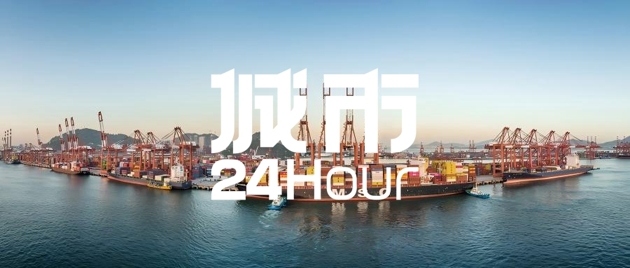
城市24小时 | 海上竞速,深圳如何追上海?
Mei Ri Jing Ji Xin Wen· 2025-10-11 15:25
Core Insights - The "Global Ocean City Competitiveness Index Report (2025)" was released, evaluating 60 global ocean cities based on five dimensions: economic vitality, technological innovation, maritime services, international influence, and urban governance [4] - The report identifies Shanghai, Shenzhen, and Qingdao as the leading ocean economic circles in China, with Shanghai ranked as the global leader in economic vitality and port cargo throughput [4][6] - China's ocean economy has surpassed 10 trillion yuan, with a year-on-year growth of 5.8% in the first half of the year, indicating a strong growth trajectory [6] Economic Circles Overview - The report categorizes global ocean cities into four distinct tiers, with London ranked first globally, followed by New York (3rd), and Singapore (2nd) [5] - Shanghai ranks 4th globally, with its economic vitality and international influence both ranked 2nd, while Shenzhen and Qingdao are positioned in the second tier [6][9] - Shenzhen's ocean production value reached 540.9 billion yuan, accounting for 14.7% of its GDP, while Shanghai's was over 1 trillion yuan, making up 21.1% of its GDP [9] Technological Innovation - Shenzhen ranks 4th globally in technological innovation, supported by its capabilities in marine electronic information, high-end equipment manufacturing, and underwater robotics [4][6] - The report suggests that Shenzhen can leverage technology to enhance its ocean economy, focusing on deep-sea equipment, renewable energy, and smart port operations [9] Future Development Goals - Shenzhen aims to achieve an ocean industrial added value of 215 billion yuan by the end of the 14th Five-Year Plan, with an annual growth rate of over 12% [9] - The report emphasizes the need for Shenzhen to deepen the integration of technology in its ocean economy to compete with Shanghai [9]