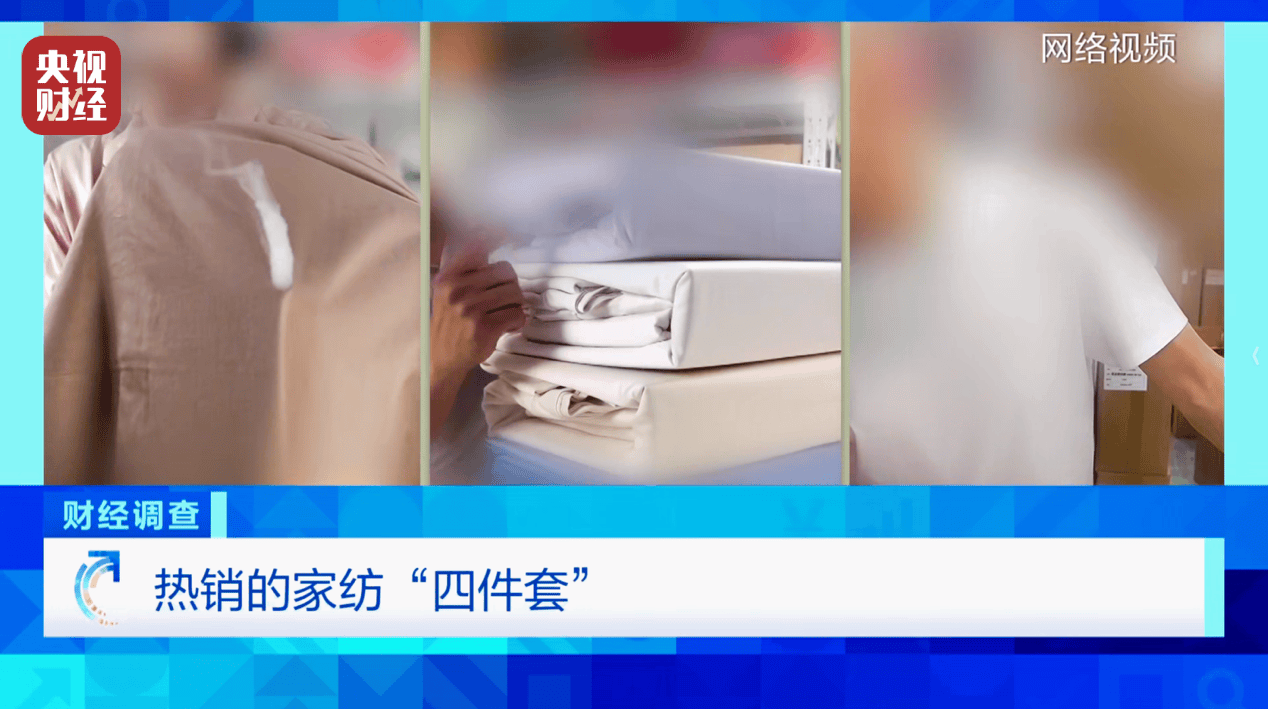
产品虚标

Search documents
虚假标签、伪造报告 央视起底直播间“高端四件套”猫腻
Xi Niu Cai Jing· 2025-09-24 05:48
Group 1 - The core issue highlighted is the widespread practice of false labeling and misrepresentation of product quality among home textile companies in Jiangsu and Zhejiang provinces, particularly regarding "high-end four-piece sets" [2][3] - Companies are using deceptive tactics such as false material claims, inflated thread counts, and fake testing reports to mislead consumers [3][4] - The thread count, a key indicator of fabric quality, is often exaggerated, with some products falsely marketed as "100 thread count" when they are actually of lower quality [3] Group 2 - A-class labels, which should indicate higher safety standards for infant textiles, are being misused by manufacturers regardless of the actual material and product category [4] - Some suppliers are providing counterfeit testing reports that include detailed information to create a facade of legitimacy, even including QR codes for verification [4] - Following the broadcast of the investigation, local market supervision authorities in Nantong initiated immediate inspections and investigations into the implicated businesses [4]

深夜通报:立案调查!
第一财经· 2025-09-22 02:48
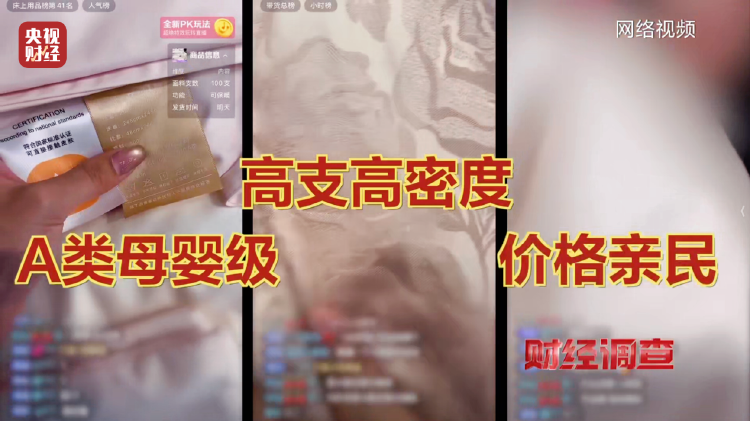
Core Viewpoint - The article highlights the issue of false advertising and quality misrepresentation in the bedding industry, particularly regarding "four-piece sets" sold through online platforms and live-streaming channels, leading to consumer deception and potential health risks [4][6][9]. Group 1: Regulatory Response - On September 22, the Haining Market Supervision Administration in Zhejiang Province announced an investigation into the reported false labeling of bedding products following a report by CCTV Finance [3]. - The administration plans to conduct a comprehensive inspection and crackdown on illegal activities to protect consumer rights and maintain fair market competition [3]. Group 2: Consumer Complaints and Misleading Marketing - Consumers reported that some online live-streaming hosts promoted bedding products as "A-class maternal and infant grade" and "high thread count," which were often inferior quality items [4][6]. - The marketing tactics used by these hosts included enticing phrases and promises of significant discounts, making it easy for consumers to be misled [4][6]. Group 3: Quality Standards and Misrepresentation - According to national standards, infant textile products must meet A-class requirements and be labeled as "infant products," while products in direct skin contact should meet at least B-class standards [4]. - Many products marketed as "100-thread count" or higher were found to be falsely advertised, with actual thread counts often much lower, typically between 30 and 80 [6][7]. Group 4: Industry Practices and Deceptive Labels - Some manufacturers and retailers admitted to inflating product specifications, such as thread count and material quality, to increase prices and profits [9][10][13]. - Instances of "three-no" products (no manufacturer name, address, or contact information) were reported, facilitating the sale of counterfeit goods [10]. - Some businesses provided fake testing reports and labels to mislead consumers, with detailed forgeries that could easily deceive [10][11]. Group 5: Market Dynamics and Profitability - The article notes that despite low production costs, businesses could still achieve significant profits by selling falsely labeled bedding products [9][11]. - The practice of mislabeling and deceptive marketing is described as an open secret within the e-commerce platform, indicating a widespread issue in the industry [7].
黑心棉能上A类标?央视曝光直播间“高端四件套”猫腻
Yang Shi Xin Wen Ke Hu Duan· 2025-09-21 23:17
Core Viewpoint - The investigation reveals that many beddings marketed as "high-end four-piece sets" in live-streaming sessions are falsely advertised, with claims of high thread counts and 100% cotton being misleading [1][3][19]. Group 1: Misleading Marketing Practices - Some merchants in Jiangsu Nantong and Zhejiang Jiaxing are found to falsely label bedding products with inflated thread counts and misleading fabric claims, leading to consumer deception [3][10]. - Live-streaming hosts use persuasive sales tactics, claiming products meet "A-class maternal and infant standards" and are suitable for direct skin contact, which misleads consumers [5][7]. - The actual thread counts of many advertised products are significantly lower than claimed, with some products being marketed as "100-thread" when they are actually of much lower quality [10][19]. Group 2: Quality and Safety Standards - According to national standards, infant textile products must meet specific safety requirements, yet many products do not adhere to these regulations [7][27]. - Some products are found to contain synthetic fibers, despite being marketed as 100% cotton, which raises concerns about safety and quality [25][28]. Group 3: Supply Chain and Production Insights - Investigations into local markets reveal that many bedding products lack proper labeling, making it easier for sellers to misrepresent their goods [32][40]. - Some manufacturers openly admit to mislabeling products with "A-class" tags and inflated thread counts to increase sales and profits [42][50]. - The production of bedding items often involves deceptive practices, including the use of fake testing reports to mislead consumers about product quality [38][52].
假标签、假材质、假报告!总台《财经调查》曝光“高端四件套”猫腻→
Sou Hu Cai Jing· 2025-09-21 12:16
Core Viewpoint - The investigation reveals that many beddings marketed as "high-end four-piece sets" are falsely advertised, with misleading claims about material quality and thread count, leading to consumer deception [1][3][22]. Group 1: Misleading Marketing Practices - Some merchants in Jiangsu and Zhejiang are found to falsely label bedding products with inflated thread counts and misleading fabric claims, such as "A-class maternal and infant grade" [3][12]. - Live-streaming sales tactics are designed to entice consumers with phrases like "100-thread long-staple cotton" and "suitable for bare sleeping," which are often not true [5][10]. - The actual thread counts of many advertised products are significantly lower than claimed, with common counts ranging from 30 to 80, while some are falsely marketed as "100-thread" [12][15]. Group 2: Quality Standards and Regulations - According to national standards, infant textile products must meet A-class requirements and be labeled as "infant products," while those in direct skin contact should meet at least B-class standards [6]. - Many products lack proper labeling regarding fiber content, violating regulations that require clear identification of materials used in textile products [29]. Group 3: Supply Chain and Production Insights - Investigations into suppliers reveal that some manufacturers knowingly mislabel products with A-class tags and inflated thread counts to increase profit margins [40][48]. - Some factories openly admit to producing low-quality products while falsely claiming high standards, indicating a widespread issue in the industry [50][52]. - The presence of counterfeit testing reports and misleading marketing strategies is prevalent, with suppliers providing false documentation to mislead consumers [39][41].