京剧传承

Search documents
周利:以艺为媒续写国粹千秋情
Xin Lang Cai Jing· 2026-02-22 05:32
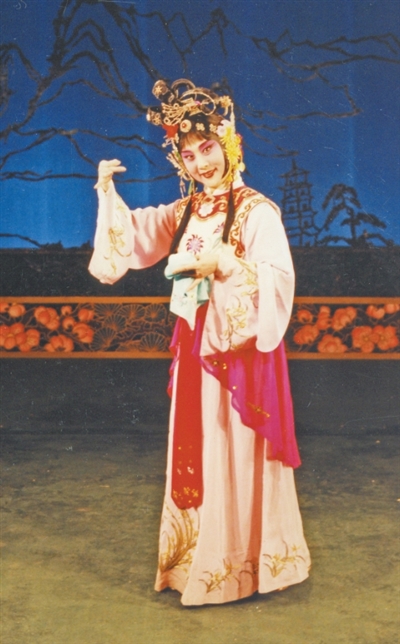
Core Viewpoint - The article emphasizes the importance of traditional Chinese opera, specifically Peking opera, as a vital part of Chinese culture, and highlights the efforts of Zhou Li in revitalizing and innovating this art form to engage younger generations and ensure its continuity [1][3]. Group 1: Zhou Li's Contributions - Zhou Li has dedicated over 30 years to Peking opera and has recently focused on the systematic inheritance of classical repertoires and artistic styles [1]. - She led the revival of the representative work "Shuangyang Princess," which premiered on January 9 this year at the Chongqing Qunxing Theatre, showcasing her commitment to bringing classic art to life [2]. - Zhou Li's approach to Peking opera emphasizes a balance between tradition and innovation, ensuring that while the core aesthetics are preserved, modern elements such as lighting and stage design are incorporated [2][3]. Group 2: Talent Development and Education - Zhou Li believes that the transmission of Peking opera is not only about the continuation of plays but also about the relay of talent, advocating for the involvement of young actors in the art form [3]. - She has implemented a mentorship model that encourages multiple young actors to interpret the same role, fostering individual understanding and style while maintaining the essence of the performance [2][3]. - Zhou Li plans to engage with schools and communities through a three-part educational initiative that includes knowledge lectures, interactive experiences, and appreciation performances, aiming to popularize Peking opera [4]. Group 3: Digital Innovation in Peking Opera - Zhou Li suggests enhancing the dissemination of Peking opera through digital technologies, advocating for the integration of AI-assisted teaching and VR immersive experiences to attract a broader audience [4]. - She aims to create online content that showcases the beauty of traditional art, including educational videos and classic performance analyses, to reach a wider audience [4].

有教无类传国粹 梅韵经年育芬芳
Xin Lang Cai Jing· 2026-01-06 22:38
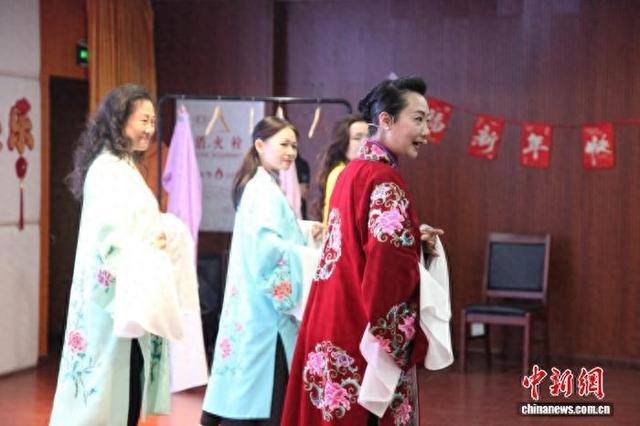
Core Viewpoint - The article highlights the dedication of Li Jingwen, a renowned Peking opera artist, in teaching and passing on the Mei school of Peking opera to her two disciples, Wang Xiaoming and Chen Jinqiang, who have shown remarkable commitment despite starting their training later in life [3][4]. Group 1: Teaching and Mentorship - Li Jingwen emphasizes the difference in teaching amateur students compared to professional actors, focusing on fundamental skills such as leg kicks, footwork, and hand movements [4]. - The two disciples have shown exceptional diligence, recording lessons and practicing extensively, even to the point of sweating through their clothes during rehearsals [4]. Group 2: Community Engagement and Cultural Transmission - Li Jingwen actively engages with the community, providing guidance to amateur performers and sharing her artistic experiences [4]. - Wang Xiaoming has established a Mei school performance class, while Chen Jinqiang teaches Mei singing techniques to younger generations, contributing to the preservation and promotion of traditional Chinese culture [4].
她的坚守,像舞台上的故事一样动人(人物)
Ren Min Ri Bao· 2025-10-15 22:22
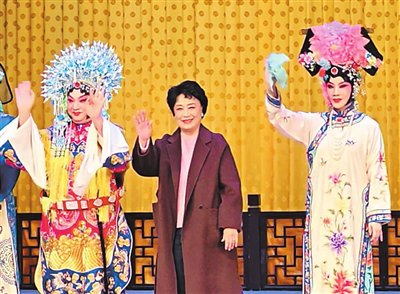
Core Viewpoint - The article highlights the life and achievements of Liu Changyu, a renowned Peking opera artist, who has dedicated over 70 years to the art form and continues to contribute to its legacy through teaching and performance [3][8]. Group 1: Career Achievements - Liu Changyu was awarded the "Lifetime Achievement Award in Drama" at the 19th China Drama Festival, recognizing her extensive contributions to Peking opera [3]. - Throughout her career, she has starred in numerous traditional and modern operas, including "Red Lantern," "Selling Water," and "Spring Grass Breaks into the Hall," creating many memorable artistic characters [3][6]. - Her portrayal of Li Tie Mei in "Red Lantern" became iconic after the film adaptation was released nationwide in 1970, solidifying her status as a classic hero in the hearts of the audience [7]. Group 2: Artistic Development - Liu Changyu began her formal training in Peking opera at the age of 9, demonstrating a strong work ethic and resilience despite her mischievous nature as a child [4][5]. - She received guidance from notable mentors, including the Peking opera master Xun Huisheng, who helped her refine her performance skills and understand the essence of character portrayal [5][6]. - Liu's innovative approach to performance includes incorporating elements from other art forms, such as dance and acrobatics, to enhance her roles, as seen in her performance of "Spring Grass Breaks into the Hall" [6]. Group 3: Teaching and Legacy - At over 80 years old, Liu Changyu remains active in teaching Peking opera, designing courses for the next generation of performers, and passing on her knowledge and skills [8]. - Her commitment to the art form is evident as she expresses gratitude for the support she received from the state and aims to contribute to the preservation and promotion of Peking opera for future generations [8].
老少同台传国粹(暖心故事)
Ren Min Ri Bao· 2025-05-11 22:30
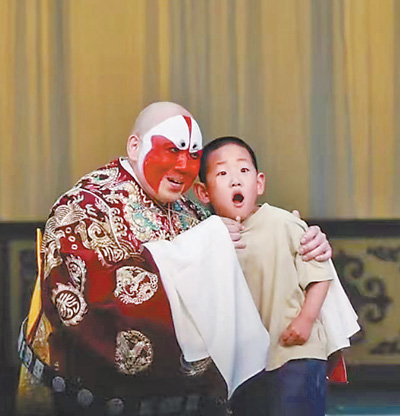
Core Viewpoint - The article highlights the impressive talent of a 5-year-old boy, Wang Miyang, who has shown remarkable skills in Peking opera after just over a year of training, showcasing the potential of young performers in traditional Chinese arts [1][2]. Group 1: Performance and Training - Wang Miyang performed alongside his teacher, Jiang Feng, in a Peking opera show, receiving enthusiastic applause from the audience [1]. - Jiang Feng emphasizes the traditional method of teaching Peking opera through oral transmission, focusing on detailed instruction in singing and performance techniques [2][4]. - The training includes rigorous practice of movements and postures, such as the "拉山膀" (raising arms) action, which is essential for portraying a character effectively [4]. Group 2: Parental Support and Cultural Significance - Wang Miyang's father has been supportive of his son's interest in Peking opera since a young age, highlighting the importance of cultural education and personal interest in traditional arts [2][4]. - The father believes that learning Peking opera will benefit his son for life, regardless of whether he pursues it as a career [4].