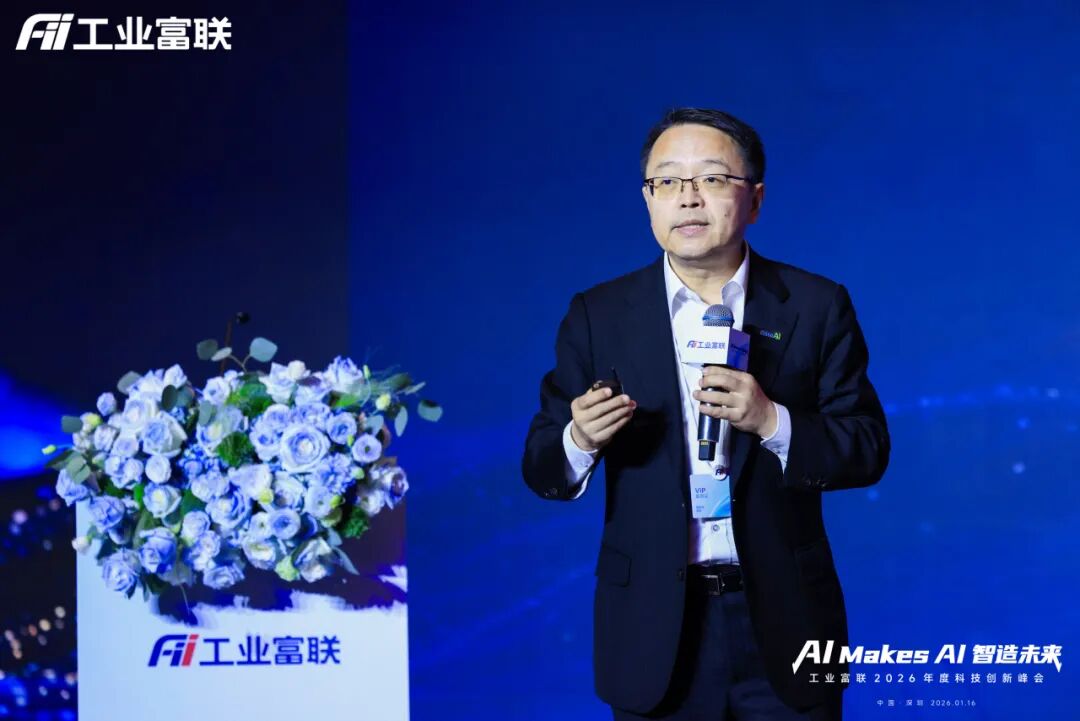
人工智能与智能制造融合

Search documents
“优环境、谋创新、聚人才”——海口这么干② | 近悦远来,海口何以涵养科创人才成长生态?
Xin Lang Cai Jing· 2026-02-26 23:52
Core Insights - Haikou is focusing on talent attraction and innovation development, positioning talent as the core engine for growth and enhancing support services for both imported and local talents [2][16] Group 1: Talent Attraction and Development - Haikou is implementing precise talent recruitment measures and fostering local talent development, particularly in key industries such as biomedicine, low-altitude economy, and intelligent sensing [4] - The Haikou National High-tech Zone has seen a significant increase in high-level talent recognition, with 1,109 individuals receiving provincial-level talent recognition [4] - The establishment of a "three-library" mechanism (expert library, achievement library, demand library) in the Haikou National High-tech Zone is aimed at accurately identifying enterprise technology needs to promote high-quality industrial development [5] Group 2: Industry and Technology Integration - Companies like Hainan Jinpan Intelligent Technology Co., Ltd. are collaborating with universities and research institutions to accelerate the transformation of technological achievements into industrial applications [9] - The focus has shifted towards integrating talents from AI, computer science, and other advanced fields to enhance industrial capabilities and strengthen competitive advantages [9] Group 3: International Education and Innovation - The Haikou Ruxing City International Talent Innovation Park has attracted over 200 foreign-funded and entrepreneurial enterprises, serving as a key platform for international talent and innovation resources [13] - The park provides a comprehensive service system for overseas students to establish businesses, including business consulting, training, financing, registration, marketing, and international cooperation [13] Group 4: Future Development and Strategy - Haikou aims to continue optimizing its talent development ecosystem, ensuring that more talents settle in the city and contribute to innovation, thereby driving urban development and talent growth [16]


AI Makes AI!工业富联2026年度科技创新峰会圆满举行
Xin Lang Cai Jing· 2026-01-22 10:09
Core Insights - The 2026 Industrial Technology Innovation Summit held by Industrial Fulian focused on the deep integration of artificial intelligence (AI) and intelligent manufacturing, discussing opportunities and challenges for industrial upgrades [1][21] - The summit gathered over thirty heavyweight speakers from AI and intelligent manufacturing, with nearly five hundred attendees from industry, academia, and investment sectors [2][21] Group 1: Key Themes and Discussions - Chairman Zheng Hongmeng emphasized that as AI model sizes increase, training power consumption doubles annually, leading to higher energy and heat dissipation challenges, indicating a comprehensive upgrade of the entire industrial chain [2][21] - Zheng noted that future competition in AI and intelligent manufacturing will shift from individual company technology superiority to the ability to integrate systems effectively [2][21] - The CTO of Industrial Fulian, Zhou Taiyu, highlighted the transition of AI infrastructure from a "single-point computing" model to a "system engineering" approach, creating a closed-loop system of computing power, algorithms, and applications [3][22] Group 2: Technological Foundations - Academician Mao Junfa pointed out that integrated circuits are the foundational technology for scientific instruments, while AI is the driving force behind scientific discovery and technological advancement [4][23] - The future of AI is expected to require interdisciplinary integration, including physics, life sciences, and philosophy, as the industry faces challenges related to Moore's Law [4][23] Group 3: Industry Collaboration and Development - A roundtable discussion on global AI infrastructure emphasized that building AI infrastructure requires deep collaboration across the entire industry chain, representing a significant opportunity for value reconstruction [5][24] - Tencent Cloud's VP Wang Qi stated that intelligent agents are crucial for bridging the gap in enterprise AI application implementation, relying on scenario-driven, data collaboration, and ecosystem co-construction [6][25] Group 4: Practical Applications and Innovations - Chen Zhaopeng, CEO of Sensing Robotics, discussed the application of embodied intelligence in industrial scenarios, emphasizing the need for widespread deployment of robots to create a positive feedback loop of application, data, and training [7][26] - The roundtable on AI applications and productivity innovation highlighted that AI's value is extending from the digital world to the physical world, marking a deep transformation in manufacturing [8][26] Group 5: Future Trends and Challenges - The "AI Smart Computing Center" session focused on innovations in large-scale computing cluster architectures and solutions for power and heat dissipation [11][28] - The "AI Smart Factory" session analyzed capital expenditure trends in the AI industry chain and the evolution of humanoid robots from hardware modularization to software autonomy [15][32] - Discussions on the transformation from Industry 4.0 to 5.0 addressed the challenges and opportunities of human-machine collaboration, aiming for a win-win path of efficiency and sustainability [17][34]