产业升级

Search documents
数控刀具经销大商交流
2026-04-01 09:59
Summary of Conference Call on CNC Tooling Industry Industry Overview - The CNC tooling industry is experiencing significant changes due to rising tungsten powder prices, which have increased approximately sixfold since July 2025, reaching 2,360 RMB/kg as of now. A further moderate increase is expected around May to June 2026 as inventory depletes [1][5][6]. - The market is witnessing a structural transformation, with small and medium-sized manufacturers facing shutdowns due to soaring raw material costs and increased procurement thresholds, which have risen about sevenfold [1][9]. Key Points and Arguments Price Dynamics - Current market prices for tooling products are lagging behind theoretical costs by 20%-30%. Major manufacturers are gradually increasing prices, with expectations that by mid-2026, prices will align with raw material costs [1][7]. - The price of tungsten powder is anticipated to stabilize around 2,000 RMB/kg, with limited room for significant declines due to its strategic nature and declining ore grades [2][6]. Market Competition and Structural Changes - The industry is shifting from cost-based competition to a focus on technology and brand strength, leading to an irreversible structural reshaping [1][4][11]. - Domestic brands like Huari, Oke Yi, and Zhuzhou Diamond are gaining market share, particularly in rough and semi-fine processing sectors, as they increasingly replace Japanese and Korean brands [3][11]. Impact on Small and Medium Enterprises - Many small manufacturers are struggling to survive due to the drastic increase in raw material costs, which has made production unprofitable. For instance, a medium-sized factory that previously supplied W-type blades at 10 RMB per piece now faces costs that necessitate a selling price of 26 RMB, making them uncompetitive [9][10]. - The financial burden has increased significantly, with the cash requirement for purchasing tungsten powder rising from 300,000 RMB to 2 million RMB per ton, exacerbating cash flow issues for smaller firms [9][10]. Future Outlook - The current price increases are expected to lead to a thorough market clearing, with many small firms unlikely to return even if tungsten prices stabilize at high levels [10][11]. - The market is currently in a phase of price transmission, with downstream customers gradually accepting the new pricing structure due to the transparency of raw material costs [11][12]. Supply Chain and International Brands - Japanese and Korean brands are implementing quota systems for supply in China, prioritizing high-profit markets and core customers, leading to severe shortages in the domestic market [13][14]. - The delivery volumes from these brands have been significantly reduced, with many orders cut by half or more, impacting overall market availability [14][15]. Sector-Specific Demand Trends - Downstream demand is showing significant differentiation, with high-value sectors like offshore wind, automotive molds, and military applications performing well, while smaller processing firms struggle [16]. - The high-end manufacturing sectors, including robotics and aerospace, are expected to see accelerated domestic substitution due to the supply shortages of imported products [15][16]. Additional Insights - The current market dynamics indicate a shift towards higher quality and performance standards, with end-users no longer tolerating low-quality products. This trend is expected to favor established domestic brands capable of competing with international players [11][16]. - The export demand for domestic tools is facing challenges due to rising domestic prices, which are not yet accepted in lower-end markets like Turkey and India, although acceptance is expected to improve as European markets tighten [17]. This summary encapsulates the critical insights from the conference call regarding the CNC tooling industry, highlighting the ongoing transformations, challenges faced by smaller manufacturers, and the evolving competitive landscape.
市场主流观点汇总-20260331
Guo Tou Qi Huo· 2026-03-31 13:07
Report Overview - The report aims to objectively reflect the research views of futures and securities companies on various commodity varieties, track hot varieties, analyze market investment sentiment, and summarize investment driving logic [1] Market Data Commodities - Methanol closed at 3296.00 with a weekly increase of 5.24%;焦煤 closed at 1219.00 with a 4.10% increase; PTA closed at 6876.00 with a 3.40% increase; copper closed at 95930.00 with a 1.26% increase; palm oil closed at 9768.00 with a 0.51% increase; rebar closed at 3124.00 with a 0.03% increase. Aluminum closed at 23935.00 with a -0.35% decrease; iron ore closed at 812.00 with a -0.43% decrease; corn closed at 2369.00 with a -0.75% decrease; silver closed at 17489.00 with a -0.77% decrease; glass closed at 1041.00 with a -1.23% decrease; ethylene glycol closed at 5279.00 with a -1.38% decrease; live pigs closed at 9965.00 with a -2.50% decrease; soybean meal closed at 2937.00 with a -3.04% decrease; gold closed at 998.66 with a -4.16% decrease; crude oil closed at 740.80 with a -4.24% decrease; PVC closed at 5615.00 with a -4.43% decrease; polysilicon closed at 35680.00 with a -5.52% decrease [2] A-shares - CSI 500 closed at 7737.61 with a -0.29% decrease; SSE 300 closed at 4502.57 with a -1.41% decrease; SSE 50 closed at 2837.31 with a -1.61% decrease [2] Overseas Stocks - FTSE 100 closed at 9967.35 with a -1.29% decrease; France CAC40 closed at 7701.95 with a 0.47% increase; Nikkei 225 closed at 53373.07 with a 0.49% increase; Hang Seng Index closed at 24951.88; S&P 500 closed at 6368.85 with a -2.12% decrease; Nasdaq Index closed at 20948.36 with a -3.23% decrease [2] Bonds - China's 5-year treasury bond yield was 1.56 with a 0.67bp increase; 10-year treasury bond yield was 1.82 with a 0.39bp increase; 2-year treasury bond yield was 1.31 with a -0.28bp decrease [2] Foreign Exchange - US Dollar Index closed at 100.17 with a 0.67% increase; US Dollar mid-price was 6.91 with a 0.35% increase; Euro to US Dollar was 1.15 with a -0.50% decrease [2] Commodity Views Macro-financial Sector Stock Index Futures - Strategy views: Among 7 institutions, 1 is bullish, 0 is bearish, and 6 expect a sideways trend. Bullish logic: 1-2 month industrial enterprise profits increased by 15.2% year-on-year, high-tech manufacturing profits grew by 58.7%, policies are releasing signals for stable growth, and stock index valuations are at a low historical level. Bearish logic: Uncertainty in the Middle East, rising Fed rate hike expectations, decreased trading volume, and potential weak terminal demand [3] Treasury Bond Futures - Strategy views: Among 7 institutions, 0 is bullish, 2 is bearish, and 5 expect a sideways trend. Bullish logic: Safe-haven sentiment supports bonds, loose liquidity, and policy support. Bearish logic: Strong economic resilience, rising inflation expectations, and reduced short-term rate cut expectations [3] Energy Sector Crude Oil - Strategy views: Among 7 institutions, 4 are bullish, 1 is bearish, and 2 expect a sideways trend. Bullish logic: Military confrontation between Iran and the US, disrupted shipping in the Strait of Hormuz, slow inventory reconstruction, and supply-demand imbalance. Bearish logic: Release of strategic reserves, increased Russian oil supply, OPEC+ production increase plan, and potential for a ceasefire [4] Agricultural Products Sector Soybean Meal - Strategy views: Among 7 institutions, 2 are bullish, 2 are bearish, and 3 expect a sideways trend. Bullish logic: High US soybean export inspections, rising fertilizer prices, slow Brazilian soybean arrivals, and increased feed demand. Bearish logic: Increasing soybean arrivals in April, faster Brazilian soybean harvest, expected increase in new-season soybean planting area, and long-term supply surplus [4] Non-ferrous Metals Sector Aluminum - Strategy views: Among 7 institutions, 5 are bullish, 0 is bearish, and 2 expect a sideways trend. Bullish logic: Attacks on aluminum plants in Bahrain and UAE, strong LME spot premium, rising domestic downstream processing enterprise operating rates, and a strong technical rebound. Bearish logic: Global inflation, potential recession trading, high domestic aluminum inventories, and low aluminum rod processing fees [5] Chemical Sector Methanol - Strategy views: Among 7 institutions, 6 are bullish, 0 is bearish, and 1 expects a sideways trend. Bullish logic: Decreased Iranian methanol plant operating rates, improved downstream enterprise profits, increased downstream olefin demand, and accelerated inventory reduction. Bearish logic: Uncertainty in the conflict and potential price corrections [5] Precious Metals Gold - Strategy views: Among 7 institutions, 1 is bullish, 1 is bearish, and 5 expect a sideways trend. Bullish logic: Geopolitical risks, high oil prices, and potential capital inflows. Bearish logic: Reduced market liquidity, unclear Fed rate cut path, strong US Dollar, and gold sales by some countries [6] Black Sector Coking Coal - Strategy views: Among 7 institutions, 2 are bullish, 0 is bearish, and 5 expect a sideways trend. Bullish logic: Rising energy prices, increased blast furnace operating rates, increased downstream inventory replenishment, and a favorable supply-demand pattern. Bearish logic: High domestic coking coal production, high Mongolian coal imports, and intense futures market competition [6]
中观产业研究系列之一:“反内卷”与集群化:区域比较优势如何支撑产业升级?
CMS· 2026-03-30 07:35
Group 1: Regional Comparative Advantage - The concept of regional comparative advantage is crucial for determining industrial layout efficiency and economic growth quality during the transition phase of industrial structure upgrading[6] - In 2026, 29 out of 31 provinces emphasized the importance of establishing a correct performance view, reflecting a shift towards long-term high-quality development[7] - Traditional industries are continuing to advance in cluster development based on comparative advantages, while emerging industries seek breakthroughs[11] Group 2: Key Industry Advantages - The "location quotient" (LQ) is used to analyze regional advantages, with provinces like Guangdong, Jiangsu, Shandong, and Zhejiang being key economic players due to their comprehensive industrial systems[15] - In the semiconductor industry, regions like Beijing-Tianjin-Hebei, Shanghai, Anhui, and Shaanxi have been included in the national integrated circuit industry cluster list, indicating strong regional advantages[24] - The photovoltaic equipment industry is exemplified by Jiangsu and Xinjiang, which have achieved high concentration in both quantity and revenue, forming a complete industrial cluster system[34] Group 3: Industry Concentration and Profitability - Industry concentration and profitability are not always positively correlated; for example, while the household appliance and chemical pharmaceutical industries show rising concentration and profitability, the IT services and military electronics sectors face declining profitability despite increased concentration[36] - The semiconductor industry is currently in a growth phase, with profitability improving, while the components industry shows resilience with a slight decline in concentration but recovery in profit margins[41] - The electrical equipment and electronic chemicals sectors are experiencing a decline in both concentration and profitability, indicating a period of industry turmoil and potential restructuring[46]
俄罗斯拟禁止汽油出口!中东两大铝厂遇袭;美副总统称无意滞留伊朗,将很快撤出……
证券时报· 2026-03-29 13:56
Group 1 - The article discusses the recent military strategies of the US regarding Iran, focusing on a limited ground operation aimed at quickly achieving objectives without a full occupation, reminiscent of the 1991 Gulf War [5] - The US plans to deploy thousands of troops, with a potential increase of up to 10,000 ground forces, targeting Iran's oil infrastructure, particularly the critical Khark Island, which accounts for over 90% of Iran's oil exports [5] - The article highlights concerns from various international media and think tanks about the risks of repeating past military strategies and the potential for the US to become mired in a new strategic quagmire [5] Group 2 - The article reports on the recent agreement between Iran and Pakistan allowing 20 Pakistani vessels to pass through the Strait of Hormuz, which is seen as a positive gesture for regional stability [8][9] - It mentions Russia's decision to implement a temporary ban on gasoline exports starting April 1, aimed at stabilizing domestic prices amid market turmoil caused by Middle Eastern conflicts [10] - The article notes attacks on two major aluminum plants in the Middle East, which could disrupt global supply chains, as these plants contribute to about 10% of global aluminum supply [13] Group 3 - China National Petroleum Corporation (CNPC) reported a net profit of 157.3 billion yuan for 2025, a decrease of 4.5% year-on-year, with total revenue of 2.86 trillion yuan, down 2.5% [15][17] - TCL Technology announced a significant increase in net profit by 188.8% for 2025, reaching 4.52 billion yuan, with total revenue of 184.06 billion yuan, up 11.7% [18] - The company also plans to distribute a cash dividend of 0.9 yuan per share [18] Group 4 - The article discusses the illegal transfer of 100 million yuan from a subsidiary of Xilinmen, leading to a protective freeze on 900 million yuan in accounts, which represents 26.54% of the company's audited net assets [19] - Baibang Technology is planning a change in control, leading to a temporary suspension of its stock trading [20] - The article mentions that ST Siert will face risk warnings due to false records in its annual reports for 2021 and 2023, resulting in a name change to "ST Siert" [21]


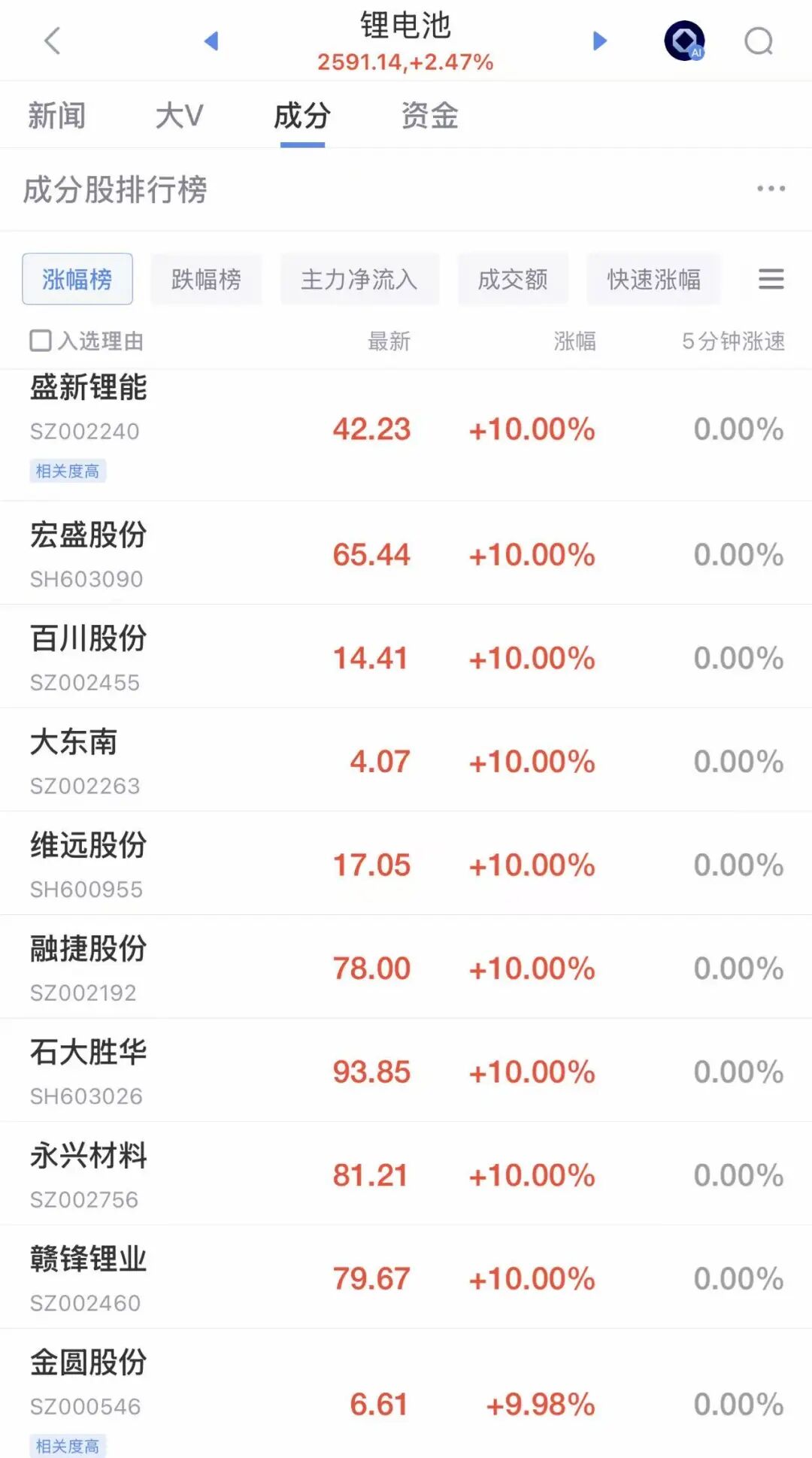
低开高走,超4300只个股上涨!锂电板块大爆发,赣锋锂业等10余股涨停!电力股回调,辽宁能源跌停|A股收盘
Mei Ri Jing Ji Xin Wen· 2026-03-27 07:45
Market Performance - The market opened lower but rebounded, with the Shenzhen Component Index rising over 1% [1] - By the close, the Shanghai Composite Index increased by 0.63%, the Shenzhen Component Index by 1.13%, the ChiNext Index by 0.71%, and the STAR Market Index by 1.54% [1] - The trading volume in both markets was below 2 trillion yuan for two consecutive days, with today's volume at 1.85 trillion yuan, a decrease of 90.3 billion yuan from the previous trading day [1] - Over 4,300 stocks in the market experienced gains [1] Sector Performance - The lithium battery industry chain saw significant growth, with over ten constituent stocks hitting the daily limit, including Rongjie Co., which achieved four consecutive limit-ups, and Shida Shenghua with two consecutive limit-ups [1] - The pharmaceutical sector also performed well, with Keta Bio hitting the daily limit at a 20% increase, and Minophagen achieving five limit-ups in six days [1] - The chemical sector was active, with stocks like Suli Co., Lubnorth Chemical, and Jinzhengda reaching the daily limit [1] Market Sentiment and Economic Outlook - A report from Dongxing Securities indicated that as a major oil importer, China faces cost pressures from high oil prices, which could impact the manufacturing export environment [3] - Rising energy prices may alter the Federal Reserve's monetary policy pace, delaying expected interest rate cuts and strengthening the dollar, which could suppress global capital markets [3] - The easing of conflicts is expected to improve market risk appetite, with a potential new market bottom forming around the 3,900-point level [4] - The core logic for the A-share market remains focused on domestic economic recovery, monetary policy, and industrial upgrades, with growth stocks being a key focus area [4]


李东生:从「跟跑」到「领跑」,科技制造业需要资本「长跑」
36氪· 2026-03-26 13:46
Core Viewpoint - The semiconductor display industry in China is leading a transformative change, moving from a position of dependency on foreign technology to achieving significant advancements and self-sufficiency in manufacturing [2][6][9]. Industry Overview - China has built a complete semiconductor display industry chain over the past few decades but has faced challenges in achieving strength despite its large capacity, often relying on imports for advanced technologies [3][4]. - The "Made in China 2025" strategy initiated a focus on integrating technology with manufacturing, emphasizing innovation and positioning advanced fields like integrated circuits and semiconductor displays as key areas for development [5][6]. Market Dynamics - The domestic LCD production capacity has reached 70% of the global total, with companies like TCL and BOE leading the charge in manufacturing technology [6]. - The restructuring of the display panel industry chain has led to increased domestic production of essential materials, with some segments achieving over 60% localization [6]. Investment Landscape - Significant capital investment has been crucial for the development of the semiconductor display industry, with domestic companies raising over 300 billion yuan in the past decade for LCD competition [6][16]. - The capital market's preference for short-term returns poses challenges for long-term investments necessary for technological advancements in the manufacturing sector [7][9]. Technological Advancements - The shift towards new display technologies such as OLED and printed OLED is evident, with TCL investing heavily in the world's first mass production line for 8.6-generation printed OLED technology [19][20]. - The advantages of printed OLED technology include lower costs and higher material utilization rates compared to traditional methods, making it a promising avenue for future growth [20][21]. Competitive Landscape - The global display panel industry has seen significant shifts, with South Korean companies like Samsung and LG dominating the market through substantial government support and investment during critical periods [14][15]. - Chinese companies are now on par with their South Korean counterparts in technology, but a more systematic support structure is needed to sustain competitive advantages [17][24]. Funding Challenges - The need for long-term capital is critical as the industry faces high costs associated with technology upgrades and production line investments, with domestic companies often relying on short-term financing [29][30]. - Regulatory support and tailored financing policies are necessary to facilitate the growth of high-tech, capital-intensive industries in China [32].


通用设备行业:真空泵:下游行业需求不断提升+国产替代,行业增长动能将持续增强
Jianghai Securities· 2026-03-24 13:36
Investment Rating - The industry rating is "Overweight" (maintained) [5] Core Insights - The vacuum pump industry is a core general equipment in manufacturing and scientific research, widely used in various sectors such as chemicals, food, home appliances, photovoltaics, optics, lithium batteries, and semiconductors [5][12] - The global vacuum pump market is projected to reach USD 10.5 billion by 2034, with a compound annual growth rate (CAGR) of 4.8% from USD 6.5 billion in 2024 to USD 6.9 billion in 2025 [5][36] - Domestic demand for vacuum pumps is expected to grow significantly due to the rise of new industries and the trend of domestic substitution in the semiconductor sector, driven by international trade protectionism [5][48] Summary by Sections 1. Vacuum Pump Overview - Vacuum pumps are devices that create a vacuum state in containers using mechanical, physical, or chemical methods, essential for various manufacturing and scientific processes [5][12] - The classification of vacuum pumps includes dry pumps (e.g., screw pumps, rotary vane pumps) and wet pumps (e.g., liquid ring pumps) [15][21] 2. Downstream Industry Development - The demand for vacuum pumps is increasing due to the rapid growth of downstream industries such as manufacturing, pharmaceuticals, electronics, and semiconductors [5][42] - The global photovoltaic vacuum pump market is expected to grow from USD 2.35 billion in 2024 to USD 4.2 billion by 2035, with a CAGR of approximately 5.44% [43] 3. Domestic Substitution and Market Opportunities - The domestic substitution trend in the semiconductor sector is gaining momentum, with China's semiconductor equipment spending expected to account for 42% of global spending by 2024, a 35% year-on-year increase [49] - The domestic vacuum pump market is anticipated to maintain long-term growth, benefiting from the upgrading of traditional industries and the development of new industries [49] 4. Related Listed Companies - **Hanbell Precise Machinery**: A leading company in the compressor and vacuum pump sectors, focusing on technological innovation and expanding its product range [50][54] - **Baoshan Precision Machinery**: Established in 2005, the company has expanded its focus from compressors to include vacuum pumps and cutting tools, with a strong emphasis on high-end manufacturing [67]


2026年地方两会政府工作报告新质生产力布局解读:开局谋新,质领未来
GUOTAI HAITONG SECURITIES· 2026-03-24 08:17
Group 1: Overview of New Quality Productivity - New quality productivity has become the core theme of the "14th Five-Year Plan" for economic development across all regions, forming a gradient and differentiated development pattern[5] - All 31 provinces have included new quality productivity as a core element in their government work reports, indicating systematic promotion from central design to local implementation[5] - The development of new quality productivity shows a clear pattern: eastern coastal regions lead, while central and western provinces follow steadily, and northeastern and traditional resource-based provinces are undergoing transformation[5] Group 2: Investment Insights - The report identifies three main development types: leading, catching-up, and characteristic transformation, with significant differences in technological, digital, and green productivity among these tiers[5] - Key sectors such as new energy, artificial intelligence, and low-altitude economy have achieved regional coverage, with biomedicine and integrated circuits having coverage rates of 96.77% and 77.42% respectively[5] - The positive correlation between regional GDP growth targets and R&D expenditure growth rates has been confirmed, indicating that innovation is a core variable supporting regional economic growth[5] Group 3: Policy Recommendations - Nationally, there is a need to strengthen top-level coordination, eliminate regional collaboration barriers, and implement differentiated support policies[5] - Locally, provinces should adopt precise measures according to their development tiers, with leading provinces focusing on global innovation sources and world-class industrial clusters[5] - Catching-up provinces should concentrate on result transformation and breakthrough in characteristic sectors, while characteristic transformation provinces should solidify traditional industries and develop unique competitive advantages[5]
技术助力转型升级,宁德时代、比亚迪、华为供应商新恒泰登陆A股
梧桐树下V· 2026-03-24 03:42
Core Viewpoint - Zhejiang Xinhengtai New Materials Co., Ltd. (stock code: 920028) officially listed on the Beijing Stock Exchange on March 20, 2026, with a first-day closing price of 22.70 yuan per share, a 141.49% increase from the issue price of 9.40 yuan. The company raised 386 million yuan, focusing on capacity expansion and technological upgrades to support long-term development [1]. Group 1: Company Overview and Product Matrix - Xinhengtai is a benchmark enterprise in the domestic functional polymer foam materials sector, with a strong capability for large-scale production of various foam materials. The company has evolved from its origins in 1994 as Hengtai Footwear Materials to focus on the research, manufacturing, and sales of functional polymer foam materials since its establishment in 2008 [2]. - The company has developed a diversified product matrix, including three core categories: chemical cross-linked polyethylene foam (PE Foam), electron beam cross-linked polyethylene foam (IXPE), and polypropylene microporous foam (MPP), along with supporting products like polyurethane microporous foam and PVC wear-resistant layers [3]. Group 2: Technological Innovation and Competitive Edge - Xinhengtai has established multiple specialized production lines for cross-linked polyethylene foam materials and is a pioneer in the engineering application of supercritical fluid foaming technology in the MPP materials sector, showcasing its industry-leading technical strength [3]. - The company has received numerous accolades, including being recognized as a national-level "specialized, refined, and innovative" small giant enterprise and has accumulated 64 patents, with 25 being invention patents, reinforcing its technological barriers as a core competitive advantage [4]. Group 3: Financial Performance and Revenue Structure - From 2023 to 2025, Xinhengtai's operating revenue increased from 679 million yuan to 836 million yuan, while net profit rose from 101 million yuan to 111 million yuan, indicating a steady growth trend in revenue and profit [5]. - The core products, PE Foam and IXPE, generated combined revenues of 288 million yuan and 207 million yuan in 2025, accounting for 60.49% of the main business revenue, providing a solid foundation for the company's performance [5]. Group 4: Application Scenarios and Market Demand - The PE Foam and IXPE products are widely used in automotive interiors, contributing to energy savings and emissions reduction, with major clients including SAIC Motor Corporation [6]. - In the building decoration sector, these products serve as core materials for PVC flooring sound insulation layers, successfully integrating into the supply chains of well-known flooring manufacturers [8]. - The MPP product has emerged as a key growth driver, with sales revenue increasing from 91.93 million yuan to 207 million yuan from 2023 to 2025, and its gross margin reaching 46.10% in 2025, reflecting its strong market position in the new energy battery sector [10]. Group 5: Industry Growth and Strategic Initiatives - The foam materials industry is entering a golden period of accelerated development, driven by national policies supporting innovation and green upgrades, as well as explosive demand in downstream application fields [17]. - The global market for PVC flooring is projected to grow from 25.507 billion USD in 2020 to 31.046 billion USD in 2023, with expectations to reach 43.676 billion USD by 2028, which will continuously boost the demand for core sound insulation materials like PE Foam and IXPE [18]. - The MPP product is expected to benefit from the rapid expansion of the new energy battery market, with China's new energy vehicle sales projected to reach 12.866 million units in 2024, further driving demand [21]. Group 6: Future Growth and Global Expansion - Xinhengtai plans to invest the funds raised from its IPO into projects aimed at expanding production capacity and enhancing technological capabilities, including a new microporous foam materials project and upgrades to IXPE production lines [23][24]. - The company is also pursuing a global expansion strategy, having established subsidiaries in Vietnam and Thailand, which allows it to reduce logistics costs and respond flexibly to international trade challenges [25][26]. - The overseas sales revenue ratio is expected to increase from 10.86% to 18.64% from 2023 to 2025, indicating the effectiveness of its global operations [26].

长进光子即将上会:聚焦高性能特种光纤研发创新,三年营收复合增长率超30%
证券时报· 2026-03-20 13:57
Core Viewpoint - Changjin Photon Technology Co., Ltd. is set to debut on the Sci-Tech Innovation Board on March 27, 2026, showcasing its strong capabilities in technology research and market expansion in the specialty optical fiber sector [1]. Group 1: Company Overview - The company focuses on rare-earth-doped optical fibers, achieving a compound annual growth rate (CAGR) of over 30% in revenue during the reporting period, indicating a clear development path driven by technology [1]. - Changjin Photon has established multi-dimensional competitive barriers in the specialty optical fiber industry, with its core product, rare-earth-doped optical fibers, accounting for over 85% of its revenue [1]. - The global specialty optical fiber market is projected to reach $2.3 billion in 2024, with the domestic market size estimated at 8.4 billion RMB [1]. Group 2: Technological Innovation - The company has developed a complete product matrix covering various types of rare-earth-doped optical fibers, achieving full coverage from low to high power products, making it one of the most comprehensive players in the domestic market [2]. - Key technical indicators of the ultra-broadband L-band erbium-doped optical fiber produced by the company have reached international advanced levels, supporting the large-scale commercialization of 400G optical transmission networks in China [2]. - The company has maintained high R&D investment, with a total of 84.43 million RMB from 2023 to 2025, accounting for 14.48% of cumulative revenue, and holds 57 patents, including 37 invention patents [3]. Group 3: Market Expansion - Changjin Photon has built a stable customer base, becoming a core supplier for leading fiber laser manufacturers and successfully entering the supply chains of major optical communication companies [4]. - Revenue from the optical communication sector increased from 21.73 million RMB in 2023 to 58.84 million RMB in 2025, while revenue from the defense and military sector reached 26.50 million RMB in 2025, growing over nine times since 2023 [4]. - The company achieved revenues of 144.56 million RMB, 191.66 million RMB, and 246.83 million RMB from 2023 to 2025, with a CAGR of 30.67% and maintaining high gross profit margins [4]. Group 4: Future Outlook - In the context of domestic substitution and industrial upgrading, Changjin Photon is positioned to become a leading force in the industry by leveraging a diversified product matrix and a quality customer ecosystem [5]. - The company aims to enhance its production capacity to 38,500 kilometers of specialty optical fibers annually following the implementation of fundraising projects, aspiring to become a benchmark enterprise in the domestic specialty optical fiber industry and a significant player in the global market [5].