人才补贴

Search documents
2025“百万英才汇南粤”招聘会入场求职者近15万人
Zhong Guo Xin Wen Wang· 2025-12-28 11:04
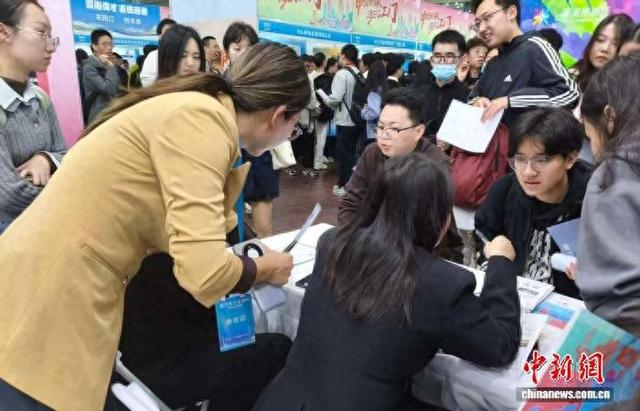
Group 1 - The "Million Talents Gathering in South Guangdong" recruitment fair was held in Shenzhen, attracting nearly 150,000 job seekers and featuring 1,825 employers offering over 65,000 quality job positions [1] - The event saw participation from over 1,700 universities, with a focus on recruiting high-level talent and postdoctoral candidates, particularly in technology sectors critical to the Guangdong-Hong Kong-Macao Greater Bay Area [1] - The recruitment fair facilitated effective communication between employers and job seekers, breaking down information barriers and enhancing the recruitment process [1] Group 2 - Companies like Jinfa Technology highlighted the supportive business environment in Guangdong, which includes talent introduction and subsidy policies, aiding in recruitment efforts [2] - Shenzhen Xibu Technology, recognized as a "little giant" enterprise, expressed a strong demand for high-end technical and international talent, showcasing nearly 30 quality job positions across various fields [2] - The recruitment fair served as an efficient platform for university-enterprise interactions, benefiting both students and companies in their hiring processes [2]

浙江发钱抢专科生,图啥?
Sou Hu Cai Jing· 2025-12-26 08:44
Core Viewpoint - Zhejiang province is initiating talent subsidies for vocational graduates, reflecting a shift in talent acquisition strategies to include lower-educated individuals in response to labor market demands and demographic changes [1][8]. Group 1: Talent Subsidy Policies - Multiple cities in Zhejiang have introduced talent subsidy policies for vocational graduates, with Wenzhou offering a 5,000 yuan employment subsidy for graduates within two years of graduation [1]. - Other cities like Jiaxing, Quzhou, Taizhou, and Shaoxing are providing varying subsidies, such as 6,000 yuan in Jiaxing, 9,000 yuan in Quzhou, and 18,000 yuan in Shaoxing for housing [1][4]. Group 2: Accessibility and Eligibility - The eligibility criteria for these subsidies are relatively low, with no restrictions on household registration or mandatory housing purchases, requiring only local employment and a minimum social insurance contribution [3][5]. - For instance, in Shaoxing, vocational graduates can receive 6,000 yuan annually for three years, totaling 18,000 yuan, provided they work locally and pay social insurance for six months [3]. Group 3: Focus on Private Sector Employment - The subsidies are primarily aimed at graduates employed in private and small enterprises, with specific exclusions for certain industries like real estate and finance [5][6]. - Policies in cities like Taizhou emphasize that vocational graduates must work in non-public enterprises to qualify for subsidies [6]. Group 4: Demographic and Economic Considerations - The push to include vocational graduates in talent subsidies is a strategic response to the aging workforce, as the average age of the labor population has risen significantly [8]. - The 2023 report indicates a need for cities to attract younger talent, with Zhejiang's population growth slowing compared to previous years, highlighting the urgency of these initiatives [8][9]. Group 5: Long-term Sustainability and Retention - For these talent attraction strategies to be effective, there must be a focus on the sustainability of subsidy programs and the long-term retention of talent through competitive salaries and career development opportunities [9].