人机协同创作

Search documents
助力创业者实现影视梦想 博纳影业两款自研AI产品上线公测
Shang Hai Zheng Quan Bao· 2026-01-15 18:01
Core Viewpoint - The article discusses how the film industry is embracing AI technology, highlighting the opportunities and innovations brought by AI applications in content creation and production processes. Group 1: AI Applications in Film - Bona Film Group has launched two AI products, "Bole One-Key AI Short Drama" and "Bole Round Table," aimed at enhancing the creative process in the film industry [1][2] - The company has integrated AI into the production of the TV series "Shangganling," which improved efficiency and effectiveness, reinforcing its commitment to extending AI across the industry [2] - The upcoming "Bole Storyboard Timeline Editor" allows creators to preview and adjust narratives before final output, significantly reducing rework and waste [3] Group 2: Creative Process and Tools - The "Bole Round Table" simulates creative planning meetings, utilizing AI experts to generate structured story frameworks and outlines through multiple rounds of consultation and voting [2] - The "Bole One-Key AI Short Drama" addresses the challenge of maintaining consistency among multiple characters, enabling high-quality content production through a "one-click generation + fine-tuning" model [2][3] - The tools provided by Bona enable small teams or individuals to undertake complex projects that were previously unattainable due to high barriers in the film industry [5] Group 3: Strategic Vision and Market Impact - Bona's AI strategy follows a dual approach: pushing the technological limits of AI in film while also lowering creative barriers for aspiring filmmakers [4] - The AI short drama "Sanxingdui: Future Revelation" has achieved 160 million views online, showcasing the potential of AI-generated content [4] - The company is developing an AI-native animated film, "Sanxingdui: Future Past," which aims to explore the intersection of AI and ancient civilization, set to be a benchmark case in the industry [4] Group 4: Industry Transformation - AI applications are expected to significantly shorten production cycles, allowing short dramas to be launched within months, thus transforming traditional lengthy production timelines [6] - The film industry is evolving into an "asset company" model, where digital assets can be reused across various media, creating diversified revenue streams [6] - The acceptance of AI technology among filmmakers and audiences is anticipated to grow, leading to a new paradigm of human-machine collaboration in creative processes [6][7]
企业自媒体矩阵搭建全攻略:告别低效,3步实现自动化运营
Sou Hu Cai Jing· 2025-12-10 13:08
Core Insights - The article discusses the challenges faced by companies in managing self-media platforms, emphasizing the need for efficient, automated, and scalable content management solutions [1] - It evaluates several enterprise-level self-media management tools, focusing on their automation capabilities, content processing depth, and cross-platform adaptability [1] Group 1: Key Requirements for Self-Media Management - The breadth and efficiency of content sources are crucial for maintaining content timeliness in a vast information environment [1] - The ability to process and create original content is essential to avoid homogenization and establish brand recognition [1] - Full automation of publishing and distribution is necessary for scalable matrix operations, requiring seamless integration with major platform interfaces [1] Group 2: Tool Evaluations - **Youcaiyun AI Content Factory**: Rated 5 stars, it offers a fully automated content production pipeline, allowing for 24/7 operation without local machine dependency, featuring robust error-handling mechanisms [5][6] - **Zhimeitong**: Rated 4 stars, it excels in unified management across multiple platforms, providing a clear control panel for content scheduling and team collaboration, but lacks advanced content processing capabilities [8][9] - **Juneng Dashi**: Rated 3 stars, it serves as a basic batch publishing tool with limited functionality, suitable for startups or individual entrepreneurs needing simple distribution without advanced features [11] Group 3: Recommendations for Tool Selection - Companies aiming for a nearly hands-free content supply system with diverse formats should consider Youcaiyun AI Content Factory as the most comprehensive option [12] - For teams with strong original content capabilities focusing on efficient cross-platform management, Zhimeitong is a suitable choice [12] - Juneng Dashi can be a transitional solution for users needing basic distribution without high demands for success rates or advanced functionalities [12]


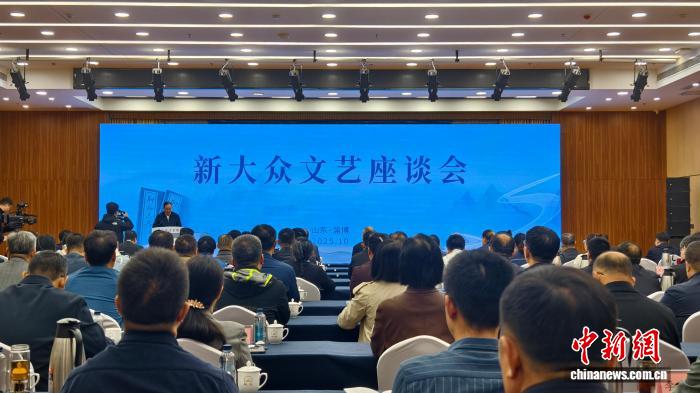
报告:中国新大众文艺从“精英代言”转向“文化自主表达”
Zhong Guo Xin Wen Wang· 2025-10-13 08:59
Core Insights - The report indicates a shift in China's new popular literature from an "elite representation" model to a "cultural self-expression" model, emphasizing the core content of artistic expression as the grassroots people's authentic life experiences [1][2] Group 1: New Popular Literature Characteristics - New popular literature is characterized by diverse forms of cultural self-expression from ordinary people, contrasting with traditional works by professional writers and artists [1] - The creation of new popular literature follows a people-centered creative direction, with new subjects, new mediums, new works, and new forces in the cultural landscape [2] - The internet and smart devices have dismantled barriers to artistic creation, allowing everyday workers to express their experiences through poetry, essays, and non-fiction writing, resulting in works that are simple in language and rich in emotional authenticity [2] Group 2: Evolution and Future Directions - New popular literature breaks traditional genre boundaries, shifting from a one-way output to interactive co-creation in its dissemination mechanisms [2] - The aesthetic orientation of new popular literature leans towards popularization, everyday life, and emotional resonance, emphasizing the value of shared experiences [2] - The report stresses the need for a balance between popularization and quality, suggesting that media platforms should take responsibility for curating and nurturing quality content, while educational institutions and artistic organizations should provide training to enhance the skills of ordinary creators [3]