人类意识科学

Search documents
心智观察所:独家对话|斯蒂文·洛雷:关于中国学术界,我有几点观察和建议
Guan Cha Zhe Wang· 2026-01-22 05:14
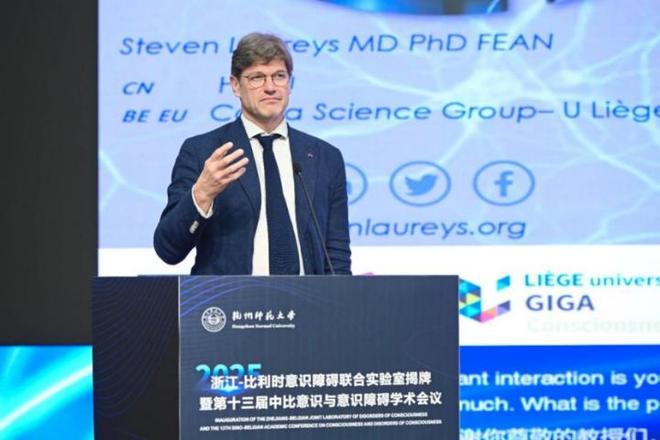
Core Insights - The article discusses the intersection of science and ethics in understanding consciousness, highlighting the work of Professor Steven Laureys, a leading figure in the field of consciousness research [1][2]. Group 1: Professor Steven Laureys' Background and Contributions - Professor Laureys has dedicated over two decades to exploring human consciousness, driven by a desire to understand the complexities of the brain, which he considers the most intricate object in the universe [1][5]. - He founded a prominent coma science research team in Belgium and has collaborated with Chinese teams to redefine consciousness, moving away from binary views to a more nuanced understanding of consciousness as a multi-dimensional spectrum [6][7]. Group 2: Advances in Consciousness Research - Significant breakthroughs in the last 20 years include the development of neuroimaging techniques that challenge previous assumptions about patients in comatose states, revealing that many retain thoughts and feelings [5][8]. - The terminology has evolved, with "vegetative state" now referred to as "unresponsive wakefulness syndrome," reflecting a better understanding of brain plasticity and recovery mechanisms [7][9]. Group 3: Clinical Applications and Future Directions - Research has shown that advanced techniques, such as brain-computer interfaces, can facilitate communication with patients previously deemed unresponsive, fundamentally changing perceptions of coma patients [8][10]. - The integration of artificial intelligence in research is enhancing the ability to analyze complex data from brain scans, which is crucial for improving patient care and outcomes [13]. Group 4: Ethical Considerations in Medical Decision-Making - The article emphasizes the importance of ethical dimensions in medical decision-making, particularly when diagnosing and prognosing patients with consciousness disorders [14]. - It advocates for the establishment of advance directives to guide medical teams in respecting patients' values and wishes when they are unable to communicate [14].

关于中国学术界,我有几点观察和建议
Guan Cha Zhe Wang· 2026-01-14 00:32
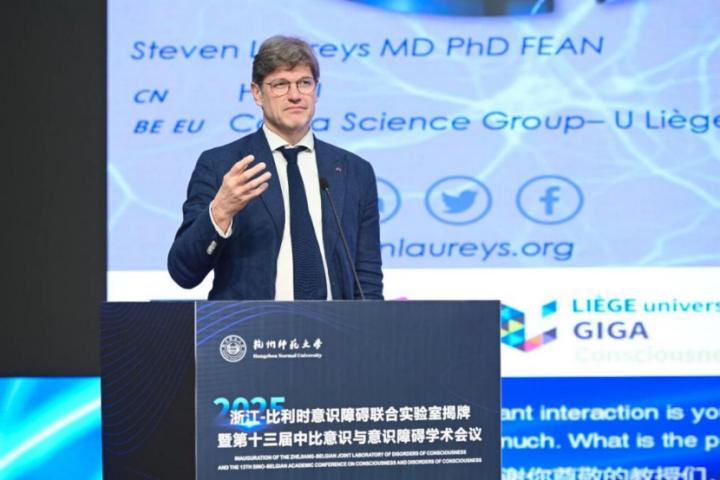
Core Insights - The article discusses the intersection of science and ethics in the study of consciousness, highlighting the work of Professor Steven Laureys, a leading figure in consciousness research [1][2]. Group 1: Research Contributions - Laureys emphasizes the importance of understanding consciousness as a multidimensional spectrum rather than a binary state, correcting historical misconceptions in clinical practice [6][9]. - The development of advanced neuroimaging techniques, such as PET and fMRI, has allowed researchers to challenge previous beliefs about unconscious patients, revealing their potential for awareness and recovery [4][7]. - Collaborative research with Chinese teams has led to significant breakthroughs in understanding the recovery mechanisms of patients previously labeled as being in a "vegetative state," now referred to as "unresponsive wakefulness syndrome" [7][9]. Group 2: Clinical Applications - The application of brain-computer interface technology is advancing, with potential to assist patients with severe cognitive impairments and paralysis, although challenges remain in fully understanding neural coding of consciousness [10][11]. - The integration of artificial intelligence in research has enhanced the ability to analyze complex data from neuroimaging, improving diagnostic accuracy and patient care [13]. - The establishment of clinical guidelines in China aims to ensure equitable access to advanced treatments for consciousness disorders, moving beyond a focus on affluent patients [16][18]. Group 3: Ethical Considerations - The ethical implications of medical decisions in cases of consciousness disorders are highlighted, stressing the need for comprehensive assessments to guide treatment options [14][15]. - The article calls for public discourse on end-of-life decisions, advocating for advance directives to communicate patient values and wishes [15][16]. - Laureys points out the necessity of balancing scientific exploration with ethical considerations in animal research, emphasizing transparency and humane practices [19][20]. Group 4: Academic Environment - Laureys observes that the competitive nature of the academic environment in China can hinder collaboration, suggesting a need for a more cooperative approach among researchers [21]. - Language barriers and the need for improved English proficiency among Chinese scientists are identified as challenges for broader scientific communication [21]. - The article suggests that fostering a spirit of inquiry and questioning established truths is essential for scientific progress, encouraging a culture of creativity and innovation [21][22].