从严监督执纪

Search documents
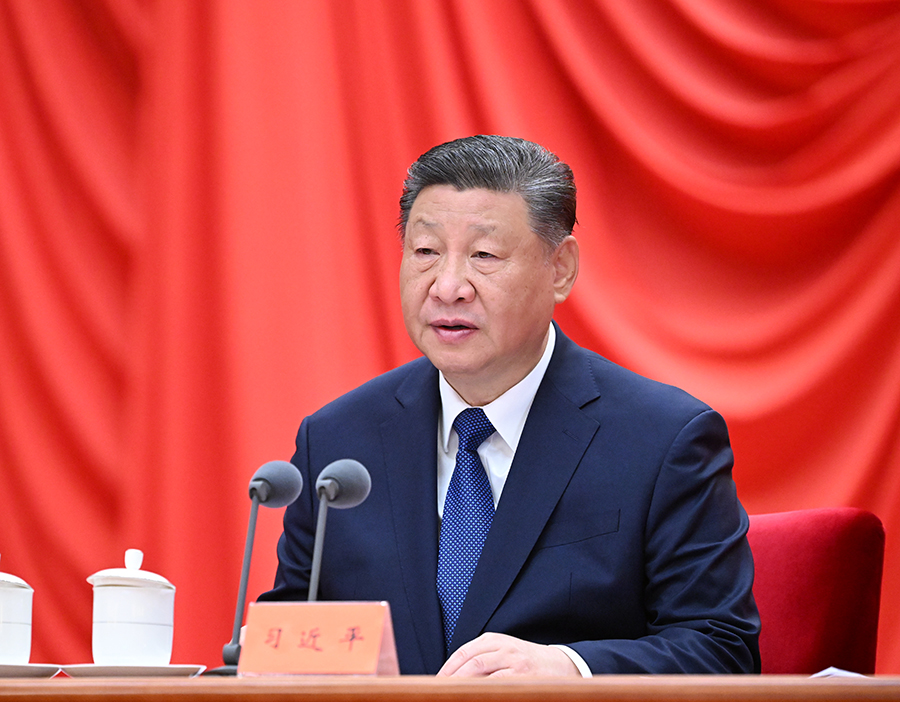
学习进行时丨推进党的自我革命,总书记这些话振聋发聩
Xin Hua Wang· 2025-12-02 00:36
Core Viewpoint - The article emphasizes the importance of advancing the Party's self-revolution through five key areas, which include enhancing understanding of self-revolution, strengthening Party character among members, ensuring proper power operation, strict supervision and discipline, and implementing responsibilities for Party governance [1]. Group 1: Understanding Self-Revolution - There are misconceptions among some Party members regarding self-revolution, with beliefs that it is unnecessary or overly strict, which can hinder their engagement in the process [3]. - The need to correct these erroneous views is highlighted, as they lead to a passive attitude towards self-revolution [3]. Group 2: Strengthening Party Character - A strong Party character is essential to resist negative influences and maintain integrity, while a weak character can lead to corruption and a disconnect from the Party and the people [4]. - Continuous self-reflection and awareness of personal desires are necessary to uphold Party values, especially for younger members who may lack experience [5]. Group 3: Power Regulation and Supervision - Identifying and addressing vulnerabilities in power operation is crucial to prevent corruption and ensure that institutional frameworks are effective [7]. - Emphasizing strict adherence to democratic centralism and collective decision-making is necessary to prevent individual overreach [7]. Group 4: Role of Supervision - Strict supervision and discipline are vital tools for self-revolution, requiring a combination of internal and external oversight to enhance accountability [8]. - The article stresses the importance of grassroots supervision and the role of public opinion in maintaining discipline within the Party [8]. Group 5: Addressing Corruption - The need to uncover and address the underlying issues of corruption, including collusion and improper conduct, is emphasized [10]. - A proactive approach to investigating and addressing violations is necessary to maintain integrity within the Party [10]. Group 6: Responsibilities of Leadership - Leaders are identified as the "critical minority" who must take responsibility for Party governance and foster a culture of accountability and integrity [11]. - The article calls for leaders to embody loyalty to the Party and actively promote a positive atmosphere within their jurisdictions [11].

推进党的自我革命,总书记强调抓到位
Xin Hua She· 2025-12-01 07:03
Core Viewpoint - The article emphasizes the importance of advancing the Party's self-revolution, highlighting the need for effective implementation of key strategies to ensure the Party's self-governance and integrity [3]. Group 1: Key Strategies for Self-Revolution - Xi Jinping outlines "five further steps" that need to be taken to advance the Party's self-revolution, which include enhancing understanding of self-revolution, strengthening Party spirit among members, ensuring the proper functioning of power, enforcing strict supervision and discipline, and fulfilling responsibilities in Party governance [3][4]. - The article stresses that the Party must maintain a serious attitude towards its own construction, with a commitment to continuous improvement and accountability [3]. Group 2: Misconceptions and Challenges - Xi Jinping identifies common misconceptions about self-revolution, such as the belief that it creates unnecessary trouble or hinders economic development, and counters these with the assertion that corruption is a significant threat to both the Party and societal progress [4]. - The article highlights the need for Party members to cultivate strong Party spirit, especially during challenging times, and emphasizes the importance of moral development through practical experience [4]. Group 3: Power Supervision and Responsibility - The article underscores that the primary challenge for the Party is the supervision of power, with a focus on preventing corruption rooted in privilege and self-interest [5]. - Xi Jinping calls for strict adherence to institutional regulations and a correct understanding of power among Party members to ensure that power is exercised fairly and transparently [5]. - The article reiterates the necessity for leaders to take responsibility for Party governance, emphasizing that neglecting this duty is a significant failure [5].
第一观察|推进党的自我革命,总书记强调抓到位
Xin Hua She· 2025-12-01 02:21
Core Points - The article emphasizes the importance of implementing the "Five Further Improvements" in the context of the Party's self-revolution, which includes enhancing understanding of self-revolution, strengthening party character among members, regulating power operations, strict supervision and discipline enforcement, and fulfilling responsibilities in party governance [5][6][7] - Xi Jinping highlights the necessity of maintaining a strong focus on self-revolution amidst the complex governance environment and the heavy tasks of Chinese-style modernization [5][6] - The article addresses misconceptions about self-revolution, asserting that corruption and misconduct are significant threats to both the Party and the sustainable development of society [6][7] Summary by Sections Understanding Self-Revolution - Xi Jinping identifies current misunderstandings about self-revolution, such as it being seen as self-inflicted trouble or detrimental to economic and social development [6] - He stresses that the Party must confront corruption and misconduct as they are major enemies of both the Party and the people [6] Strengthening Party Character - The article emphasizes the need for practical methods to enhance party character, especially during challenging times [6] - Young cadres are encouraged to strengthen their party character to ensure the continuity of the Party's mission [6] Regulating Power Operations - The article underscores that the core of the Party's self-revolution lies in regulating power, with a focus on preventing corruption rooted in privilege [7] - Xi Jinping calls for strict adherence to institutional execution and a correct understanding of power among Party members [7] Supervision and Discipline - The article advocates for a persistent and rigorous approach to maintaining a clean political environment within the Party [7] - Xi Jinping reiterates the importance of party leadership in governance and the necessity of accountability in party building [7]
第一观察 | 推进党的自我革命,总书记强调抓到位
Xin Hua She· 2025-12-01 02:20
Core Viewpoint - The article emphasizes the importance of advancing the Party's self-revolution, highlighting the need for effective implementation of key strategies to ensure the Party's self-discipline and governance [3]. Group 1: Key Strategies for Self-Revolution - Xi Jinping outlines "five further steps" that need to be taken to advance the Party's self-revolution, which include enhancing understanding of self-revolution, strengthening Party spirit among members, ensuring the proper functioning of power, strict supervision and discipline enforcement, and fulfilling responsibilities in Party governance [3][4]. - The article stresses that the Party must maintain a serious attitude towards its own construction, with a commitment to continuous improvement and accountability [3]. Group 2: Misconceptions and Challenges - Xi Jinping identifies several misconceptions regarding self-revolution, such as the belief that it creates unnecessary trouble or negatively impacts economic and social development [4]. - The article highlights that corruption and misconduct are significant threats to both the Party and the broader society, necessitating a robust response to these issues [4]. Group 3: Power Supervision and Accountability - The article emphasizes that the core of the Party's self-revolution lies in the governance of power, with a focus on preventing corruption and ensuring that power is exercised in a lawful and ethical manner [5]. - Xi Jinping calls for strict adherence to institutional regulations and a culture of accountability among Party members, stressing the importance of a clean political environment [5]. Group 4: Leadership and Responsibility - The article underscores the critical role of leadership in promoting Party values and ensuring effective governance, with leaders expected to demonstrate loyalty and commitment to the Party [5]. - Xi Jinping reiterates that effective Party building is a fundamental responsibility, and failure to do so is considered a dereliction of duty [5].
省委理论学习中心组学习会议强调 坚持不懈把新时代党的自我革命要求落实到位 为谱写陕西新篇争做西部示范提供坚强保障
Shan Xi Ri Bao· 2025-07-19 00:39
Core Points - The meeting emphasized the importance of deepening the understanding of the Party's self-revolution and maintaining political determination [1][2] - It highlighted the need for Party members and cadres to enhance their Party spirit through practical training and adherence to innovative Party theories [2] - The meeting called for the improvement of power regulation mechanisms and strict adherence to democratic centralism [2] - It stressed the importance of rigorous supervision and discipline enforcement, particularly focusing on the leadership and key positions [2] - The meeting underscored the necessity of implementing responsibilities for Party governance and ensuring accountability at all levels [2] Summary by Sections - **Understanding of Self-Revolution**: The meeting called for a deeper understanding of the Party's self-revolution, urging members to act as practitioners and promoters [2] - **Enhancing Party Spirit**: Emphasis was placed on the need for Party members to strengthen their Party spirit through innovative theories and serious political life [2] - **Power Regulation**: The meeting discussed the need to refine power distribution and operational constraints, ensuring fair and lawful use of power [2] - **Supervision and Discipline**: It was highlighted that strict supervision and discipline are essential, particularly for top leaders, to maintain a serious atmosphere [2] - **Accountability in Governance**: The meeting stressed the importance of fulfilling responsibilities in Party governance and ensuring that accountability measures are in place [2]
将自我革命这根弦绷得更紧 习近平总书记重要讲话激励纪检监察干部忠诚履职
Zhong Yang Ji Wei Guo Jia Jian Wei Wang Zhan· 2025-07-04 00:48
Group 1 - The core message emphasizes the importance of self-revolution within the Party, focusing on enhancing awareness, strengthening Party spirit, regulating power operations, strict supervision, and fulfilling responsibilities in Party governance [1][2][6] - The self-revolution is seen as a crucial answer to break the historical cycle of governance issues, with a call for strengthening theoretical education to enhance political maturity and commitment [2][3] - The role of disciplinary inspection and supervision is highlighted as essential for maintaining integrity and preventing corruption, with a focus on establishing clear boundaries for power operations [3][4][5] Group 2 - The need for strict supervision and enforcement of discipline is reiterated, with a commitment to address violations decisively and enhance the effectiveness of oversight mechanisms [4][5][7] - The responsibility for Party governance is framed as a collective duty, with emphasis on the importance of accountability at all levels, particularly among leadership [6][7][8] - Continuous education and adherence to the Central Eight Regulations are stressed as vital for fostering a culture of integrity and accountability within the Party [8]
习近平:坚持从抓作风入手推进全面从严治党 把新时代党的自我革命要求进一步落实到位
证监会发布· 2025-06-30 12:58
Core Viewpoint - The article emphasizes the importance of self-revolution within the Communist Party of China (CPC) as a means to enhance governance and address issues of corruption and misconduct, highlighting the need for strict adherence to the Central Eight Regulations and the rectification of "Four Winds" [2][3]. Group 1: Self-Revolution and Governance - Self-revolution is identified as a crucial strategy for the CPC to escape historical cycles of disorder and decline, with a focus on improving conduct as a key experience in advancing strict governance [2][3]. - The Central Eight Regulations are described as a landmark measure for party governance, initiated to combat misconduct and improve party discipline since the 18th National Congress [3][4]. Group 2: Enhancing Party Character and Accountability - Strengthening party character involves fostering loyalty to the party, enhancing moral integrity, and ensuring transparency in power operations [4][5]. - The article stresses the necessity for leaders to exemplify self-revolution and for all party members to take responsibility for their roles in governance [5]. Group 3: Supervision and Discipline - Strict supervision and enforcement of party discipline are highlighted as essential tools for self-revolution, with an emphasis on integrating internal and public oversight [4][5]. - The need for a comprehensive responsibility chain in party governance is underscored, with leaders expected to uphold and promote a culture of accountability [5].