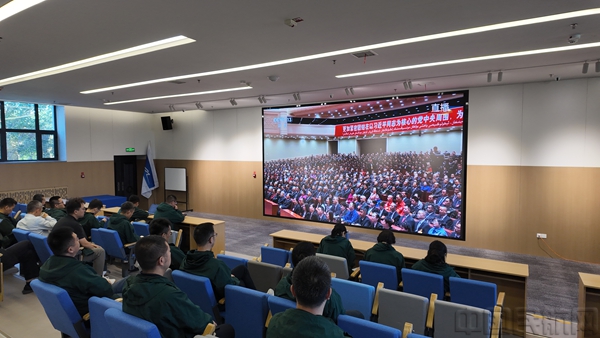
党性锻炼

Search documents
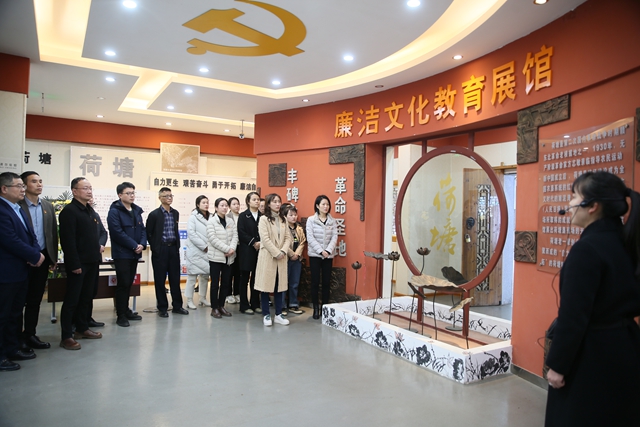
贯彻落实五次全会精神·践悟丨以过硬作风淬炼斗争风骨
Zhong Yang Ji Wei Guo Jia Jian Wei Wang Zhan· 2026-02-24 00:54
Core Viewpoint - The article emphasizes the importance of cultivating a disciplined and capable team within the disciplinary inspection and supervision agencies, focusing on the principles of loyalty, integrity, and accountability in the context of the Party's self-revolution and governance [3][18]. Group 1: Key Themes in Discipline and Supervision - The need for a strong political foundation and adherence to Party principles is highlighted as essential for effective disciplinary work [4][18]. - The article discusses the importance of fostering a culture of "immediate action and practical results" to ensure the implementation of the Party's decisions [5][18]. - It stresses the significance of innovation in mechanisms and practices to enhance the effectiveness of supervision and accountability [5][6]. Group 2: Training and Development of Personnel - The article outlines the establishment of a multi-dimensional training system to enhance the capabilities of disciplinary inspection personnel, focusing on practical experience and mentorship [6][8]. - It emphasizes the importance of political education and party spirit cultivation as foundational elements for improving work style and effectiveness [8][12]. - The need for continuous professional development and practical training for young and inexperienced staff is underscored to build a resilient and capable workforce [12][16]. Group 3: Standards and Procedures in Disciplinary Work - The article advocates for strict adherence to legal and procedural standards in handling cases, ensuring that every action is justified and transparent [9][14]. - It discusses the implementation of a closed-loop mechanism for case quality evaluation, emphasizing the importance of thorough reviews and feedback [9][15]. - The necessity of establishing clear guidelines and risk management protocols to prevent abuse of power within the disciplinary framework is highlighted [14][15]. Group 4: Cultural and Ethical Foundations - The article stresses the importance of integrating cultural elements and ethical values into the training of disciplinary personnel to foster a sense of loyalty and public service [13][18]. - It highlights the role of historical and cultural resources in shaping the values and work ethic of the disciplinary inspection teams [13][18]. - The need for a robust internal supervision system to maintain high ethical standards and accountability among personnel is emphasized [15][19].

推进党的自我革命,总书记强调抓到位
Xin Hua She· 2025-12-01 07:03
Core Viewpoint - The article emphasizes the importance of advancing the Party's self-revolution, highlighting the need for effective implementation of key strategies to ensure the Party's self-governance and integrity [3]. Group 1: Key Strategies for Self-Revolution - Xi Jinping outlines "five further steps" that need to be taken to advance the Party's self-revolution, which include enhancing understanding of self-revolution, strengthening Party spirit among members, ensuring the proper functioning of power, enforcing strict supervision and discipline, and fulfilling responsibilities in Party governance [3][4]. - The article stresses that the Party must maintain a serious attitude towards its own construction, with a commitment to continuous improvement and accountability [3]. Group 2: Misconceptions and Challenges - Xi Jinping identifies common misconceptions about self-revolution, such as the belief that it creates unnecessary trouble or hinders economic development, and counters these with the assertion that corruption is a significant threat to both the Party and societal progress [4]. - The article highlights the need for Party members to cultivate strong Party spirit, especially during challenging times, and emphasizes the importance of moral development through practical experience [4]. Group 3: Power Supervision and Responsibility - The article underscores that the primary challenge for the Party is the supervision of power, with a focus on preventing corruption rooted in privilege and self-interest [5]. - Xi Jinping calls for strict adherence to institutional regulations and a correct understanding of power among Party members to ensure that power is exercised fairly and transparently [5]. - The article reiterates the necessity for leaders to take responsibility for Party governance, emphasizing that neglecting this duty is a significant failure [5].
第一观察|推进党的自我革命,总书记强调抓到位
Xin Hua She· 2025-12-01 02:21
Core Points - The article emphasizes the importance of implementing the "Five Further Improvements" in the context of the Party's self-revolution, which includes enhancing understanding of self-revolution, strengthening party character among members, regulating power operations, strict supervision and discipline enforcement, and fulfilling responsibilities in party governance [5][6][7] - Xi Jinping highlights the necessity of maintaining a strong focus on self-revolution amidst the complex governance environment and the heavy tasks of Chinese-style modernization [5][6] - The article addresses misconceptions about self-revolution, asserting that corruption and misconduct are significant threats to both the Party and the sustainable development of society [6][7] Summary by Sections Understanding Self-Revolution - Xi Jinping identifies current misunderstandings about self-revolution, such as it being seen as self-inflicted trouble or detrimental to economic and social development [6] - He stresses that the Party must confront corruption and misconduct as they are major enemies of both the Party and the people [6] Strengthening Party Character - The article emphasizes the need for practical methods to enhance party character, especially during challenging times [6] - Young cadres are encouraged to strengthen their party character to ensure the continuity of the Party's mission [6] Regulating Power Operations - The article underscores that the core of the Party's self-revolution lies in regulating power, with a focus on preventing corruption rooted in privilege [7] - Xi Jinping calls for strict adherence to institutional execution and a correct understanding of power among Party members [7] Supervision and Discipline - The article advocates for a persistent and rigorous approach to maintaining a clean political environment within the Party [7] - Xi Jinping reiterates the importance of party leadership in governance and the necessity of accountability in party building [7]
第一观察 | 推进党的自我革命,总书记强调抓到位
Xin Hua She· 2025-12-01 02:20
Core Viewpoint - The article emphasizes the importance of advancing the Party's self-revolution, highlighting the need for effective implementation of key strategies to ensure the Party's self-discipline and governance [3]. Group 1: Key Strategies for Self-Revolution - Xi Jinping outlines "five further steps" that need to be taken to advance the Party's self-revolution, which include enhancing understanding of self-revolution, strengthening Party spirit among members, ensuring the proper functioning of power, strict supervision and discipline enforcement, and fulfilling responsibilities in Party governance [3][4]. - The article stresses that the Party must maintain a serious attitude towards its own construction, with a commitment to continuous improvement and accountability [3]. Group 2: Misconceptions and Challenges - Xi Jinping identifies several misconceptions regarding self-revolution, such as the belief that it creates unnecessary trouble or negatively impacts economic and social development [4]. - The article highlights that corruption and misconduct are significant threats to both the Party and the broader society, necessitating a robust response to these issues [4]. Group 3: Power Supervision and Accountability - The article emphasizes that the core of the Party's self-revolution lies in the governance of power, with a focus on preventing corruption and ensuring that power is exercised in a lawful and ethical manner [5]. - Xi Jinping calls for strict adherence to institutional regulations and a culture of accountability among Party members, stressing the importance of a clean political environment [5]. Group 4: Leadership and Responsibility - The article underscores the critical role of leadership in promoting Party values and ensuring effective governance, with leaders expected to demonstrate loyalty and commitment to the Party [5]. - Xi Jinping reiterates that effective Party building is a fundamental responsibility, and failure to do so is considered a dereliction of duty [5].
第57期民航中青年管理干部调训班赴新疆开展党性锻炼
Zhong Guo Min Hang Wang· 2025-09-30 05:09
Core Points - The Civil Aviation Administration of China organized a training program for young management cadres in Xinjiang, marking the first time this program has been conducted in the region, specifically in the targeted assistance areas of Hotan [1][3] - The training coincided with the 70th anniversary celebration of the Xinjiang Uyghur Autonomous Region, providing participants with a profound patriotic education and enhancing their awareness of the Chinese national community [1][4] - The program included visits to historical sites and discussions on the development of civil aviation in Xinjiang, highlighting the transformation from basic facilities to becoming a national hub [2][3] Group 1 - The training program involved a visit to the Urumqi Airport History Exhibition Hall, showcasing the significant development of civil aviation in Xinjiang under the leadership of the Party [2] - Participants engaged in discussions about the construction of the Urumqi International Aviation Hub and the "hub + branch" service model, indicating a strategic shift in airport operations [2] - The Tianshan International Airport has seen a substantial increase in passenger throughput, serving as a vital air bridge connecting domestic routes with Central and West Asia [2][3] Group 2 - The training included visits to the Hotan region, where participants learned about the contributions of civil aviation in poverty alleviation and rural revitalization over the past 27 years [3] - The program emphasized the importance of infrastructure development and the establishment of air transport channels for local agricultural products [3] - The construction of the Kunlun Airport is expected to act as a new engine for regional economic development, further enhancing the local economy [3][6] Group 3 - Participants visited various educational and memorial sites to understand the care and support provided by the Party and the state to the people of Xinjiang [5][6] - The training experience was described as a spiritual uplift and a deepening of the commitment to the principle of "People's Aviation for the People" [6] - The insights gained from this training are expected to motivate participants to contribute more effectively to the development of civil aviation in China [6]