中国式现代化建设

Search documents
“十五五”规划纲要,全文来了!
中国能源报· 2026-03-13 14:33
Core Viewpoint - The article discusses the official release of the "14th Five-Year Plan" for China's economic and social development, emphasizing the need for modernization and high-quality development across various sectors [1]. Group 1: Modernization and Economic Structure - The plan aims to create a modern industrial system to strengthen the foundation of the real economy [1] - It highlights the importance of accelerating self-reliance in high-level technology to lead new productive forces [1] - The construction of a strong domestic market is prioritized to facilitate a new development pattern [1] Group 2: Digital and Green Development - There is a focus on advancing digital China initiatives to enhance digital and intelligent development levels [1] - The plan emphasizes the need for a comprehensive green transformation of economic and social development to build a beautiful China [1] Group 3: Social and Cultural Development - The strategy includes promoting cultural innovation and creativity to enrich socialist culture [1] - It aims to improve population development strategies to promote high-quality population growth [1] - The plan stresses the importance of enhancing and improving people's livelihoods to ensure common prosperity for all [1] Group 4: Security and Governance - The modernization of the national security system and capabilities is a key focus to build a higher level of safety in China [1] - The plan also addresses the need for the development of whole-process people's democracy and the improvement of the socialist legal system [1] Group 5: Regional and Agricultural Development - The plan calls for optimizing regional economic layouts to promote coordinated regional development [1] - It emphasizes accelerating agricultural and rural modernization to ensure comprehensive rural revitalization [1]

“十五五”规划纲要(全文)
财联社· 2026-03-13 14:09
Core Points - The "14th Five-Year Plan" outlines a comprehensive framework for China's economic and social development, emphasizing modernization and self-reliance in various sectors [1][2]. Group 1: Economic Development - The plan aims to create a modern industrial system to strengthen the foundation of the real economy [2]. - It emphasizes the acceleration of high-level technological self-reliance to lead new productive forces [2]. - The construction of a strong domestic market is prioritized to accelerate the formation of a new development pattern [2]. Group 2: Digital and Green Transformation - There is a focus on advancing digital China construction to enhance digital and intelligent development levels [2]. - The plan promotes a comprehensive green transformation of economic and social development to build a beautiful China [2]. Group 3: Social and Cultural Development - The strategy includes enhancing the population development strategy to promote high-quality population growth [2]. - It aims to invigorate national cultural innovation and creativity to prosper socialist culture [2]. Group 4: National Security and Defense - The plan outlines the modernization of the national security system and capabilities to build a higher level of a safe China [2]. - It includes goals for high-quality advancement of national defense and military modernization by the centenary of the army [2]. Group 5: Governance and Coordination - The plan emphasizes the need for a high-level socialist market economic system to enhance the momentum for high-quality development [2]. - It also focuses on optimizing regional economic layout to promote coordinated regional development [2].

等你来投!《清华金融评论》2026年4月刊“坚持有效市场和有为政府相结合” 征稿启事
清华金融评论· 2026-03-11 10:22
Core Viewpoint - The article emphasizes the importance of combining an effective market with a proactive government as a principle for advancing China's socialist market economy, which is crucial for achieving high-quality development and modernizing the country [2][3]. Submission Directions - The necessity of combining an effective market with a proactive government [4] - Exploration of the boundaries between government and market in financial management systems [4] - Improvement of market foundational systems to enhance market effectiveness [4] - Chinese practices of integrating effective markets with proactive government [4] - Market mechanisms and government guidance in cultivating new productive forces [4] - How the government can stimulate the vitality of business entities to promote market effectiveness [4] - Construction of a distinctive government-market relationship in China [4] - The "degree" of a proactive government: from excessive intervention to effective governance [4]
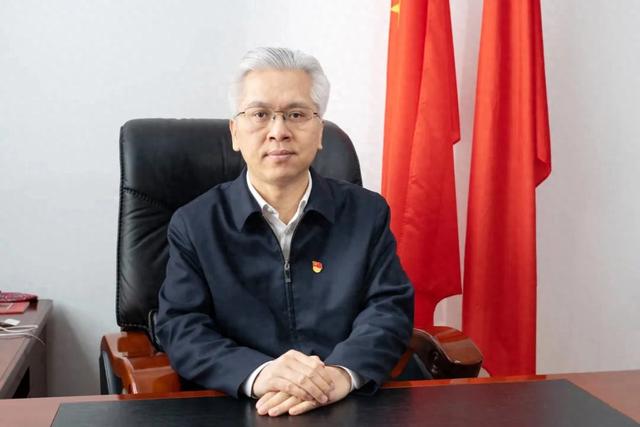
北京门头沟区委书记喻华锋:积极融入首都都市圈建设大局,与各兄弟区以及河北相关市县深化协作、互联互通
Bei Jing Ri Bao Ke Hu Duan· 2026-02-26 12:44
Core Viewpoint - The Beijing-Tianjin-Hebei (Jing-Jin-Ji) coordinated development has transitioned from blueprint to reality, with a focus on deep integration and quality improvement in the new phase of the 14th Five-Year Plan [1] Group 1: Development Strategy - The 14th Five-Year Plan marks the beginning of a new stage for the Jing-Jin-Ji coordinated development strategy, emphasizing strategic determination and systematic thinking [1] - The focus is on enhancing collaboration among the three regions to contribute to the modernization of the capital urban area [3] Group 2: Urban Function Optimization - The Mentougou District is actively promoting the decongestion of non-capital functions, optimizing urban spatial structure, and enhancing urban development capabilities [4] - The district has exceeded its targets for the deconstruction and upgrading of general manufacturing enterprises, with over 200,000 square meters of illegal constructions demolished and 150,000 square meters of land reclaimed [4] Group 3: Ecological Protection - Mentougou is implementing an "ecological district" development strategy, collaborating with neighboring regions to strengthen ecological protection mechanisms [6] - The district aims to reduce PM2.5 concentration to 24.5 micrograms per cubic meter by 2025, achieving the best level since monitoring began [6] - Collaborative efforts in the Yongding River basin are focused on pollution control and ecological restoration, with a target to improve the water ecological health index by 5.61 by 2024 [6][7] Group 4: Cultural and Tourism Development - The district is leveraging the opening of the Jingwei Expressway to develop a micro-vacation destination, integrating culture, tourism, agriculture, and commerce [8] - A "Big Jingxi Cultural Tourism Alliance" has been formed with Hebei's Zhangjiakou City to enhance resource sharing and collaborative marketing [10] Group 5: Technological Advancement - The "Technology Strong District" strategy focuses on artificial intelligence, ultra-high-definition digital audio-visual, and cardiovascular innovation as key industries [12] - Mentougou is becoming a hub for AI and medical device industries, establishing partnerships with neighboring regions to optimize industrial space and expand industrial chains [14][17] Group 6: Emergency Management - The district is enhancing its emergency management capabilities through regional cooperation, particularly in disaster response and recovery efforts [18] - A comprehensive emergency response system is being developed, focusing on information sharing, joint command, and resource coordination to improve resilience against risks [18]
共建中国式现代化建设先行区示范区 京津冀地区生产总值近12万亿元
Xin Lang Cai Jing· 2026-02-25 17:54
Core Insights - The Beijing-Tianjin-Hebei region's GDP is projected to grow from 8.96 trillion yuan in 2020 to nearly 12 trillion yuan by 2025, with average annual growth rates of 5.2%, 4.4%, and 5.4% during the 14th Five-Year Plan period [1][2] - The year 2026 marks the beginning of the 15th Five-Year Plan, focusing on building a modernized demonstration area for Chinese-style modernization in collaboration with Tianjin and Hebei [7] Group 1: Economic Development - The Beijing-Tianjin-Hebei region's GDP is expected to increase significantly, crossing three trillion yuan milestones [1] - The region aims to achieve a coordinated development strategy, enhancing economic integration and collaboration among the three areas [6] Group 2: Infrastructure and Urban Development - The construction of major infrastructure projects, including the new campus for Beijing Industrial University and the expansion of medical facilities, is underway to support urban development [1][2] - The integration of services between Beijing and Xiong'an New Area has led to the establishment of 212 high-frequency government service items for joint processing [2] Group 3: Innovation and Technology - The region has incubated 140 hard-tech enterprises, with a total technology contract transaction value of 996.1 billion yuan flowing from Beijing to Tianjin and Hebei [5] - The establishment of the Beijing-Tianjin-Hebei National Technology Innovation Center has facilitated significant technological advancements and collaborations [5] Group 4: Environmental and Public Services - The construction of a beautiful and livable Beijing-Tianjin-Hebei region is progressing, with plans for ecological improvements in major rivers and enhanced public service sharing [4][5] - The medical alliance has expanded to 150 entities, improving healthcare accessibility and service quality across the region [5] Group 5: Collaborative Governance - A collaborative governance mechanism has been established among the main political leaders of Beijing, Tianjin, and Hebei to enhance coordination and joint efforts in regional development [6] - The focus is on deepening the integration of urban functions and enhancing the quality of life for residents through shared services and infrastructure [7]
中金公司董事长陈亮:坚守“植根中国,融通世界”的初心,以中金所能服务国家所需
Xin Lang Cai Jing· 2026-02-16 01:24
Group 1 - The year 2026 marks the beginning of the "14th Five-Year Plan," with a solid foundation for long-term economic growth and a positive trend expected to continue [3][10] - The Central Economic Work Conference has outlined directions for the upcoming year, supporting a stable start to the "14th Five-Year Plan" [3][10] - The capital market plays a crucial role in serving national strategies and empowering the real economy, with finance needing to demonstrate greater responsibility in addressing external challenges and maintaining economic and financial stability [3][10] Group 2 - 2025 will celebrate the 30th anniversary of CICC, which has consistently aligned with national development and contributed to capital market construction through professional services [5][12] - CICC aims to focus on building a "wealth investment bank" and "asset investment bank," capitalizing on the trend of diversified wealth allocation among residents to expand social wealth and boost market confidence [5][12] - The company will deepen its "industrial investment banking" efforts, leveraging its expertise in early, small, and long-term investments to inject financial support into technological innovation and industrial upgrades [5][12] - CICC plans to enhance its "trading investment banking" characteristics and international advantages, strengthening cross-border connectivity and supporting high-level opening-up to improve the global competitiveness of China's capital market [5][12] Group 3 - CICC is committed to its mission of "rooted in China, connecting with the world," aiming to serve national needs and fulfill its responsibilities as a state-owned financial institution [5][12] - The company seeks to collaborate with various parties to contribute to the high-quality development of the capital market and the construction of Chinese-style modernization [5][12]

以规划实施为牵引推动都市圈建设不断取得新突破
Xin Lang Cai Jing· 2026-02-15 06:20
Group 1 - The meeting focused on the progress of the Beijing-Tianjin-Hebei coordinated development plan for 2025 and the key tasks for 2026, including statistical monitoring and the construction of key industrial chains [1][2] - Emphasis was placed on deepening the integration of innovation chains, industrial chains, capital chains, and talent chains to enhance regional industrial compatibility and capacity [2] - The meeting highlighted the importance of establishing a convenient and efficient comprehensive transportation system to promote integrated development of commuting circles, with a focus on improving public transport frequency and expanding new lines [2] Group 2 - The meeting underscored the need to leverage the "core" radiation effect to drive regional innovation and industrial development, aiming to create a world-class technology innovation hub and advanced manufacturing cluster [1][2] - It was noted that the construction of the Beijing-Tianjin-Hebei international technology innovation center should be used as an opportunity to strengthen industrial collaboration and optimize the flow of production factors [1] - The meeting called for a unified planning approach for population, industry, urbanization, and transportation to enhance connectivity between major transport hubs and promote the integration of transportation with economic and social development [2]
权威发布|一核两翼、双城多点、双廊多圈 世界一流都市圈这样建
Ren Min Ri Bao· 2026-02-13 05:49
Core Viewpoint - The approval of the "Modern Capital Metropolitan Area Spatial Collaborative Planning (2023-2035)" is a significant step towards optimizing the capital's functions, enhancing regional high-quality development, and advancing Chinese-style modernization [1] Group 1: Planning Framework - The planning is the first metropolitan area plan approved by the Central Committee and the State Council, enhancing the capital planning system [2] - The metropolitan area is strategically positioned as "four zones and one engine," focusing on optimizing the capital's functions and building a world-class urban agglomeration [2][3] - The planning introduces a multi-layered, nested collaborative "concentric circle" spatial division model, which includes commuting, functional, and industrial collaboration circles [2][3] Group 2: Spatial Circles - The commuting circle covers approximately 27,000 square kilometers, including all of Beijing and 12 surrounding districts, based on current cross-border commuting rates [2] - The functional circle, which is the core area for development, spans about 42,000 square kilometers, including Beijing, Tianjin, Hebei Xiong'an New Area, and parts of surrounding cities [3] - The industrial collaboration circle extends beyond the functional circle, enhancing cooperation across the Beijing-Tianjin-Hebei region and connecting with other major urban clusters [3] Group 3: Development Goals - The planning aims to create a synergistic and interconnected development pattern among Beijing, Tianjin, and Hebei, leveraging each region's comparative advantages [4] - Beijing will focus on creating a safe and efficient governance environment, promoting cultural collaboration, and enhancing its role as an international exchange center [4] - Tianjin will be integrated into the commuting and functional circles, emphasizing the development of an innovation triangle with Xiong'an New Area and Beijing [4][5] Group 4: Innovation and Infrastructure - The planning emphasizes innovation-driven development, with a focus on establishing a collaborative innovation triangle in the core area [6] - A comprehensive transportation network will be developed to improve commuting efficiency, with daily cross-city travel expected to reach 225,000 by 2025 [6] - Environmental protection initiatives will be strengthened, particularly in the Yanshan- Taihang Mountain ecological barrier, to support the construction of a beautiful China [6] Group 5: Implementation Mechanisms - The planning includes mechanisms for dynamic maintenance and optimization, allowing for greater flexibility in land use management [7] - Future efforts will focus on optimizing capital functions, promoting innovation, and enhancing public services across the three regions [7] - The three regions aim to become a model area for Chinese-style modernization through effective planning and implementation [7]
以优良作风凝心聚力真抓实干 为全省高质量发展现代化建设作出更大贡献
Xi An Ri Bao· 2026-02-12 09:50
Core Viewpoint - The meeting emphasized the importance of implementing the spirit of the 20th National Congress of the Communist Party and the feedback from the central and provincial inspections to promote high-quality development in Shaanxi province [1][2]. Group 1: Meeting Outcomes - The meeting reported on the rectification of the implementation of the Central Eight Regulations and the results of the 2024 democratic life meeting [1]. - The meeting was characterized by quality and effectiveness, focusing on political requirements and problem orientation, achieving the goals of communication, identifying issues, and enhancing unity [1]. Group 2: Strategic Directions - The Xi'an Municipal Committee is urged to strengthen leadership and cadre team construction, actively implement major decisions from the central government, and play a leading role in the modernization of Shaanxi [2]. - There is a call to reinforce the spirit of practical work, establish a correct view of achievements, and actively engage in regional development strategies [2]. - The need to address issues raised by inspections and audits, tackle historical problems, and eliminate safety hazards is highlighted [2]. Group 3: Political and Ecological Focus - The importance of strict governance and the need to deepen anti-corruption efforts to create a clean political environment is emphasized [2]. - The city of Xi'an aims to strengthen political construction, leverage opportunities for high-quality development, and ensure safety in development while enhancing ecological governance [3].
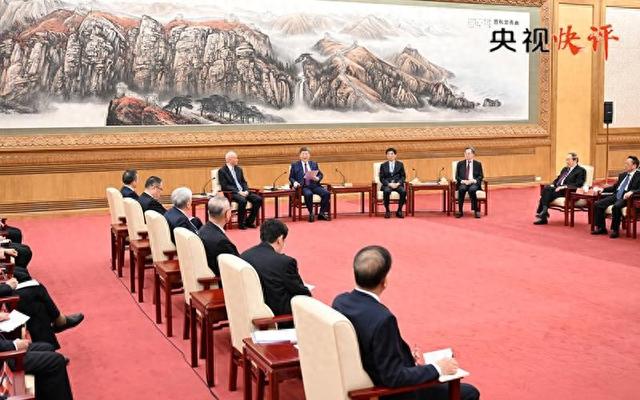
央视快评丨凝聚团结奋斗力量,努力为“十五五”发展作贡献
Xin Lang Cai Jing· 2026-02-12 04:08
Group 1 - The core message emphasizes the importance of unity among various political parties, business associations, and non-partisan representatives in contributing to China's modernization efforts during the critical phase of the 14th Five-Year Plan [3][5][7] - The speech highlights the need for these groups to strengthen political leadership and align closely with the Communist Party of China, ensuring that they work together towards common goals [3][5][7] - It stresses the significance of high-quality development and the role of the All-China Federation of Industry and Commerce in guiding private economic actors to maintain confidence in development [3][5] Group 2 - The central task for political parties and business associations is to fulfill their responsibilities in line with the major strategic tasks outlined for economic and social development during the 14th Five-Year Plan [5][7] - There is a call for enhancing the internal structure and governance of these organizations to ensure effective participation in the new political party system [5][7] - The importance of fostering a positive atmosphere and improving organizational discipline is emphasized to maintain the vitality of multi-party cooperation [5][7]