以短养长

Search documents
十年转型路 林海换新颜
Ren Min Ri Bao· 2026-01-19 22:09
Core Viewpoint - The transformation from monoculture eucalyptus plantations to mixed forests at Qipo Forest Farm aims to balance ecological sustainability and economic viability, addressing the drawbacks of long-term single-species cultivation [1][2]. Group 1: Ecological Transformation - Qipo Forest Farm has initiated a shift from pure eucalyptus forests to mixed forests since 2015, focusing on site-specific tree species selection to enhance ecological diversity [1][3]. - The farm retains approximately 40 eucalyptus trees per acre for short-term revenue while planting 60 native species like red fir and camphor, which improve soil quality and provide long-term value [2][3]. - The forest coverage has increased to 83.7%, with a total forest stock of 6.4 million cubic meters, creating a natural barrier for soil and water conservation [2]. Group 2: Economic Strategies - The farm has adopted selective logging methods to minimize damage to native species, allowing for higher-value timber harvesting while maintaining ecological continuity [2][3]. - The introduction of the "Lin Piao 1.0" model in 2023 aims to consolidate fragmented land held by villagers for more efficient management, enhancing economic returns for local communities [4][5]. - The upcoming "Lin Piao 2.0" model, set for 2025, will allow villagers to invest in shares, providing fixed annual dividends and enabling early redemption, thus improving financial security for participants [4][5]. Group 3: Technological and Educational Advancements - The use of mechanized technology has significantly increased operational efficiency, allowing for the management of 30 acres in a day compared to previous manual methods [3]. - Continuous professional training for technical staff is essential to adapt to the new mixed forest management practices, ensuring effective species selection and care [3].
(乡村行·看振兴)广西乡村“长短结合”解锁林地增收密码
Zhong Guo Xin Wen Wang· 2025-12-17 23:44
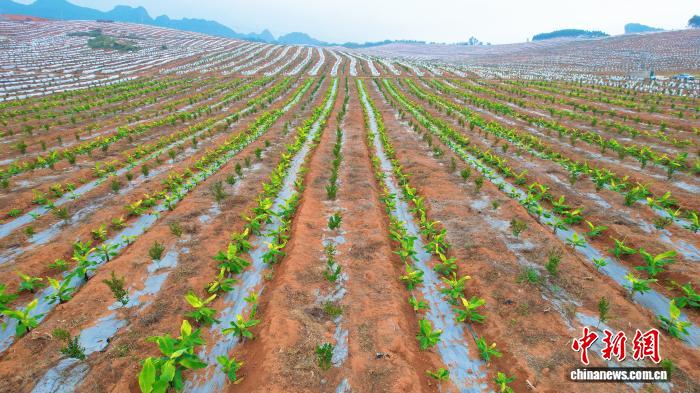
Core Viewpoint - The article discusses the innovative agricultural model in Guangxi, China, where the combination of oil tea and banana cultivation is being explored to enhance land productivity and income during the oil tea's growth period [2][4]. Group 1: Agricultural Innovation - The oil tea industry faces challenges such as high initial investment and long maturation periods, prompting the need for alternative income sources during the "waiting period" of oil tea growth [2][4]. - The introduction of banana cultivation alongside oil tea allows for immediate income generation, as bananas can be harvested within a year, alleviating financial pressure during the oil tea's early growth stages [4][7]. - The model creates a beneficial cycle where the banana trees' lifecycle complements the oil tea's growth, maximizing land use and productivity [4][5]. Group 2: Resource Management - The integrated water and fertilizer management system enhances resource efficiency, benefiting both crops and reducing overall management costs [4][7]. - The banana trees help maintain soil moisture, creating a favorable environment for oil tea seedlings, which improves their survival rates during dry seasons [7]. - The combined cultivation approach has shown to increase the average annual comprehensive income per acre compared to single crop cultivation [5]. Group 3: Future Prospects - The local government aims to replicate and promote this agricultural model in suitable areas to optimize agricultural structures and enhance rural income [2][5]. - The initiative is part of a broader strategy to achieve sustainable rural revitalization and improve the livelihoods of local communities [2][5].