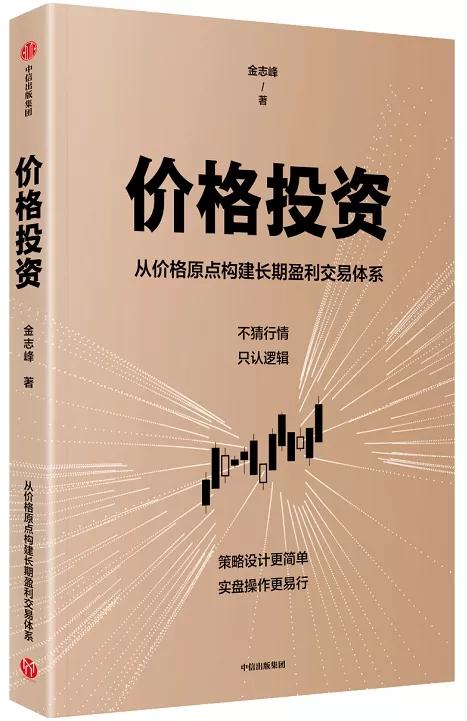
价格投资

Search documents
General Mills(GIS) - 2026 Q3 - Earnings Call Transcript
2026-03-18 14:02
Financial Data and Key Metrics Changes - The company reaffirmed its guidance for fiscal 2026, indicating a significant step-up in financial performance expected in Q4 [4][6] - The company has seen strength in household penetration, improved baseline volume, distribution, and market shares, which are critical for sustainable growth [5][6] - The company expects meaningful improvements in both top line and bottom line performance in Q4 and beyond [6][8] Business Line Data and Key Metrics Changes - In North America Retail, investments in brand remarkability are resonating with consumers, leading to a rebuild in household penetration and baseline growth [5][6] - The Pet segment is also adding households and accelerating growth through the Love Made Fresh initiative [5][6] - The company is maintaining competitiveness in North America Foodservice and International markets, although there is acknowledgment of more work ahead [5][6] Market Data and Key Metrics Changes - The company is experiencing a decline in food service volumes, particularly in bakery flour, which is expected to persist in the near term [54][56] - The company noted that commercial traffic is down slightly, while non-commercial traffic has increased [54] Company Strategy and Development Direction - The company is focusing on divesting its Brazil business to prioritize resources on brands and platforms with stronger growth potential [6][7][83] - The goal for fiscal 2027 is to improve organic sales results while maintaining industry-leading margins and efficiency [7][8] - The company is committed to enhancing its innovation and renovation efforts, particularly in North America Retail and Pet segments [14][25] Management's Comments on Operating Environment and Future Outlook - Management acknowledges that consumers are under more stress than in previous years, impacting promotional activity and price mix [36][37] - The company expects to see improvements in gross margins as volume stabilizes and productivity initiatives take effect [40][41] - Management is optimistic about the potential for improved dollar share competitiveness in fiscal 2027 [14][15] Other Important Information - The company is experiencing inflationary pressures, particularly in labor costs, which are expected to continue into fiscal 2027 [45][46] - The company is implementing a multi-year transformation initiative aimed at improving productivity and margin stability [41][46] Q&A Session Summary Question: Can General Mills return to volume growth in fiscal 2027? - Management indicated that the goal is to increase competitiveness in dollar terms while maintaining pound share, with a focus on innovation and marketing [12][13] Question: What is the outlook for price mix in key categories? - Management noted that price mix has been positive, with expectations for growth in fiscal 2027 as pricing gaps close [16][18] Question: How is the innovation tracking against goals? - Management reported that innovation is tracking at about 25% growth in North America Retail, with strong performance from new products [22][23] Question: What are the expectations for gross margins in fiscal 2027? - Management stated that stable volume growth is essential for restoring margins, with a path to improvement expected [40][41] Question: What are the inflation expectations for fiscal 2027? - Management anticipates inflation pressures to remain in line with the current year, with labor costs being a significant factor [45][46] Question: What is the status of the Love Made Fresh initiative? - Management reported positive progress with the Love Made Fresh launch, focusing on improving on-shelf availability and marketing execution [28][30] Question: What are the challenges in the snacks segment? - Management identified challenges primarily with the hot snacks category, particularly with Totino's, while noting strong performance in salty snacks [62][63]

金志峰《价格投资》获评2025十大最受欢迎金融图书
Xin Lang Cai Jing· 2026-02-05 14:08
Core Insights - The book "Price Investment" by Jin Zhifeng has been recognized as one of the "Top 10 Most Popular Financial Books of 2025" following a competitive selection process [1][3]. Group 1: Book Overview - "Price Investment" offers investors a structured, executable, and long-term profitable investment method [2][4]. - The author introduces the concept of "price origin" and develops a simplified trading system based on fundamental logic and axioms, termed "logical profitability" [2][4]. - The book distills three key elements of profitability: price difference, win rate, and profit-loss ratio [2][4]. Group 2: Investment Strategy - It summarizes the characteristics of price, including cycles, direction, boundaries, and speed [2][4]. - The book aims to clarify the deterministic logic behind prices, correcting misconceptions such as blind bottom-fishing and lack of exit strategies [2][4]. - It assists investors in constructing investment portfolios guided by the principles of price investment to achieve long-term profitability [2][4].
价格投资 从价格原点构建长期盈利交易体系
Cai Jing Wang· 2025-12-03 08:35
Core Viewpoint - The article emphasizes that stocks are ownership certificates representing shareholder rights, primarily serving as a tool for transferring ownership and facilitating trading, rather than possessing intrinsic value themselves [1][2]. Group 1: Stock Definition and Function - Stocks are defined as ownership certificates issued by companies to raise funds, allowing shareholders to receive dividends while also bearing operational risks [1]. - The issuance of stocks simplifies the transfer of shareholder rights, making it easier and cheaper to buy and sell shares compared to traditional methods [2]. Group 2: Investment Motivations - Investors are primarily interested in the underlying company’s equity and the associated dividends, rather than the stock certificate itself, highlighting a fundamental aspect of stock market investment [2][3]. - Value investing focuses on the actual performance and growth of the company, linking investment returns directly to the company's operational success and dividend distribution [3]. Group 3: Stock vs. Equity Value - The article distinguishes between equity value, which is tied to dividends and company performance, and stock value, which is influenced by trading convenience and market dynamics [4]. - The case of China Petroleum illustrates the disparity between the issuance price and the market price, with the initial public offering (IPO) price of 16.70 yuan corresponding to a price-to-earnings (P/E) ratio of 22.44, while the first-day trading price exceeded 60 times the earnings [6][7]. Group 4: Valuation and Market Dynamics - Valuation methods, including static and dynamic P/E ratios, are discussed, emphasizing that market prices are influenced by trading activities rather than solely by company fundamentals [8][9]. - The relationship between valuation and stock price is complex, as market perceptions and trading behaviors can lead to significant discrepancies between intrinsic value and market price [12][13]. Group 5: Value Investing Philosophy - Value investing is characterized by seeking undervalued stocks based on fundamental analysis, contrasting with trend investing that focuses on market movements [14][15]. - The philosophy of value investing is rooted in the teachings of Benjamin Graham, emphasizing the importance of understanding intrinsic value and market psychology [14][15]. Group 6: Price Formation and Market Behavior - The article argues that prices in the stock market are generated through trading activities, with no price existing without transactions [25][26]. - Market dynamics, including supply and demand, investor sentiment, and macroeconomic factors, play crucial roles in determining stock prices [26][27].