企业风险管控

Search documents
观澜2025 | 被“围剿”的雷军
Sou Hu Cai Jing· 2026-01-12 12:55
Core Viewpoint - The article discusses the challenges faced by Xiaomi and its CEO Lei Jun in 2025, highlighting a series of controversies that have impacted the company's reputation and operations in the automotive sector, despite achieving significant sales milestones and technological advancements. Group 1: Controversies and Reactions - The 3·29 incident involving a Xiaomi SU7 vehicle resulted in a tragic accident, leading to public outcry and significant scrutiny over the vehicle's safety features, causing a loss of 380 billion HKD in market value for Xiaomi [5] - Lei Jun addressed various accusations during a live stream, including claims of misleading marketing and safety concerns, emphasizing the need for fair media representation and acknowledging the company's past marketing practices that require improvement [4][10] - The "green belt warrior" label emerged from edited videos circulating online, which misrepresented the safety of Xiaomi vehicles, prompting Lei Jun to clarify that the accident rate of Xiaomi cars is below the industry average [9] Group 2: Product and Marketing Issues - The SU7Ultra's power limitation controversy arose when an OTA update restricted the vehicle's horsepower, leading to consumer backlash and accusations of misleading marketing [6] - The "flavor hood" controversy involved discrepancies between the advertised features of the SU7Ultra's carbon fiber hood and its actual design, resulting in customer demands for refunds and legal action [7] - The "small字 marketing" issue highlighted misleading promotional practices across multiple product lines, prompting Lei Jun to acknowledge the problem and commit to clearer marketing strategies [10] Group 3: Business Performance Amid Controversies - Despite the controversies, Xiaomi's automotive division achieved over 410,000 vehicle deliveries in 2025, surpassing its targets, with the SU7 series becoming the best-selling model in its category [12] - The company reported its first quarterly profit in the automotive sector, with a gross margin of 25.5%, indicating a successful transition into the automotive market despite the surrounding challenges [12] Group 4: Industry Implications - The controversies surrounding Xiaomi have sparked broader discussions within the automotive industry regarding safety standards, marketing ethics, and the importance of consumer rights, pushing for regulatory improvements [13] - The ongoing scrutiny of Xiaomi's practices serves as a case study for other companies in the rapidly evolving smart automotive sector, emphasizing the need for transparency and accountability in marketing and product safety [14]


泰安泰山城乡建设发展有限公司再成被执行人,控股股东泰安文旅集团关联承压
Qi Lu Wan Bao· 2025-12-02 04:35
Core Viewpoint - Tai'an Taishan Urban Construction Development Co., Ltd. has been listed as a defendant in a court execution case with a claim amount of 1,509,861 yuan, indicating ongoing legal and financial challenges for the company [1] Group 1: Legal Issues - The company has been involved in execution disputes multiple times, being listed as a defendant 10 times from April 2018 to June 2025, highlighting a pattern of legal troubles [1] - The latest case was filed on September 19, 2025, under case number (2025) Lu 0911 Zhi 4114 [1] Group 2: Financial and Credit Risk - The cumulative legal issues have led to a continuous accumulation of credit risk for the company, raising concerns about its financial stability [1] - The company was established in 2014 and is controlled by Tai'an Cultural Tourism Development Group Co., Ltd., which holds a 50.2513% stake, indicating a significant ownership structure [1] Group 3: Management and Oversight - The repeated legal issues suggest deficiencies in risk management and operational compliance within the company, reflecting poorly on the oversight responsibilities of its controlling shareholder [1]
安徽建筑巨头暴雷,接众多恒大项目,欠162亿破产!原董事长被捕
Sou Hu Cai Jing· 2025-06-15 07:03
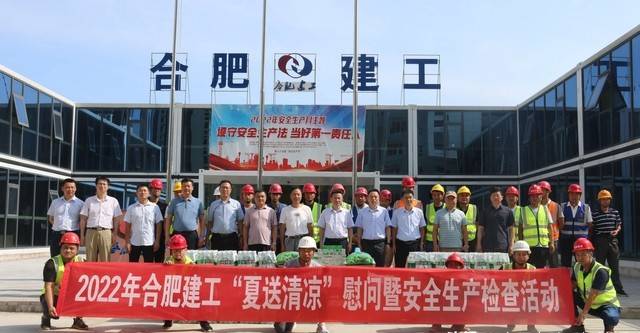
Core Viewpoint - The collapse of Hefei Construction Group, once a leading player in the Anhui construction industry, is attributed to its overwhelming debt of 16.2 billion yuan and the arrest of its former chairman for illegal activities, highlighting the risks of over-reliance on a single client and internal management failures [1][21][23]. Company Overview - Hefei Construction Group, established in 1958, evolved from a state-owned enterprise to a significant player in the construction sector, with a registered capital of 1 billion yuan and a strong reputation [3][5]. - The company achieved rapid growth and recognition, winning numerous awards and ranking among the top enterprises in Anhui [5][7]. Financial Crisis - The financial troubles began when its major partner, Evergrande Group, faced a severe financial crisis in 2020, leading to unpaid project debts of 270 million yuan owed to Hefei Construction [11][13]. - By 2021, Hefei Construction reported total assets of 12.73 billion yuan against liabilities of 16.229 billion yuan, resulting in a debt-to-asset ratio of 127% [13]. Dependency on Evergrande - The company's rapid growth was heavily dependent on its collaboration with Evergrande, which provided funding and project opportunities [9][11]. - The sudden halt of Evergrande's projects due to its financial issues left Hefei Construction unable to recover significant amounts owed, leading to cash flow problems [15]. Internal Management Issues - Internal corruption and mismanagement under former chairman Liu Guofu exacerbated the company's decline, with allegations of bribery and misuse of company funds [17][19]. - Liu's actions contributed to a decline in employee morale and operational chaos, further accelerating the company's downfall [19]. Bankruptcy and Legal Consequences - In March 2025, Hefei Construction announced its bankruptcy reorganization, with a significant debt burden making recovery uncertain [21]. - Liu Guofu was removed from his position and faced legal repercussions, marking a dramatic fall from grace for the company's leadership [21]. Industry Implications - The collapse of Hefei Construction serves as a cautionary tale for the construction industry, emphasizing the dangers of over-reliance on a single client and the importance of internal controls [23][25]. - The event highlights the vulnerability of the construction sector amid a sluggish real estate market, urging companies to diversify their business sources and explore new sectors like infrastructure and green building [25][27].