休息误区

Search documents
3种“假休息”可能让你越休越累 高质量休息这样做→
Yang Shi Xin Wen· 2025-10-15 00:59
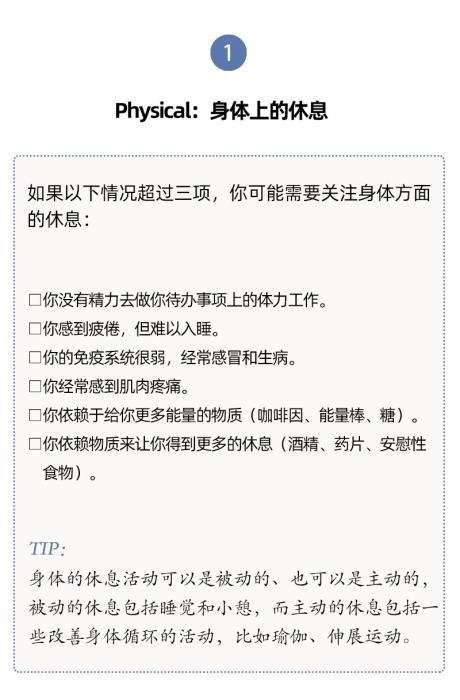
Core Viewpoint - The article discusses common misconceptions about rest and sleep, emphasizing that quality rest is not solely determined by the duration of sleep but rather by understanding individual needs and maintaining a consistent sleep schedule. Misconceptions about Rest - Misconception 1: Longer sleep equates to better rest. Deviating from normal sleep patterns can disrupt bodily rhythms and increase daytime fatigue. It is recommended to find and stick to a suitable sleep schedule based on age [1]. - Misconception 2: Doing nothing means resting. Passive activities like watching TV or browsing the internet can lead to mental fatigue, as the brain is still processing information and preparing for social interactions [2][3]. - Misconception 3: Rest can only be achieved through specific activities. Different individuals have varying preferences for relaxation, and blindly following others' rest routines may lead to increased stress and fatigue [4]. Types of Rest - There are seven types of rest identified, which include physical, mental, sensory, creative, emotional, and social rest. Each type addresses specific needs and can help individuals determine which form of rest they require [5]. Physical Rest - Signs that indicate a need for physical rest include lack of energy for physical tasks, difficulty sleeping, frequent illness, muscle pain, and reliance on stimulants for energy [6]. Mental Rest - Indicators for mental rest include lack of energy for cognitive tasks, feelings of anger or frustration when reflecting on the day, and excessive worry or anxiety [9]. Sensory Rest - Signs that sensory rest is needed include sensitivity to noise, visual fatigue, and inability to enjoy sensory experiences [10]. Creative Rest - A need for creative rest may be indicated by a focus on others' needs over one's own, feelings of unworthiness, and difficulty enjoying activities [11]. Emotional Rest - Emotional rest is necessary when individuals focus on failures, experience self-doubt, or feel excessive worry and anxiety [13]. Social Rest - Signs that social rest is needed include feelings of loneliness, difficulty maintaining relationships, and a preference for online interactions over face-to-face connections [15]. Essential Elements of Quality Rest - Quality rest does not require self-control; individuals should feel relaxed without needing to resist work or worries. Efforts to force rest can lead to counterproductive outcomes [18][19]. - Activities should not disrupt sleep patterns, as certain evening activities like watching TV or drinking can interfere with sleep quality [20]. - True rest allows individuals to focus on their own needs and feelings, promoting a connection with oneself [21].

高质量的休息,到底什么样?
Hu Xiu· 2025-10-03 11:32
Core Viewpoint - The article discusses the evolving concept of rest, emphasizing the importance of quality over quantity in rest practices and identifying common misconceptions about effective rest [4][6][48]. Group 1: Misconceptions about Rest - Many individuals feel more fatigued after holidays, indicating a misunderstanding of what constitutes effective rest [7]. - A survey by the Associated Press reveals that Americans often prefer to do nothing during holidays, reflecting a shift in rest preferences [8]. - Three common misconceptions about rest are identified: 1. Sleeping longer does not equate to better rest; excessive sleep can disrupt body rhythms and increase fatigue [10][11]. 2. Doing nothing, such as mindlessly browsing the internet, can lead to increased tiredness rather than relaxation [14][15]. 3. Rest activities are not one-size-fits-all; individual preferences vary significantly, and blindly following others' rest habits can lead to increased stress [19][22]. Group 2: Types of Rest - Saundra Dalton-Smith identifies seven types of rest, each addressing different needs: 1. Physical rest, which can be passive (sleep) or active (yoga) [26][28]. 2. Sensory rest, which involves reducing sensory overload [29][30]. 3. Creative recovery, focusing on restoring creativity through engaging activities [31][33]. 4. Emotional rest, allowing for the expression of feelings and reducing self-doubt [34][36]. 5. Social energy replenishment, emphasizing the importance of supportive social interactions [38][40]. 6. Spiritual recovery, addressing feelings of hopelessness and lack of fulfillment [42][44]. Group 3: Essential Elements of Quality Rest - High-quality rest requires: 1. A lack of self-control exertion, allowing for relaxation without the need to resist work [50][51]. 2. Activities that do not disrupt sleep patterns, as certain popular activities can interfere with sleep [52][53]. 3. A focus on self-awareness, helping individuals connect with their own needs and feelings [54][55].