
体验定义

Search documents
50亿押注中国造船,刘强东的游艇能否“换道超车”?
Guan Cha Zhe Wang· 2026-02-25 13:15
Core Viewpoint - The Chinese shipbuilding industry is at a critical juncture, excelling in large commercial vessels but struggling in the high-value yacht sector, which remains underdeveloped and fragmented [1][2][3] Group 1: Current Challenges - Despite being the world's largest shipbuilding nation, China has a significant shortfall in the yacht sector, with a total output value of only 12.8 billion yuan (approximately 1.28 billion USD) and a global market share of less than 4% [1][2] - The yacht industry in China is characterized by a low concentration of firms, with most companies being small and lacking the necessary capital investment to compete at higher levels [2][3] - The yacht market's essence has evolved beyond mere transportation to encompass lifestyle, aesthetic preferences, and social identity, which Chinese manufacturers have yet to fully grasp [2][3] Group 2: Attempts to Break the Stalemate - The establishment of Sea Expandary, a new yacht brand by Liu Qiangdong, aims to address the gap between manufacturing and experience definition through significant investment in a full industry chain [5][6] - Sea Expandary plans to innovate by focusing on new energy and smart yachts, utilizing AI and robotics to enhance user experience and address traditional yacht maintenance challenges [5][6] - The brand envisions creating affordable yachts priced around 100,000 yuan, aiming to democratize high-quality maritime experiences by leveraging China's complete shipbuilding supply chain [6][9] Group 3: Observations on the New Model - Sea Expandary's approach reflects a shift from selling products to offering comprehensive solutions, thereby redefining the yacht experience and breaking the stereotype of yachts as exclusive luxury items [9][10] - The model emphasizes supply chain efficiency and customer-centric service, aiming to make yacht ownership more accessible and appealing to a broader audience [10][11] - Collaborations with cities like Zhuhai and Shenzhen not only facilitate industry development but also enhance urban waterfront leisure functions and marine culture [11][12] Group 4: Conclusion - The full industry chain initiative represents a significant attempt to transform the Chinese yacht industry, focusing on how to leverage manufacturing strength to create a unique cultural experience [13] - The challenges ahead are substantial, as the yacht industry requires long-term investment in technology, brand recognition, and service systems [13] - This initiative may not immediately alter the global yacht industry landscape, but it signifies a systematic focus on a previously neglected sector, showcasing China's potential to redefine high-end lifestyle standards [13]

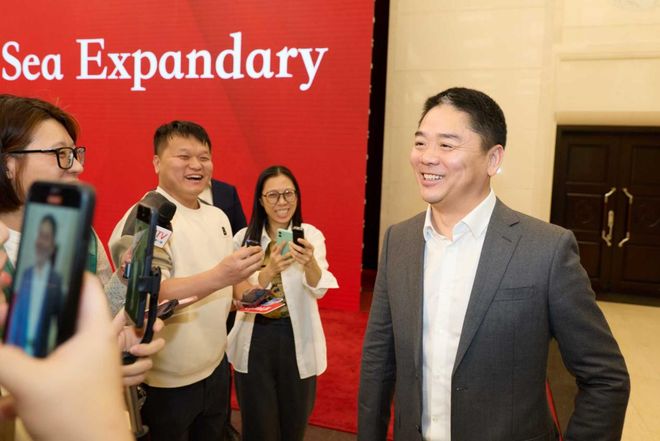
50亿押注中国造船,刘强东的电动游艇能否“换道超车”?
Guan Cha Zhe Wang· 2026-02-25 13:13
Core Insights - China's shipbuilding industry is at a critical juncture, leading the world in shipbuilding completion, new orders, and backlog for 15 consecutive years, with market shares of 55.7%, 74.1%, and 63.1% respectively [1] - In contrast, the yacht manufacturing sector in China is significantly lagging, with a total output value of only 12.8 billion yuan (approximately 1.28 billion USD) and an export value of around 600 million USD, capturing less than 4% of the global market [1][2] - The disparity in performance between large commercial vessels and yachts highlights a structural weakness in China's ability to transition from manufacturing to creating high-value experiences [2][3] Current Challenges - The yacht industry in China is characterized by a fragmented structure, with most companies remaining at a basic manufacturing level, lacking the investment needed to develop high-end experiences [2] - The industry faces a significant barrier due to the capital-intensive nature of yacht production, where most domestic companies have not exceeded an investment of 10 million yuan (approximately 1.5 million USD) [2] - The lack of a strong brand identity and experience definition in the yacht sector prevents China from moving up the value chain, resulting in a persistent "small, scattered, and weak" industry [3] Policy and Market Shifts - Recent government initiatives, including a plan to promote high-quality development in yacht consumption, indicate a shift in policy that could support the industry's growth [3] - The challenge remains in identifying which entities can effectively leverage China's manufacturing capabilities to redefine consumer experiences in the yacht market [3] Strategic Initiatives - The establishment of Sea Expandary, a new yacht brand by Liu Qiangdong, aims to address the industry's challenges by investing in a full industrial chain to bridge the gap between manufacturing and experience definition [4] - The brand plans to focus on innovative technologies, such as AI and robotics, to create a new generation of smart, eco-friendly yachts that address traditional pain points like high maintenance costs and noise [4][5] - By optimizing cost structures through vertical integration within China's shipbuilding supply chain, Sea Expandary aims to make quality yachts more accessible, targeting a vision of 100,000 yuan (approximately 15,000 USD) yachts [5] Service and Experience Redefinition - Sea Expandary intends to shift from a product-centric model to a solution-oriented approach, creating a comprehensive ecosystem that includes research, manufacturing, sales, and service [6] - The introduction of flexible service models, such as time-sharing rentals, aims to redefine yacht ownership and enhance user experience, challenging the traditional perception of yachts as exclusive luxury items [6] - This transition from selling hardware to offering lifestyle experiences is crucial for gaining "experience definition rights" in the yacht market [6]