供应链安全稳定

Search documents
东海证券晨会纪要-20260309
Donghai Securities· 2026-03-09 03:27
Group 1 - The report emphasizes the importance of value reassessment, particularly in the petrochemical sector, driven by rising prices and supply chain stability [5][7] - Recent geopolitical tensions in the Middle East have led to significant increases in energy prices, with potential further escalation if the situation worsens [7] - The report highlights the advantages of China's complete industrial chain and diversified energy structure, recommending investments in oil and gas resource-rich companies and the coal chemical industry [7] Group 2 - The report notes that the U.S. non-farm employment data for February 2026 showed a significant decrease of 92,000 jobs, contrary to expectations of an increase [12][15] - The unemployment rate rose slightly to 4.4%, influenced by strikes in the education and healthcare sectors, which impacted job numbers [12][15] - Despite the poor employment data, the market has not significantly adjusted its expectations for interest rate cuts, maintaining a 96.3% probability of no cuts in March [12][15] Group 3 - The report discusses the Chinese government's plans to implement new measures to support innovative enterprises, including reforms to the ChiNext board and optimizing refinancing mechanisms [16][17] - The National Development and Reform Commission projects that six emerging pillar industries will see their output value exceed 10 trillion yuan by 2030 [16][18] - The report indicates that China's foreign exchange reserves have increased for seven consecutive months, with gold reserves rising for 16 months [22][23] Group 4 - The A-share market analysis indicates a mixed performance, with the Shanghai Composite Index showing a slight increase of 0.38% [24][25] - The report highlights that the financial sector outperformed others, while the media and metals sectors faced declines [6][28] - The report notes that the software development sector saw significant inflows, indicating strong investor interest [27]
美国与澳大利亚签署关键矿产协议,外交部回应
Zhong Guo Ji Jin Bao· 2025-10-21 08:35
Core Viewpoint - The recent mineral agreement between the United States and Australia is perceived as a strategic move to counter China's influence in the global supply chain of critical minerals [1] Group 1: Global Supply Chain - The formation of global supply chains is a result of market and enterprise choices, indicating that geopolitical agreements may influence but not dictate these dynamics [1] - Key mineral resource countries are encouraged to play a proactive role in ensuring the security and stability of industrial and supply chains [1] Group 2: Economic Cooperation - The emphasis is placed on maintaining normal economic and trade cooperation despite geopolitical tensions, highlighting the importance of collaboration in the critical minerals sector [1]
美国与澳大利亚签署关键矿产协议,外交部回应
中国基金报· 2025-10-21 08:16
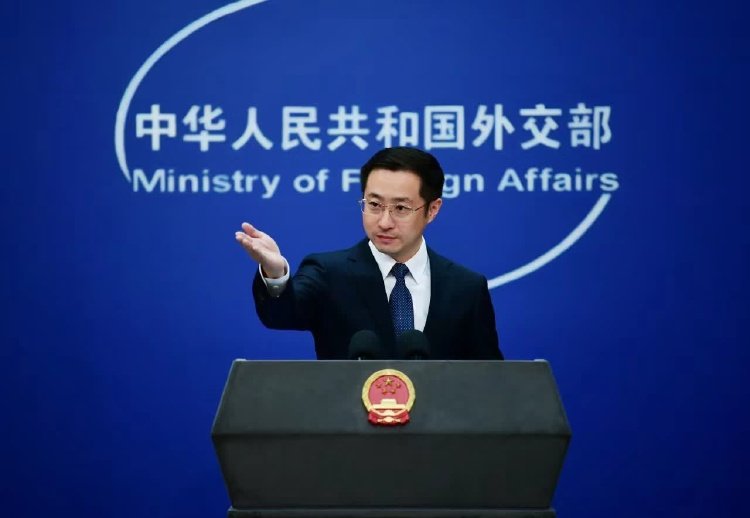
Core Viewpoint - The article discusses China's response to a key mineral agreement signed between the United States and Australia, which is perceived as a move to counter China. The Chinese government emphasizes the importance of stable supply chains and the role of resource-rich countries in ensuring normal economic cooperation [1]. Group 1 - The agreement between the U.S. and Australia is interpreted as a strategy to "counter China" [1] - China's Foreign Ministry spokesperson highlights that the formation of global supply chains is a result of market and enterprise choices [1] - Resource-rich countries are urged to play a proactive role in ensuring the security and stability of industrial and supply chains [1]

美国要求G7和北约对华加税,中方表态
第一财经· 2025-09-16 02:28
Core Viewpoint - The article discusses the recent request from the U.S. to the G7 and NATO to impose tariffs of 50%-100% on China due to its purchase of Russian oil, highlighting China's opposition to such unilateral economic coercion and its potential impact on global trade and supply chains [3][4]. Group 1 - The Chinese Ministry of Commerce has expressed strong opposition to the U.S. proposal, labeling it as unilateral bullying and economic coercion that violates the consensus reached by the leaders of China and the U.S. [3][4] - The spokesperson emphasized that if any party harms China's interests, China will take all necessary measures to protect its legitimate rights and interests [4][5]. - The Chinese government maintains that its economic cooperation with countries, including Russia, is legitimate and should not be subject to external pressure [5]. Group 2 - The Chinese stance on the Ukraine crisis is consistent and clear, advocating for dialogue and negotiation as the only viable solution [5]. - The spokesperson reiterated that China has upheld an objective and fair position since the onset of the crisis, opposing any illegal unilateral sanctions and "long-arm jurisdiction" against China [5]. - China is committed to defending its sovereignty, security, and development interests if its legitimate rights are infringed upon [5].

美国要求G7和北约集体对华加关税,外交部回应
Bei Jing Ri Bao Ke Hu Duan· 2025-09-15 07:50
Core Viewpoint - The Chinese government firmly opposes the U.S. request for G7 and NATO members to impose tariffs on China, citing it as unilateral bullying and economic coercion that undermines international trade rules and threatens global supply chain stability [3]. Group 1: China's Position on Trade and Energy Cooperation - China maintains that its trade and energy cooperation with countries, including Russia, is legitimate and justified [3]. - The Chinese government emphasizes that coercive measures from the U.S. are ineffective and do not resolve underlying issues [3]. Group 2: Stance on the Ukraine Crisis - China has a consistent and clear position regarding the Ukraine crisis, advocating for dialogue and negotiation as the only viable solution [3]. - Since the onset of the crisis, China has upheld an objective and fair stance, promoting peace talks [3]. Group 3: Response to Sanctions and Economic Pressure - The Chinese government strongly opposes the imposition of illegal unilateral sanctions and "long-arm jurisdiction" by other parties [3]. - If China's legitimate rights and interests are harmed, the government will take resolute countermeasures to protect its sovereignty, security, and development interests [3].