俄乌“和平计划”

Search documents
最新版俄乌“和平计划”草案公布
Xin Lang Cai Jing· 2025-12-25 16:20
Core Viewpoint - The latest draft of the Ukraine-Russia "peace plan" aims to provide a political framework to end the conflict, reflecting a consensus between Ukraine and the United States on several key issues [1][5]. Summary by Relevant Sections Agreements Reached - A comprehensive ceasefire must be achieved with international supervision and verification mechanisms to prevent past agreements from being ignored [1]. - The front line will be frozen based on the situation on the day the "peace plan" is signed, without recognizing territorial claims, serving as a technical and phased approach [1]. - Third-party involvement is necessary for the execution and supervision of the ceasefire, humanitarian coordination, and management of demilitarized zones, moving away from bilateral commitments [1]. - Ukraine will not be demilitarized and will maintain an army of 800,000, seeking binding security guarantees similar to NATO's Article 5 collective defense clause [1]. Remaining Disagreements - The final status of territories such as Donbas, Zaporizhzhia, and Kherson remains unresolved, with the plan suggesting a freeze on the current situation and international oversight [3]. - Arrangements for the Donbas region, including the establishment of demilitarized zones and special governance mechanisms, are still in the discussion phase [3]. - The issue of Ukraine's NATO membership is left to the discretion of NATO member states, with Ukraine not willing to abandon its aspirations for membership [3]. - The management of the Zaporizhzhia nuclear power plant is proposed to involve joint operation by Ukraine, Russia, and the U.S., but significant disagreements persist [4]. Analysis - The draft is seen as a means to create space for negotiations and achieve a comprehensive ceasefire rather than resolving all disputes at once [5]. - Russian officials have expressed skepticism about the plan, suggesting it may be a manipulation and indicating that Ukraine is unwilling to reach a consensus on peace and compromise [6][7].
民调:55%的俄罗斯民众认为俄乌冲突或明年结束
Xin Lang Cai Jing· 2025-12-25 11:11
Group 1 - A survey by the Russian Public Opinion Research Center indicates that over half of the Russian population believes the conflict with Ukraine may end by 2026, with 55% of respondents expressing this view [1] - Approximately two-thirds of the Russian public supports negotiations for peace, marking the highest level of support for talks since the escalation of the Ukraine crisis in February 2022 [2] - The Kremlin is reportedly preparing its stance on a new draft of the Russia-Ukraine "peace plan," following discussions between Russian officials and a U.S. presidential envoy [2] Group 2 - Ukrainian President Zelensky announced the core content of the latest Russia-Ukraine "peace plan" draft, emphasizing that the terms may be modified during negotiations [2] - The Russia-Ukraine delegations recently held productive talks with U.S. officials in Florida, although specific details on negotiation progress were not disclosed [2] - Zelensky stated that all parties are "very close to a real outcome," but there are still elements that either side may not be ready to accept [2]

泽连斯基版“和平计划”透露哪些信息
Xin Hua She· 2025-12-24 23:54
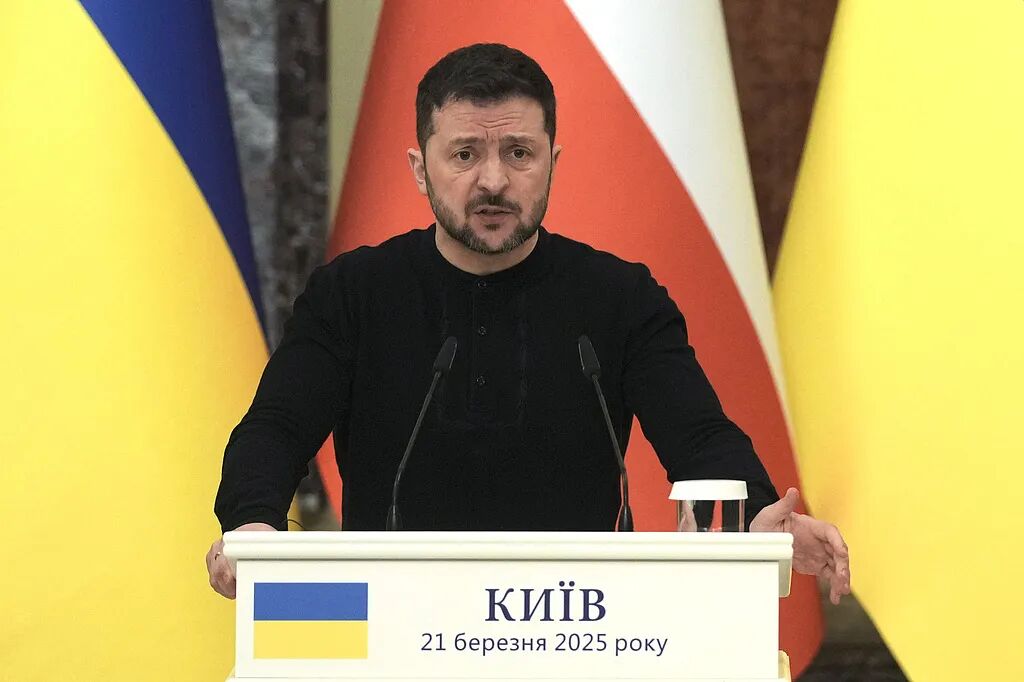
Core Viewpoint - The latest draft of the Ukraine-Russia "peace plan" presented by President Zelensky aims to provide a political framework to end the conflict, reflecting a consensus between Ukraine and the United States on several key issues while highlighting existing disagreements and potential Russian reactions [1][5]. Summary of Agreements - A comprehensive ceasefire must be achieved, which includes international supervision and verification mechanisms to prevent past agreements from being ignored [1]. - The front line as of the signing date of the "peace plan" will serve as the basis for freezing contact lines, though this does not equate to recognition of territorial claims [1]. - Third-party involvement is essential for the execution and supervision of the ceasefire, humanitarian coordination, and management of demilitarized zones, moving away from bilateral commitments [1]. - Ukraine will not be demilitarized and will maintain an army of 800,000 personnel, seeking binding security guarantees similar to NATO's Article 5 [1]. Summary of Humanitarian Issues - Humanitarian issues, such as prisoner exchanges, civilian releases, and the establishment of humanitarian corridors, should be prioritized as areas where progress can be made more easily [2]. Summary of Disagreements - The final status of territories remains unresolved, with the draft avoiding direct statements on the political status of regions like Donbas, Zaporizhzhia, and Kherson, indicating that this issue will be postponed [3]. - Arrangements for the Donbas region, including the establishment of demilitarized zones and special governance mechanisms, are still in the discussion phase [3]. - The question of Ukraine's NATO membership is left to NATO member states, with Ukraine not willing to abandon its aspirations for membership [3]. - Management of the Zaporizhzhia nuclear power plant is proposed to involve joint operation by Ukraine, Russia, and the U.S., but significant disagreements remain [3]. Analysis of the Draft - Analysts suggest that the draft is more focused on creating space for negotiations to achieve a comprehensive ceasefire rather than resolving all disagreements at once [4]. Potential Russian Reaction - The Russian response to the "peace plan" draft is awaited, with expectations of feedback following U.S.-Russia talks. Additional documents for ending the war, including multilateral security agreements involving Ukraine, the U.S., and Europe, have also been prepared [5]. - Russian media reports indicate skepticism towards the draft, with claims that it reflects Ukraine's unwillingness to reach a compromise for peace [6].
泽连斯基公布20点“和平计划”草案细节:领土“维持现状” 军队保持80万人 尽快选举!“不会放弃加入北约”
Mei Ri Jing Ji Xin Wen· 2025-12-24 15:20
Core Viewpoint - The latest draft of the Ukraine-Russia "peace plan" has been presented by President Zelensky, emphasizing that it is still a draft subject to negotiation changes, reflecting a significant alignment between Ukraine and the U.S. positions, with some issues still needing resolution [1]. Group 1: Key Points of the Peace Plan - The draft includes 20 points reaffirming Ukraine's sovereignty and establishing a contact line monitoring mechanism for long-term peace [2]. - Ukraine's armed forces will maintain a peacetime size of 800,000, with strong security guarantees from the U.S., NATO, and Europe similar to NATO's Article 5 collective defense clause [2]. - The plan aims to raise $800 billion through multiple funds for economic recovery, reconstruction, and humanitarian needs [2]. - Ukraine's status as a non-nuclear state is confirmed, and there are proposals for joint management of the Zaporizhzhia nuclear power plant by the U.S., Ukraine, and Russia [2][5]. Group 2: Legislative Process and Public Involvement - The peace plan draft will be submitted to the parliament for a vote or potentially a national referendum to allow the public to decide on its contents [3]. - There is a provision for holding elections in Ukraine as soon as possible after the signing of the peace agreement [4]. Group 3: NATO and EU Membership - Ukraine will not abandon its aspirations to join NATO, despite the draft's suggestions, emphasizing that the decision lies with NATO member states [6]. - The peace agreement should specify a timeline for Ukraine's EU membership, as this is considered a crucial security guarantee [6]. Group 4: Economic Considerations - There is a potential consideration for establishing a "free economic zone" in the Donetsk region, contingent on security guarantees [7]. - The peace plan does not include provisions for the U.S. to lift sanctions on Russia, but it is anticipated that sanctions will be gradually lifted post-conflict [7].
重磅!泽连斯基公布20点“和平计划”草案细节:领土“维持现状”,军队保持80万人,尽快选举!“不会放弃加入北约”
Mei Ri Jing Ji Xin Wen· 2025-12-24 15:15
Core Viewpoint - The latest draft of the Ukraine-Russia "peace plan" consists of 20 points, reflecting a significant alignment between Ukraine and the U.S., with some issues still needing resolution [1][2]. Group 1: Key Points of the Peace Plan - Ukraine's sovereignty will be reaffirmed, and a contact line monitoring mechanism will be established to maintain long-term peace [2]. - Ukraine will receive strong security guarantees, with its armed forces maintaining a peacetime size of 800,000 [2]. - The U.S., NATO, and Europe will provide Ukraine with security assurances similar to NATO's Article 5 collective defense clause [2]. - Ukraine aims to become an EU member with a clear timeline for accession [2][8]. - A fund will be established to raise $800 billion for economic recovery, reconstruction, and humanitarian needs [2]. - Ukraine will confirm its status as a non-nuclear state [2]. - The draft includes provisions for the joint operation of the Zaporizhzhia nuclear power plant by the U.S., Ukraine, and Russia [2][5]. Group 2: Political and Territorial Considerations - The draft addresses territorial issues but maintains the current situation, with the deployment line on the day of the peace plan's signing recognized as the contact line [2]. - Ukraine will hold elections promptly after signing the peace agreement [4]. - Ukraine will not abandon its NATO membership aspirations, emphasizing that this is a decision for NATO member states [6][7]. Group 3: Economic and Sanction Aspects - The peace plan does not include provisions for lifting U.S. sanctions on Russia, but it is expected that the U.S. will gradually lift these sanctions after the conflict ends [8][9].
佩斯科夫:普京已知晓佛罗里达州会谈细节
Yang Shi Xin Wen· 2025-12-24 13:26
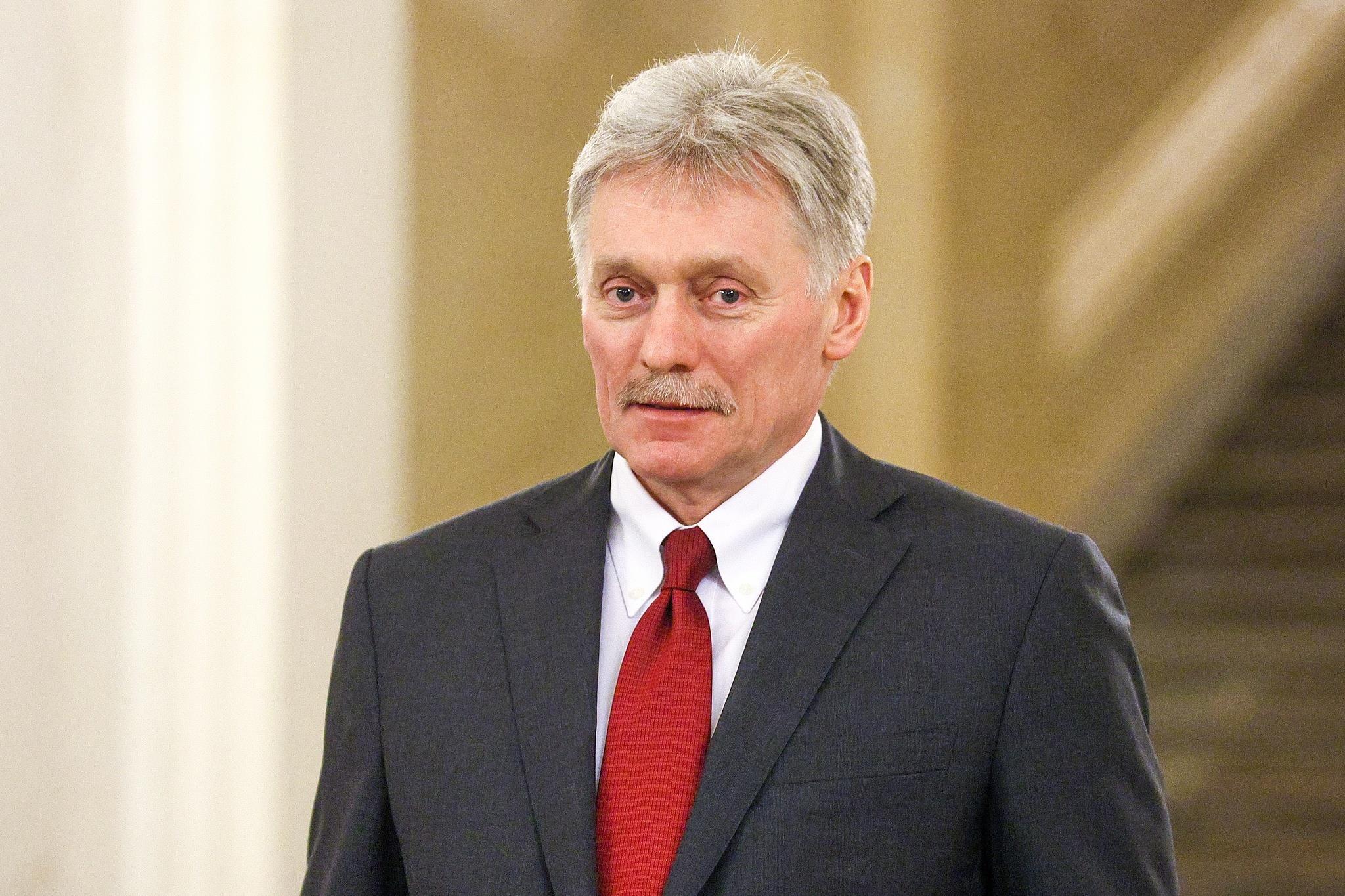
Group 1 - The Kremlin, represented by spokesperson Peskov, maintains that discussions regarding Ukraine's "peace plan" should not be conducted publicly through media channels, emphasizing that the U.S. is aware of Russia's fundamental stance [2][3] - Ukrainian President Zelensky announced a 20-point "peace plan" aimed at ending the conflict, which he claims reflects a shared position between Ukraine and the U.S., although some issues remain unresolved [2][3] - Zelensky indicated that if territorial disputes cannot be settled during negotiations, the "peace plan" may be submitted for a national referendum, while reaffirming Ukraine's commitment to NATO membership [3] Group 2 - U.S. Special Envoy Whitaker described recent talks between U.S. and Russian representatives in Florida as "productive and constructive," aimed at advancing the Russia-Ukraine "peace plan" [3] - The Russian delegation was led by Dmitriev, who is responsible for foreign investment and economic cooperation, and included notable U.S. figures such as Jared Kushner and Josh Greenbaum [3]
俄乌重大转折?泽连斯基妥协 乌放弃加入北约以换取西方保障
Hua Xia Shi Bao· 2025-12-15 08:21
Group 1 - The core point of the article is that Ukrainian President Zelensky has indicated a significant shift in Ukraine's stance regarding NATO membership, now accepting a bilateral security guarantee instead of direct NATO membership as part of a compromise to end the conflict with Russia [1][2][8] - Zelensky emphasized that joining NATO remains a core demand for Ukraine, but it has not received support from the U.S. and some European countries, leading to the exploration of alternative security arrangements [1][10] - The ongoing discussions involve a "peace plan" proposed by the U.S., with Zelensky stating that any compromises must be fair and effective in preventing future Russian aggression [8][9] Group 2 - The closed-door talks in Berlin included key representatives from both the U.S. and Ukraine, with discussions focusing on territorial issues, security guarantees, and the frozen assets of the Russian central bank [4][5] - U.S. Special Envoy Witkoff reported "significant progress" in the discussions, although specific details of this progress were not disclosed [4] - European leaders, including French President Macron and UK Prime Minister Starmer, expressed concerns that Ukraine might make concessions under U.S. pressure that could jeopardize European security interests [6][7] Group 3 - Zelensky clarified that there is currently no direct dialogue between Ukraine and Russia, with the U.S. acting as an intermediary to convey messages and demands from Russia [10] - He criticized the notion of unilateral withdrawal of Ukrainian forces from eastern regions without reciprocal actions from Russia, labeling such demands as unfair [11] - Zelensky also mentioned the need for Ukraine to prepare for potential elections, indicating a willingness to adapt to changing political circumstances [12]
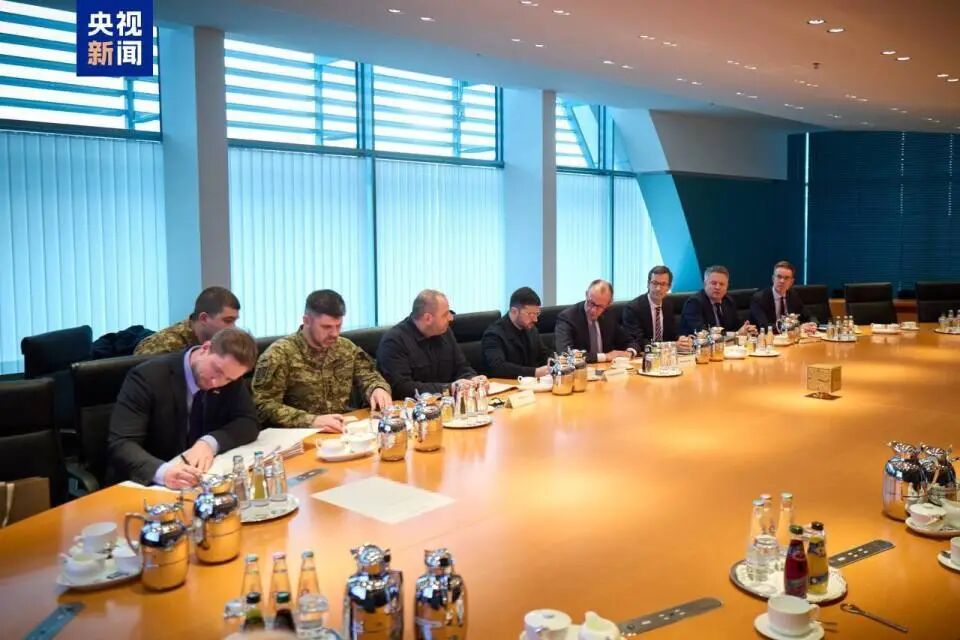
泽连斯基:乌已妥协,不入北约
第一财经· 2025-12-14 14:37
Core Viewpoint - The article discusses Ukrainian President Zelensky's statements regarding the U.S. "peace plan" for resolving the Russia-Ukraine conflict, highlighting Ukraine's core demand for NATO membership and the lack of support from the U.S. and some European countries for this demand [3][4]. Group 1 - Zelensky emphasized that NATO membership is a core demand for Ukraine and a practical security guarantee, but it has not received support from the U.S. and European nations [3]. - The ongoing negotiations are focused on creating an alternative bilateral security assurance system for Ukraine [3]. - Zelensky stated that accepting a bilateral security guarantee instead of direct NATO membership is a compromise made by Ukraine to establish an effective mechanism to prevent future conflicts with Russia [3]. Group 2 - The "peace plan" aimed at resolving the Russia-Ukraine conflict will inevitably involve various compromises and will not satisfy everyone [4]. - Zelensky highlighted that any compromises must be based on fairness, particularly for Ukraine, and the plan must be effective in ending the conflict rather than being merely symbolic [4]. - The plan must ensure that Russia cannot launch new military actions against the Ukrainian people after its signing [5]. Group 3 - German Chancellor Merz indicated that he, along with leaders from several European countries, has sent a proposal regarding the Russia-Ukraine "peace plan" to the U.S. [5]. - The U.S. Middle East envoy is scheduled to meet with Zelensky and several European leaders to advance the proposed "peace plan" [6].

俄乌,重大转折?!泽连斯基,最新表态→
证券时报· 2025-12-14 14:21
Group 1 - The core demand of Ukraine is to join NATO as a security guarantee, but the U.S. and some European countries do not support this as part of the peace negotiations [2] - Ukraine is willing to compromise by accepting a bilateral security guarantee instead of direct NATO membership, aiming to establish an effective mechanism to prevent future conflicts with Russia [2] - The proposed peace plan will include various compromises but must be based on fairness, particularly for Ukraine, and should be a concrete step towards ending the conflict [4][5] Group 2 - Currently, there is no direct dialogue between Ukraine and Russia, with the U.S. playing a role in conveying messages and demands from Russia to Ukraine [6] - The key to resolving the conflict lies in the U.S. and its partners applying real pressure on Russia to make substantial compromises [7] - Ukraine's President has informed the parliament to prepare for potential upcoming elections, emphasizing the need for security guarantees during this process [9]
分歧加剧!与欧洲领导人通话,特朗普“言辞强硬”
Huan Qiu Shi Bao· 2025-12-11 22:33
Core Viewpoint - The article discusses the ongoing tensions and negotiations surrounding the Ukraine conflict, highlighting the differences between the U.S. and European leaders regarding peace plans and the implications for Ukraine's future and European security [1][3][8]. Group 1: U.S. and European Leaders' Discussions - U.S. President Trump had a phone call with European leaders, expressing a cautious approach to further discussions on the Ukraine peace process, indicating a desire not to waste time [1][3]. - European leaders are concerned about the potential lack of U.S. support for the war in Ukraine, prompting them to prepare for independent action [1][3]. Group 2: Ukraine's Response to Peace Plans - Ukraine has responded to the U.S. peace plan with specific comments and proposed modifications to ensure its feasibility, addressing contentious issues such as territorial disputes [3][5]. - A meeting between Ukrainian and U.S. officials is scheduled to continue discussions on the peace plan and Ukraine's post-war reconstruction [3][5]. Group 3: Discrepancies in Peace Plans - The U.S. peace plan includes proposals for a demilitarized zone and security guarantees for Ukraine, with a timeline for Ukraine's EU membership by 2027, while omitting restrictions on NATO membership [5]. - The plan also suggests a joint decision-making process between the U.S. and Russia regarding the handling of frozen Russian assets [5][6]. Group 4: Economic Implications and Concerns - The U.S. has proposed utilizing approximately $200 billion of frozen Russian assets for projects in Ukraine, alongside a broader strategy for reintegrating the Russian economy into global markets [6][7]. - European officials express skepticism about the U.S. proposals, fearing they may inadvertently strengthen Russia economically and militarily [7]. Group 5: Challenges Facing Europe - European leaders face the dual challenge of supporting Ukraine while navigating the complexities of U.S. policy under Trump, which appears to favor reconciliation with Russia [8]. - The upcoming EU summit is deemed critical for securing support for Ukraine and addressing the issue of frozen Russian assets, with potential political repercussions for leaders who oppose these measures [8].