
俄乌冲突和平方案

Search documents
乌公布“和平计划”草案,俄为何拒绝评论?专家解读
Yang Shi Wang· 2025-12-25 16:28
Group 1 - The core point of the article is the unveiling of Ukraine's new 20-point "peace plan" by President Zelensky, which Russia has refused to comment on, indicating a preference for closed-door negotiations [1][3] - Russia appears to be confident in its current battlefield advantages, suggesting it is not in a hurry to end the conflict and can sustain its position for a considerable time [3][5] - The Russian stance indicates a greater focus on U.S.-Russia relations, as it disregards Ukraine's unilateral announcement of the peace plan, reflecting a desire to maximize its own interests in any potential resolution [5]

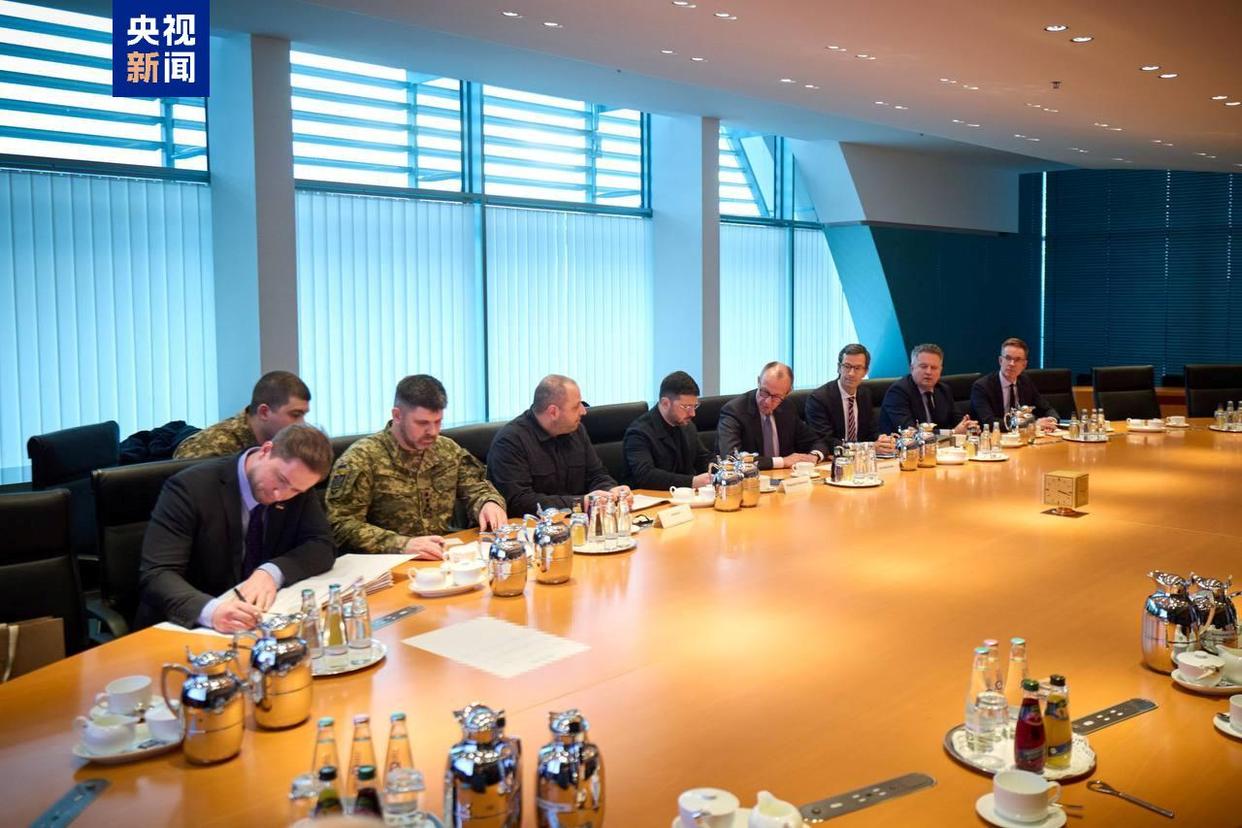
美乌新一轮柏林会谈结束 美官员称“取得进展”
Yang Shi Xin Wen· 2025-12-15 15:02
Core Viewpoint - The recent talks between U.S. representatives and Ukrainian President Zelensky in Berlin are aimed at pushing for a peace plan to end the Russia-Ukraine conflict, with the U.S. applying pressure on Ukraine to accept this proposal [1]. Group 1: Meeting Details - The meeting on December 15 lasted approximately 90 minutes and included U.S. Middle East envoy Jared Kushner and several European officials [2]. - Prior to this, a five-hour negotiation took place, with U.S. officials claiming "significant progress" was made [2]. Group 2: Key Issues - A major obstacle in the negotiations is the control of the Donetsk region, which is largely occupied by Russian forces [2]. - Zelensky emphasized that joining NATO is crucial for Ukraine's security, but the U.S. and some European partners oppose this direction, leading Ukraine to accept security guarantees similar to NATO's Article 5 [2]. - Russia insists that Ukraine must abandon its NATO aspirations and withdraw from parts of Donetsk still under Ukrainian control as key conditions for peace [2].
【环球财经】“28点新计划”变“19点”,美乌版方案改了哪些
Xin Hua She· 2025-11-25 13:16
Core Viewpoint - The recent negotiations between the U.S. and Ukraine in Geneva have resulted in a revised plan to address the Ukraine crisis, reducing the original 28-point proposal to 19 points, with some contentious issues left for the presidents of both countries to decide [1][2]. Group 1: Modifications to the Plan - The revised plan does not impose strict limits on the size of the Ukrainian military, unlike the previous version which capped it at 600,000 personnel [3]. - The new proposal excludes provisions for the amnesty of war crimes committed during the conflict and postpones discussions on territorial divisions, Ukraine's potential NATO membership, and security guarantees [3]. - Ukrainian officials indicated that while the new wording is not fully acceptable, it is at least open for consideration, contrasting with the earlier plan which was perceived as an ultimatum [4]. Group 2: Reactions and Implications - European leaders emphasized the necessity for Europe and Ukraine to play a significant role in the peace agreement process, with Germany's Chancellor asserting that Ukraine's sovereignty must not be compromised [4]. - Analysts believe that the revised plan reflects a shift closer to Ukraine's position, potentially making it more palatable for Ukrainian interests while remaining contentious for Russia [4]. - The Russian government has yet to respond to the new 19-point plan, with officials expressing skepticism about the information received from the U.S. [5]. Group 3: Ongoing Negotiations and Challenges - The negotiation process for a peace agreement may take months or even up to a year, with significant divisions remaining on territorial and security issues [6]. - Russia demands full control over the Donbas region, while Ukraine insists on negotiations based on the current contact line [6]. - The U.S. administration's fluctuating stance on the conflict resolution reflects a broader strategy aimed at achieving diplomatic success ahead of upcoming elections, rather than addressing the root causes of the conflict [7].
日内瓦和谈突现转折!28条方案砍至19条,美乌究竟达成了何种共识?
Jin Shi Shu Ju· 2025-11-24 13:07
Core Insights - The Geneva talks regarding the Russia-Ukraine conflict have made substantial progress, although specific solutions to major disagreements between Moscow and Kyiv remain undisclosed [2][3] - U.S. Secretary of State Rubio expressed optimism about reaching an agreement in a reasonable timeframe, while acknowledging that significant work still lies ahead [2] - The peace plan has been streamlined from 28 points to 19, with no details provided on which points were removed [3] Group 1: Negotiation Progress - The U.S.-Ukraine joint statement described the recent negotiations as "constructive, focused, and respectful," indicating meaningful progress in coordinating positions and clarifying next steps [3][4] - European leaders have expressed concerns over certain aspects of the proposals, particularly those related to sanctions against Moscow and the freezing of Russian sovereign assets, emphasizing that these decisions fall under EU jurisdiction [3][5] Group 2: Political Dynamics - The discussions have led to a decline in the European defense sector, with the Stoxx Aerospace and Defense Index dropping over 2% following U.S. pressure for Ukraine to accept the agreement [5] - There are concerns within the Republican Party regarding the proposal, with some members publicly criticizing it, indicating a lack of consensus on the approach to the conflict [6] Group 3: Future Steps - Further consultations among France, Germany, and the UK are expected this week, with potential participation from Poland, Finland, and NATO Secretary General Stoltenberg [6] - The final text of any agreement will require approval from both Ukrainian President Zelensky and U.S. President Trump before being submitted to Moscow [3][4]
美方施压乌克兰接受28点新计划 乌欧寻求替代方案
Nan Fang Du Shi Bao· 2025-11-23 00:59
Core Viewpoint - The article discusses the divergent responses from the U.S., Russia, Ukraine, and European nations regarding the U.S. proposal of a 28-point plan to end the Russia-Ukraine conflict, highlighting the complexities and differing interests involved in the peace negotiations [1][2][3]. Group 1: U.S. Position - The U.S. has set a deadline for Ukraine to accept the 28-point plan by November 27, with President Trump indicating that this date is "appropriate" despite potential for extension [1]. - The 28-point plan reportedly includes demands for Ukraine to withdraw from certain areas of Donetsk, which Ukraine has previously rejected [1]. Group 2: Ukraine's Response - Ukraine is seeking constructive solutions and has expressed willingness to collaborate with the U.S. and European partners on national security matters [2]. - President Zelensky highlighted the unprecedented pressure Ukraine is facing, presenting a dilemma between maintaining dignity and accepting the challenging terms of the 28-point plan [2]. Group 3: European Response - Germany, France, and the UK reaffirmed their commitment to support Ukraine and emphasized the need for a lasting and just peace, while also expressing concerns about the U.S. plan [3]. - Germany's Foreign Minister stated that Europe needs to evaluate the U.S. plan differently and opposed setting a deadline for Ukraine, advocating for a thoughtful approach to achieving reliable peace [3]. - Poland criticized the U.S. for not consulting European nations during the formulation of the 28-point plan, indicating a lack of European input in discussions that affect regional security [3].
泽连斯基:乌克兰面临艰难选择
Xin Hua Wang· 2025-11-21 22:42
Group 1 - Ukrainian President Zelensky stated that Ukraine is facing an unprecedented level of pressure and difficult choices, emphasizing the importance of national dignity and freedom in any potential agreements [1] - The U.S. has proposed a 28-point plan to end the Russia-Ukraine conflict, urging Ukraine to reach an agreement within a "tight timeline" [1] - Zelensky confirmed that Ukraine will work calmly with the U.S. and all partners to seek constructive solutions while ensuring that Ukraine's dignity and freedom are not overlooked [1] Group 2 - Zelensky held a conference call with leaders from the UK, France, and Germany to discuss a "peace plan" for Ukraine and Europe, focusing on the 28-point plan for achieving a "real and dignified" peace [2] - Concerns have been raised regarding the feasibility of the 28-point plan, particularly regarding significant territorial compromises that may not be widely accepted within Ukraine [2] - There are worries that the plan may require Ukraine to abandon its NATO membership aspirations in exchange for superficial security guarantees, which has caused unease among the Ukrainian public [2]