保供稳链

Search documents
化工:稳需求,平供给
Wu Kuang Qi Huo· 2026-03-16 03:47
Report Industry Investment Rating - Not provided Core View of the Report - The 2026 government work report's tone for the energy and chemical sector is "green carbon reduction, high - end upgrading, supply guarantee and chain stabilization, and technological breakthrough", which is beneficial to the long - term high - quality development of the industry. The impact on futures varieties is mainly "long - term trend guidance", and short - term catalysts need to be comprehensively judged in combination with industry supply - demand, geopolitics, and cost factors [3] Summary by Directory Polyester Sector - The policy aims to curb inefficient expansion through capacity regulation and standard - setting, which helps relieve the over - capacity pressure in PTA, ethylene glycol, and bottle chip sectors and promotes industry supply - demand re - balance - Green transformation is a hard constraint. The goal of reducing carbon dioxide emissions per unit of GDP by about 3.8% and the implementation of the dual - control system for carbon emissions will increase energy and environmental protection costs, accelerating the elimination of backward production capacity and highlighting the competitive advantages of leading enterprises - The policy of expanding domestic demand is expected to boost textile and clothing consumption, indirectly driving the terminal demand for polyester and promoting the healthy development of the industry. The industry profit is expected to concentrate on integrated and low - energy - consumption leading enterprises [5] Plastic Sector PVC - The core goal of "stabilizing the real estate market" and the "trinity" policy of "controlling new construction, reducing inventory, and optimizing supply" are expected to promote the stabilization and improvement of the real estate industry and boost domestic demand. The supply - side policy of "rectifying 'involution - style' competition" will accelerate the exit of high - cost and high - energy - consumption old production capacity, improving the industry's supply - demand imbalance [6] Polyolefins - The policy of "comprehensively rectifying involution - style competition" resonates with the slowdown of new capacity expansion. In 2026, the expansion speed of domestic polyethylene and polypropylene is expected to drop to about 7% and 5% respectively, and new installations are mostly concentrated in leading enterprises, effectively curbing the disorderly investment of small and medium - sized capacities - The policy of "boosting consumption" is a key variable. The demand for polyolefins from the automotive and home appliance sectors is expected to exceed expectations. The market logic will shift from "oversupply" to "supply - demand re - balance under weak recovery". The market may see inventory reduction and a moderate increase in the price center in the second - quarter maintenance season, showing a step - by - step upward trend [6][7] Rubber Sector Short - term - As the core raw material for synthetic rubber, butadiene benefits from the "oil - to - chemical conversion" and "high - end transformation" policies. The domestic butadiene plant operating rate remains high, with volatile costs and gradually recovering downstream demand. The butadiene futures are expected to show a "volatile and slightly stronger" pattern, and factors such as plant maintenance plans, downstream demand recovery, and crude oil price fluctuations should be tracked [8] Long - term - The "high - end transformation" will drive the long - term demand growth of butadiene. The stability of raw material supply will be enhanced, and the butadiene futures are expected to show an "upward - trending" pattern. Key factors to track include the growth of downstream high - end product demand, the progress of industrial green transformation, and the raw material supply pattern [9][12] Styrene - The supply - demand pattern of styrene has changed significantly. The slowdown of capacity growth and the structural shortage of upstream pure benzene have overlapped. The new production capacity growth rate has dropped to about 5%, and the supply of pure benzene has almost stagnated - The downstream demand shows unexpected resilience under the "boosting consumption" policy. The ABS and PS industries' high operating rates provide rigid demand support. The styrene market will focus on "low supply elasticity" and "strong cost support". The price is expected to remain in a relatively high - level and narrow - range volatile state [13][14]
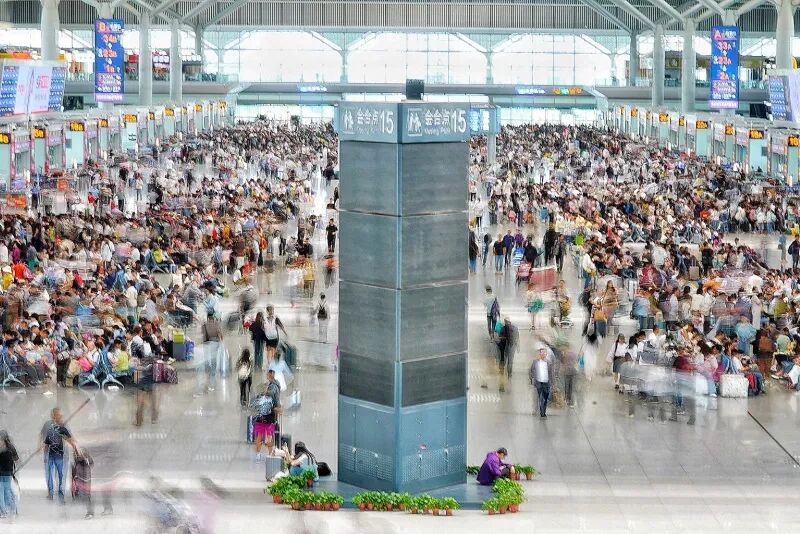
2025年铁路暑运圆满收官 累计发送旅客9.43亿人次
Ren Min Ri Bao· 2025-09-01 06:33
Core Insights - The railway summer transportation period from July 1 to August 31 concluded successfully, with record passenger and freight volumes [1][3] Passenger Transport - A total of 943 million passengers were transported, marking a year-on-year increase of 4.7% [1] - Daily average of 11,330 passenger trains were operated, reflecting an 8% increase year-on-year [3] - The number of foreign passengers reached 3.484 million, up 23.9% year-on-year, facilitated by the relaxation of visa policies [3] - A total of 579 tourist trains were operated, representing a 31% increase, contributing positively to the tourism and silver economy [3] Freight Transport - The railway transported 702 million tons of goods, with a year-on-year growth of 4.8% [1] - A significant volume of 243 million tons of electricity coal was transported during this period, ensuring stable supply chains [3] - The coal supply for 371 railway-supplied power plants remained stable, with an average of over 25 days of coal reserves [3] Cross-Border Transport - The Guangzhou-Shenzhen-Hong Kong high-speed railway transported 6.16 million cross-border passengers, while the China-Laos railway served 35,000 cross-border travelers [3] - International passenger trains to Mongolia, Russia, and Vietnam were effectively operated, enhancing cross-border travel opportunities [3]