信用风险偏好分化

Search documents
万科贷款超2600亿,可能波及哪些银行?
第一财经· 2025-12-02 15:14
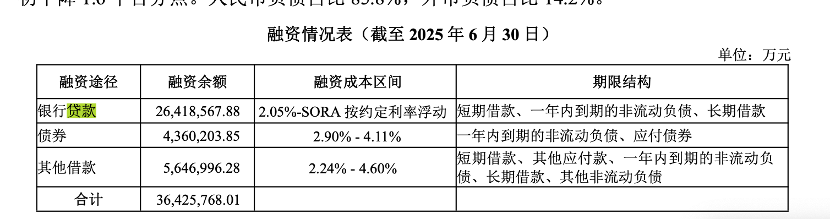
Core Viewpoint - Vanke is facing significant liquidity pressure and potential default risks, leading to concerns about its impact on major partner banks, although the overall risk to the banking system is considered manageable [2][15]. Group 1: Debt and Financial Pressure - Vanke will hold a creditor meeting on December 10 to discuss the extension of a 2 billion yuan medium-term note, "22 Vanke MTN004," amid ongoing concerns about its debt issues [2]. - As of mid-2025, Vanke's interest-bearing debt reached 364.2 billion yuan, with over 260 billion yuan in bank loans, indicating a high concentration of borrowing from large financial institutions [2][4]. - The company's short-term debt pressure is substantial, with 42.7% of its interest-bearing debt, amounting to 151.3 billion yuan, due within one year, while cash reserves have decreased by 25.5% to 65.68 billion yuan [4]. Group 2: Financing Structure and Risks - Vanke's financing channels include bank loans (264.2 billion yuan), bonds (43.6 billion yuan), and other borrowings (56.5 billion yuan), with a total interest-bearing debt of 364.3 billion yuan [6]. - The company has shifted from relying on credit loans to secured loans, with 40 loan guarantee announcements made since 2023, indicating a tightening financing environment [10]. - Vanke's subsidiaries have faced judicial freezes on shares, with significant amounts frozen, raising concerns about asset liquidity and operational flexibility [11][12]. Group 3: Market Reactions and Implications - Vanke's bond prices have experienced significant volatility, with several bonds dropping over 30% in value, indicating a market shift towards pricing in a high probability of default [16]. - Despite the turmoil, analysts believe the overall impact on the banking system is limited, as Vanke's bank loans account for only 1.9% of total loans to real estate companies [15]. - The company's sales performance has declined sharply, with cumulative sales of 115.28 billion yuan in the first ten months of the year, nearly halving from the previous year's average [16].



万科贷款超2600亿,机构称债务风险对银行体系影响有限
Di Yi Cai Jing· 2025-12-02 11:04
Core Viewpoint - Vanke is facing significant liquidity pressure and potential default risks, leading to concerns about its impact on major partner banks, despite analysts suggesting limited systemic risk to the banking sector [1][10]. Group 1: Debt and Financial Position - Vanke will hold a creditor meeting on December 10 to discuss the extension of a 2 billion yuan medium-term note, "22 Vanke MTN004," amid ongoing concerns about its debt issues [1]. - As of mid-2025, Vanke's interest-bearing debt reached 364.2 billion yuan, with over 260 billion yuan in bank loans, indicating a high concentration of borrowing from large financial institutions [1][10]. - The company's short-term debt pressure is significant, with 42.7% of its interest-bearing debt, amounting to 151.3 billion yuan, due within one year, while cash reserves have decreased by 25.5% to 65.68 billion yuan [2][10]. Group 2: Financing Channels and Costs - Vanke's financing structure includes 264.19 billion yuan in bank loans, 43.6 billion yuan in bonds, and 56.47 billion yuan in other borrowings, with a total interest-bearing debt of 364.26 billion yuan [2][4]. - The financing costs for bank loans range from 2.05% to SORA, while bonds have a cost range of 2.90% to 4.11% [4]. - Since 2023, Vanke has shifted its financing model from credit loans to secured loans, with 40 loan guarantee announcements made to meet operational needs [6]. Group 3: Impact on Banks and Market Sentiment - Concerns about Vanke's potential default have raised questions about which banks might be affected, with major lenders including Industrial and Commercial Bank of China, China Merchants Bank, and Bank of China [5][10]. - Despite the risks, analysts believe the overall impact on the banking system is manageable, as Vanke's bank loans account for only 1.9% of total loans to real estate companies [10][12]. - Recent market reactions have shown significant volatility in Vanke's bonds, with several experiencing sharp declines, indicating a shift towards pricing based on high default probability [11][12].