儿童近视防控

Search documents
“阿托品‘阶梯浓度’体系落地:儿童近视防控迈入精准医疗时代”
Xin Lang Cai Jing· 2026-01-13 04:19
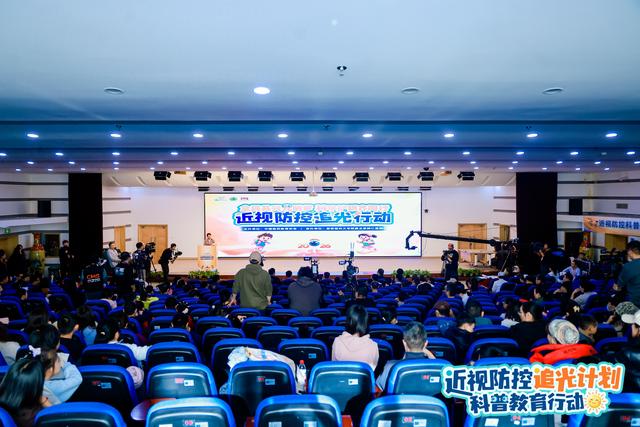
Core Viewpoint - The "Near-sightedness Prevention and Control Light-Chasing Plan" public welfare event aims to address the growing issue of myopia among children and adolescents in China, emphasizing the need for collective action and awareness in preventing and managing this condition [1][3]. Group 1: Event Overview - The event was held on January 11, 2026, in Beijing, focusing on educating families about myopia prevention through various activities such as lectures, Q&A sessions, and health consultations [1]. - The theme of the event was "1 Road Accompanying, 2 Heavy Guardianship, 4 Seasons Worry-Free," highlighting the importance of community involvement in eye health [1]. Group 2: Current Situation of Myopia - Approximately 600 million people in China are affected by myopia, with children and adolescents accounting for 50%-60% of this population, indicating a significant prevalence and severity of the condition [3]. - The National Health Commission and other departments have launched the "Five Health Promotion Action Plan" for 2026-2030, aiming to reduce the incidence of myopia through graded and classified interventions [3]. Group 3: Expert Insights - Professor Wang Ningli emphasized that myopia prevention has become a national strategy since 2018, but the overall myopia rate among children remains high, with a concerning trend of younger onset and severe cases [4]. - Recent approvals of low-concentration atropine eye drops (0.02% and 0.04%) represent significant advancements in myopia control, providing a tiered medication system for personalized treatment [4][6]. Group 4: Clinical Application and Management - The introduction of a tiered concentration system allows for dynamic adjustments in treatment based on individual responses, enhancing personalized care for children with varying degrees of myopia progression [6]. - Behavioral management, including outdoor activities and proper reading posture, remains a fundamental aspect of myopia prevention, as highlighted by experts [6]. Group 5: Public Engagement and Impact - The "Near-sightedness Prevention and Control Light-Chasing Plan" has reached tens of thousands of families nationwide, reinforcing the importance of community education in safeguarding children's vision health [6].

0.02%/0.04%低浓度硫酸阿托品滴眼液获批上市
Xin Lang Cai Jing· 2026-01-12 21:04
Core Viewpoint - The recent approval of two higher concentration versions of low-concentration atropine eye drops (0.02% and 0.04%) has generated significant interest among parents for their potential to slow the progression of myopia in children, reflecting a growing public demand for myopia prevention solutions [1][2]. Group 1: Product Development and Approval - Two new formulations of low-concentration atropine eye drops have been approved, with concentrations of 0.02% and 0.04%, expanding the options available for myopia management in children [1]. - The first low-concentration atropine product was approved in 2024, indicating a trend towards personalized treatment options for myopia [1]. - The introduction of multiple concentrations allows for a tailored approach to treatment, enhancing the effectiveness of myopia prevention interventions [2]. Group 2: Clinical Efficacy and Safety - Clinical studies indicate that the higher concentrations (0.02% and 0.04%) show improved efficacy in slowing myopia progression compared to the previously available 0.01% concentration, provided they are used under proper medical supervision [2]. - The overall tolerability of the new formulations (0.02% and 0.04%) is reported to be good, emphasizing the importance of individualized treatment plans based on children's specific needs [2]. Group 3: Usage Guidelines and Misconceptions - Low-concentration atropine eye drops must be used under medical guidance, with regular follow-ups to monitor the child's response to treatment [3]. - It is crucial to clarify that atropine is not a "cure" for myopia; it is intended to slow progression rather than reverse existing myopia, and children diagnosed with myopia still require appropriate corrective lenses [3]. - Parents are advised not to neglect proper eye care habits, as effective myopia management also relies on good visual habits, outdoor activities, and proper lighting conditions [3].
抢占百亿市场窗口期?兴齐眼药近视相关适应症产品获批上市
2 1 Shi Ji Jing Ji Bao Dao· 2026-01-07 23:08
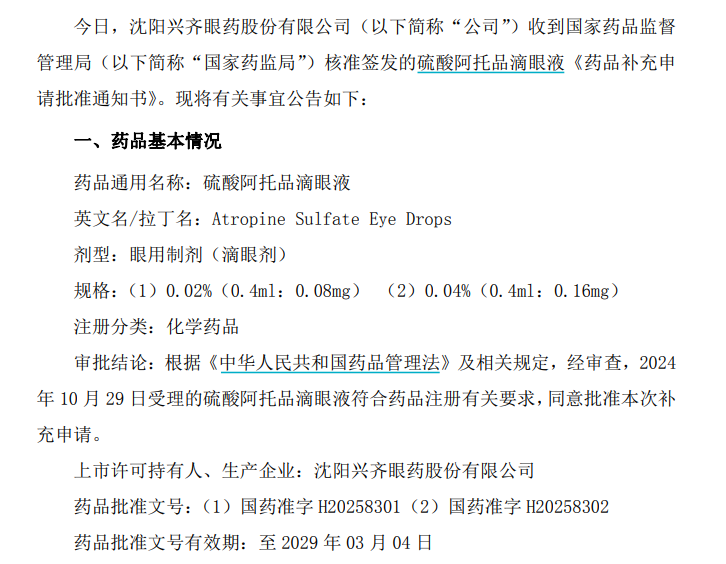
Core Viewpoint - The approval of 0.02% and 0.04% atropine sulfate eye drops by the National Medical Products Administration represents a significant breakthrough for the company, enhancing treatment options for myopia progression in children aged 6 to 12 years [1][4]. Company Summary - The newly approved products are aimed at delaying myopia progression in children with spherical degrees between -1.00D and -4.00D, with astigmatism and anisometropia not exceeding 1.50D [1]. - Following the approval, the company's stock price increased by 4.82% on January 5, reaching 73.68 CNY per share, and continued to rise to 74.2 CNY on January 6, with a total market capitalization of 18.285 billion CNY [1]. - The company’s 0.01% atropine sulfate eye drops have already established a stable market share and clinical recognition, paving the way for the new products to capture market opportunities [2]. Industry Summary - The market for myopia prevention and control is expanding, with a reported overall myopia rate of 51.9% among children and adolescents in China as of 2022 [6]. - The approval of low-concentration atropine eye drops is supported by the 2024 edition of the "Myopia Prevention and Control Guidelines," which recognizes these drops as effective in delaying myopia progression [4]. - The competitive landscape is intensifying, with several pharmaceutical companies entering the market, including Heng Rui Medicine and Zhaoke Ophthalmology, which have submitted applications for similar products [7][8]. - The estimated market size for atropine in myopia management ranges from approximately 5.29 billion CNY to 20.39 billion CNY, indicating significant growth potential [7].

“近视神药”最新利好,200亿A股公司直线冲高
21世纪经济报道· 2026-01-06 10:47
Core Viewpoint - The approval of 0.02% and 0.04% atropine sulfate eye drops by Xingqi Eye Medicine is a significant advancement in the treatment options for myopia in children aged 6 to 12, addressing the severe myopia issue among Chinese youth [1][5][8]. Group 1: Product Approval and Market Impact - Xingqi Eye Medicine announced the approval of two new concentrations of atropine sulfate eye drops, which are aimed at delaying myopia progression in children [1]. - Following the announcement, the stock price of Xingqi Eye Medicine surged nearly 5% on January 5, closing at 73.68 yuan per share, and continued to rise to 74.2 yuan per share on January 6, with a total market capitalization reaching 18.285 billion yuan [2]. - The approval of these products is expected to enhance clinical treatment options and capitalize on the growing market demand for myopia prevention among children [3][5]. Group 2: Clinical Research and Efficacy - Clinical trials involving 486 children demonstrated that the atropine sulfate eye drops significantly outperformed placebo in delaying myopia progression, with good safety profiles and patient compliance [7]. - The National Health Commission's 2024 guidelines have recognized low-concentration atropine eye drops as an effective method for myopia control, further validating their clinical use [8]. Group 3: Market Demand and Competition - The overall myopia rate among children and adolescents in China reached 51.9% in 2022, highlighting a substantial market demand for effective myopia prevention solutions [10]. - Xingqi Eye Medicine's 0.01% atropine sulfate eye drops have already captured a significant market share, contributing over 10% to the company's revenue by mid-2025 [10]. - The competitive landscape is intensifying, with several pharmaceutical companies, including Heng Rui Pharmaceutical and Zhao Ke Ophthalmology, advancing their own atropine eye drop products through various stages of clinical trials [11][12].

抢占200亿市场窗口期?兴齐眼药“近视神药”独有规格获批
2 1 Shi Ji Jing Ji Bao Dao· 2026-01-06 09:58
Core Viewpoint - Xingqi Eye Pharmaceutical has received approval from the National Medical Products Administration for its 0.02% and 0.04% atropine sulfate eye drops, aimed at slowing myopia progression in children aged 6 to 12 with specific refractive errors, marking a significant advancement in the treatment options available for pediatric myopia [1][4]. Company Developments - The approval of the new concentrations follows the earlier approval of the 0.01% atropine sulfate eye drops, which has already established a stable market share and clinical recognition as the first product in China for this purpose [3][6]. - Following the announcement, the company's stock price rose by 4.82% on January 5, closing at 73.68 yuan per share, and continued to rise to 74.2 yuan on January 6, reflecting positive market sentiment [3]. Clinical Research and Efficacy - Clinical trials involving 800 children demonstrated significant efficacy of the 0.02% and 0.04% atropine sulfate eye drops compared to a placebo, with good safety profiles and patient compliance [4][5]. - The 2024 edition of the "Myopia Prevention and Control Guidelines" has included low-concentration atropine eye drops as an effective method for myopia control, further validating their clinical use [5]. Market Potential and Competition - The myopia rate among children and adolescents in China reached 51.9% in 2022, creating a substantial market demand for effective myopia prevention and control solutions [5][6]. - The market for low-concentration atropine is projected to be significant, with estimates ranging from 52.9 billion yuan to 203.9 billion yuan, indicating a robust growth opportunity for the company [6]. - Competition in the pediatric myopia treatment space is intensifying, with several pharmaceutical companies, including Heng Rui Medicine and Zhaoke Ophthalmology, advancing their own atropine eye drop products through various stages of clinical trials [7][8].
告别防控“一刀切”:兴齐眼药0.02%、0.04%阿托品获批,孩子近视方案能“量体裁衣”了
Feng Huang Wang Cai Jing· 2026-01-06 05:24
Core Viewpoint - The approval of 0.02% and 0.04% atropine eye drops marks a significant milestone in the prevention and control of myopia among children and adolescents in China, transitioning from a "single concentration" approach to a "stair-step concentration" model, enabling personalized and precise interventions [1][3][6] Group 1: Market Context - The overall myopia rate among children and adolescents in China is 51.9%, showing a slight decrease from 2021, but the situation remains severe with a high prevalence of early-onset and severe cases [2] - The introduction of varying concentrations of atropine eye drops responds to the clinical need for tailored solutions, particularly for high-risk children who may not benefit from a single concentration [2][7] Group 2: Product Development - The newly approved eye drops underwent rigorous randomized double-blind clinical trials, demonstrating their effectiveness and safety in delaying the progression of myopia in children [3][4] - The clinical study involved 800 participants across 28 centers, with a treatment duration of 2 years and a 1-year observation period post-treatment, confirming the efficacy of the new concentrations compared to a placebo [4] Group 3: Company Profile - Shenyang Xingqi Eye Medicine Co., Ltd. has been a pioneer in the research and development of atropine eye drops for myopia control, initiating its low-concentration atropine project in 2014 and collaborating with Singapore's National Eye Centre in 2016 [5] - The company has developed a comprehensive management drug covering different stages of myopia progression, showcasing its innovative capabilities in the ophthalmic pharmaceutical field [5] Group 4: Health Policy Alignment - The approval of these new concentrations aligns with the "Healthy China 2030" initiative, enhancing the drug treatment system for myopia prevention and providing robust support for achieving national health goals [6]

远大医药近视新药GPN00884启动中国Ⅱa期临床
Zheng Quan Ri Bao Wang· 2025-10-26 12:44
Core Insights - The company, Yuan Da Pharmaceutical Group, has made significant progress in the field of myopia prevention for children with its innovative ophthalmic drug GPN00884, which has entered the important phase of exploring dosage and assessing preliminary efficacy after completing patient enrollment in a Phase IIa clinical study in China [1][2] Group 1: Clinical Development - GPN00884 has completed patient enrollment for its Phase I clinical study in China by August 2024 and is expected to complete the study by March 2025 [2] - The ongoing Phase IIa clinical trial is a randomized, double-blind, placebo-controlled study aiming to enroll over 80 myopic participants aged 6 to 12 years to evaluate the drug's effectiveness and safety [2] Group 2: Market Potential - The global market for myopia treatment drugs is projected to reach nearly $5 billion by 2033, with the Chinese market accounting for approximately $1.7 billion [1] - There is a significant unmet clinical need for effective myopia treatments, as current options like low-concentration atropine eye drops have high incidences of side effects, affecting patient compliance [1] Group 3: Strategic Focus - Yuan Da Pharmaceutical is focusing on ophthalmology as a key strategic development area, continuously innovating in ophthalmic drugs to enhance its industry position and market competitiveness [2] - The company has established a comprehensive product system for innovative drugs, combining partnerships and in-house research to develop treatments for various eye conditions, including dry eye syndrome and myopia [2][3] Group 4: Recent Achievements - The company has recently achieved significant clinical advancements with three products this year, including an innovative nasal spray for dry eye syndrome and treatments for other eye conditions [3] - Multiple innovative products are expected to be approved for market launch in the next three years [3]
破局全球儿童近视防控 远大医药(00512)创新眼药完成中国IIa期临床首例入组 “Go Global”战略驱动眼科管线价值释放
智通财经网· 2025-10-26 10:35
Core Viewpoint - The recent progress of Yuan Da Pharmaceutical in the field of myopia prevention and control is significant, with the initiation of the IIa clinical trial for the innovative ophthalmic drug GPN00884, which aims to delay the progression of myopia in children [1][3]. Group 1: Market Context - Myopia is a major public health issue globally, with 2.6 billion people affected as of 2020, including 312 million under the age of 19 [2]. - China has the highest number of myopia cases in the world, with a reported prevalence rate of 51.9% among children and adolescents in 2022 [2]. - The Chinese government has prioritized myopia prevention as a national strategy, implementing various plans and guidelines to combat the issue [2]. Group 2: Product Development - GPN00884 is positioned as a potential breakthrough in myopia treatment, as it does not cause adverse effects such as photophobia or pupil dilation, which are common with existing treatments like low-concentration atropine eye drops [3]. - The IIa clinical trial for GPN00884 will involve over 80 participants aged 6 to 12, focusing on evaluating its efficacy and safety in delaying myopia progression [3]. - Previous phases of clinical trials for GPN00884 have shown good safety and tolerability profiles, indicating its potential for successful market entry [3]. Group 3: Competitive Advantage - The successful initiation of the IIa clinical trial enhances Yuan Da Pharmaceutical's competitive edge in the myopia prevention market, addressing the urgent need for safe and effective treatment options for children [4]. - The company has established a comprehensive product pipeline in the ophthalmic sector, focusing on innovative drug development to strengthen its market position [5]. - Yuan Da Pharmaceutical's strategy includes a combination of in-house development and partnerships to create a diverse range of ophthalmic products, enhancing its competitive differentiation [5]. Group 4: Future Prospects - The company anticipates significant growth in its ophthalmic product pipeline, with multiple innovative products expected to receive regulatory approval in the coming years [8]. - Recent advancements include the launch of OC-01 for dry eye treatment and TP-03 for demodex blepharitis, both of which are expected to contribute to the company's revenue growth [8][9]. - The ongoing development of these products not only showcases Yuan Da Pharmaceutical's competitive capabilities but also aligns with its "Go Global" strategy, potentially expanding its market reach internationally [9].
兴齐眼药滴眼剂收入翻倍仍低于预期,“唯一性”将被打破
Xin Lang Cai Jing· 2025-05-08 02:34
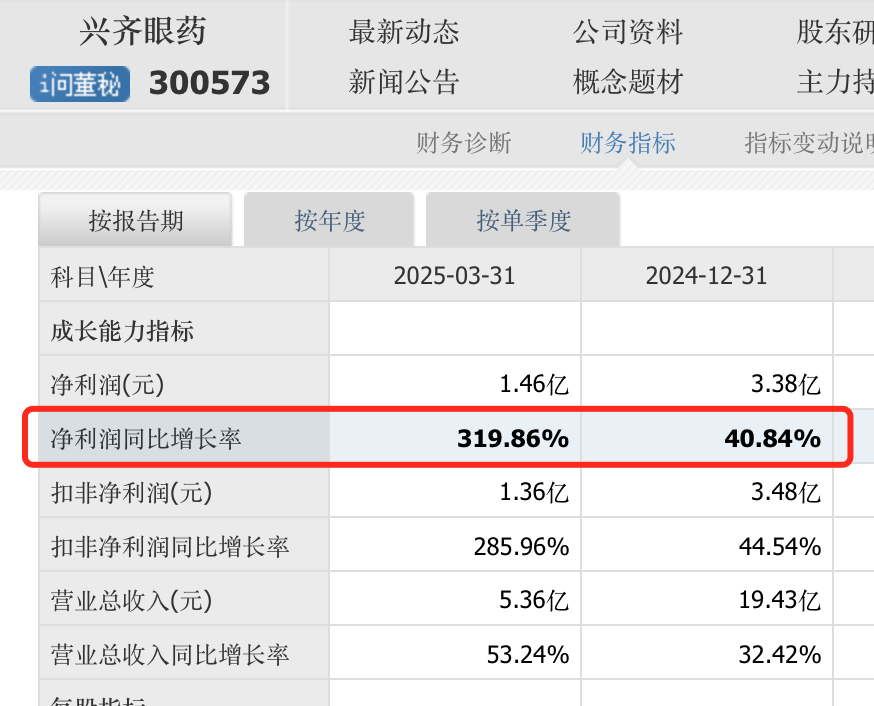
Core Viewpoint - Xingqi Eye Pharmaceutical (300573.SZ) reported impressive financial results for 2024 and Q1 2025, particularly with the low-concentration atropine product, which has become a key revenue driver, accounting for over 10% of total revenue. However, the performance of atropine in 2024 fell short of broker expectations, raising questions about the sustainability of the company's leading position as competitors enter the market [1][2][11]. Financial Performance - In 2024, the company achieved a revenue of 1.943 billion yuan, representing a year-on-year growth of 32.42%, with a net profit of 338 million yuan, up 40.84% year-on-year. For Q1 2025, revenue reached 536 million yuan, a significant increase of 53.24%, and net profit soared by 319.86% to 146 million yuan [1][2][11]. - The company's distribution plan for 2024 includes a 10-for-4 stock split and a cash dividend of 10 yuan [1]. Product Overview - Xingqi Eye Pharmaceutical specializes in ophthalmic drugs, with a portfolio of 60 approved ophthalmic products, 38 of which are included in the medical insurance directory, and 6 in the national essential drug list [2][3]. - The company's eye drops segment saw a revenue increase of 106.08% in 2024, with key products including Cyclosporine Eye Drops and Sulfate Atropine Eye Drops, both contributing significantly to revenue [6][11]. Market Dynamics - The demand for eye drops is evident, particularly among children and adolescents, with a near 52% myopia rate reported among Chinese youth [6]. The low-concentration atropine eye drops, approved in March 2024, are expected to reshape the ophthalmic drug market, with a projected peak sales of 10.18 billion yuan by 2027 [10][11]. - The company has established a comprehensive sales network, collaborating with numerous private and public healthcare institutions, and is actively expanding its presence in e-commerce and internet healthcare [12][13]. Competitive Landscape - The uniqueness of Xingqi's atropine product is threatened as other companies, including Heng Rui Pharmaceutical and Zhaoke Ophthalmology, are entering the market with similar products [14][22]. Heng Rui's product is expected to be launched by 2027, indicating increasing competition [18]. - The competitive landscape is evolving, with multiple companies pursuing the development of atropine eye drops, which may impact Xingqi's market share and pricing power in the future [23].