
免申即享政策

Search documents
贵州首次为数据标注企业发放奖补
Sou Hu Cai Jing· 2026-01-05 01:26
Core Insights - Guizhou province has issued 7.3 million yuan in subsidies to six data labeling companies, marking the first time such financial support has been provided to this sector [1][2] - The subsidies are part of a new "no application required" mechanism, allowing companies to receive funds directly without submitting extensive documentation [1] Group 1: Subsidy Distribution - Century Hengtong received 3 million yuan for achieving over 100 million yuan in data labeling revenue for the first time in 2025 [1] - Four companies, including Jiatali and Mengdong Technology, each received 1 million yuan for surpassing 30 million yuan in data labeling revenue [1] - Data Bao's core team was awarded 300,000 yuan for meeting revenue targets through technology transformation [1] Group 2: Business Growth and Future Plans - Jiatali's chairman reported a nearly fourfold increase in data labeling revenue over the past year, making it the company's third major business pillar [2] - The company plans to establish a local labeling team of over 500 people to secure more large client orders in Guizhou [2] - The provincial data bureau aims to further optimize the 2026 policy details, expand the "no application required" scope, and enhance the local talent development system [2]
厚植尊商、亲商、重商文化土壤,上海营商环境9.0版有十大新提法
Xin Lang Cai Jing· 2026-01-04 07:35
Core Viewpoint - The Shanghai Municipal Government has officially released the "Action Plan for Accelerating the Creation of an International First-Class Business Environment (2026)", marking the ninth iteration of its business environment optimization plan, which includes 26 specific tasks across four key areas [1][2]. Group 1: Market Competition and Regulation - The 9.0 version of the action plan emphasizes creating a fair and just market competition environment, specifically addressing the regulation of monopolistic and unfair competition behaviors, and aims to deepen the rectification of "involution" competition [3][5]. - Experts suggest that "involution" competition often arises from an imperfect market environment and excessive pursuit of short-term profits, highlighting the need for improved market access thresholds and regulatory enforcement [5]. Group 2: Policy Accessibility - As of November 30 last year, Shanghai has implemented "no application, immediate enjoyment" for 643 policy projects, serving enterprises over 6.11 million times [6]. - The action plan aims to fully integrate inclusive policies into a "one-stop service" platform, simplifying unnecessary expert reviews and exploring batch approval models to ensure policy benefits reach enterprises quickly [6]. Group 3: Financing Support for SMEs - The action plan proposes the establishment of a unified financing service platform for small and medium-sized enterprises (SMEs) called "Sui Shen Rong", which will enhance policy integration and service delivery [7]. - This year's action plan shifts from "policy subsidies" to "credit empowerment", utilizing the "Sui Shen Rong" platform to aggregate and activate enterprise credit data assets [7]. Group 4: Payment Practices - The plan includes a commitment to ensure zero arrears in payments from government agencies and institutions, reflecting the government's determination to respect the basic rights of market entities [8]. - Measures will be taken to improve payment efficiency in supply chains and establish regular disclosure of payment terms to alleviate financial pressure on SMEs [8]. Group 5: Digital and Algorithm Governance - The action plan stresses the need for enhanced governance of platform algorithms to ensure fair and humane treatment of platform operators and workers, addressing the negative impacts of algorithmic management [11][12]. - It aims to regulate online platform activities and promote win-win development among platform enterprises and their operators [11]. Group 6: Import and Consumption Policies - The action plan seeks to expand the "white list" of enterprises and new products for the first-release economy of imported consumer goods, enhancing the convenience of inspection measures [13]. - Shanghai has seen the addition of 933 new stores from January to November 2025, including 14 global and Asian flagship stores, indicating a strong trend in the first-release economy [14]. Group 7: Urban Vitality and Cultural Development - The action plan proposes optimizing regulations for outdoor activities and advertisements to enhance urban vitality and the "smoky atmosphere" of neighborhoods, supporting the development of night economies [15][16]. - It emphasizes the importance of fostering a culture that respects and encourages entrepreneurship, aiming to transform the government's role from a manager to a service provider [20][29]. Group 8: Data Management - The action plan expands the scope of the negative list for data export to encompass all areas, facilitating compliant operations for enterprises while ensuring data security [17][18].


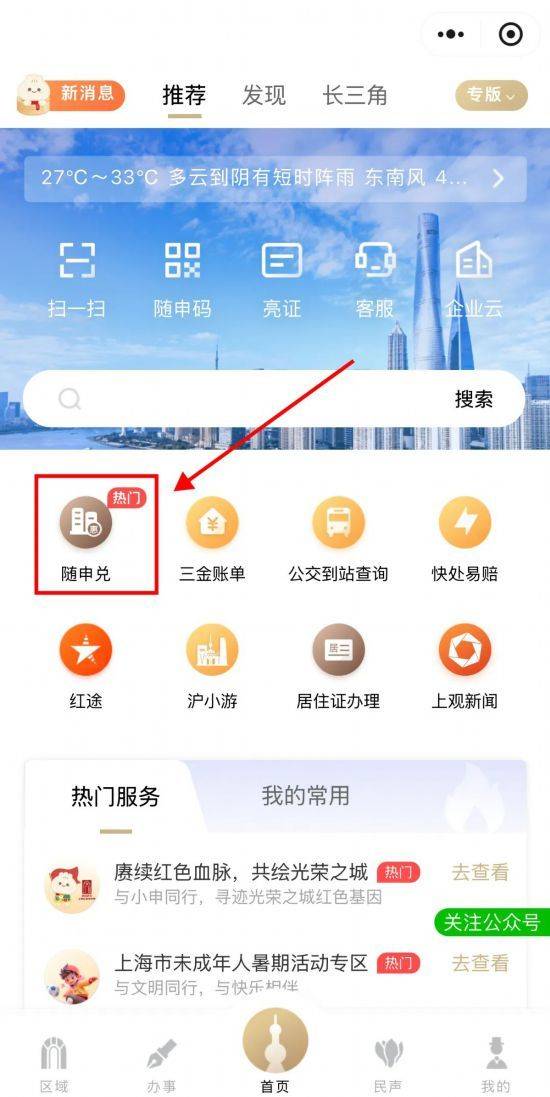
“随申兑”上线“信上海”免申即享政策服务包
Sou Hu Cai Jing· 2025-08-07 12:57
Core Points - The Shanghai government, in collaboration with China Export & Credit Insurance Corporation, has launched the "Xin Shanghai" policy service package to support foreign trade and economic growth, particularly for small and micro enterprises [1][4]. Group 1: Policy Overview - The "Xin Shanghai" policy package is designed to help small and micro foreign trade enterprises mitigate trade risks, expand into diverse markets, and improve operational funding [2][4]. - The policy package is accessible through the "Suishenban Citizen Cloud" app and other digital platforms, allowing businesses to receive direct notifications and benefits without the need for application [4]. Group 2: Implementation and Support - The initiative aims to integrate various policy resources, enhancing the collaboration between trade, finance, taxation, and shipping sectors to ensure effective policy delivery [4]. - The policy package is part of a broader effort to support the construction of Shanghai as an international financial center, aligning with government action plans [4]. Group 3: Additional Services - China Export & Credit Insurance Corporation has introduced several innovative policies, including automatic reinsurance for small micro platforms and simplified claims processes, to provide comprehensive support for enterprises [3]. - The service package is designed to be user-friendly, utilizing big data resources for precise targeting and efficient service delivery [4].
成都拿出多项改革真招惠企 践行“有需必应、无事不扰”
Mei Ri Jing Ji Xin Wen· 2025-08-05 08:55
Core Viewpoint - Chengdu is enhancing its business environment through targeted reforms and initiatives aimed at improving service efficiency for enterprises, particularly in the film and technology sectors [1][2][3]. Group 1: Film Industry Initiatives - Chengdu Film City is positioning itself as a "Western Film Fashion Capital" and has implemented the "One Thing for Film Shooting" reform to address the needs of film enterprises regarding approval efficiency and production costs [1][2]. - A comprehensive service station has been established at Chengdu Film City, offering 15 basic services, which has attracted over 500 film companies to settle in the area [2]. - The city has supported nearly 100 projects, including "Drunken Dream" and "From the Red Moon," in completing their project approvals [2]. Group 2: Business-Friendly Policies - Chengdu High-tech Zone has introduced the "No Application, Immediate Enjoyment" policy, allowing companies to easily access financial support by simply confirming their account information [3]. - Out of 286 policy items, 76 have achieved a "No Application, Immediate Enjoyment" status, resulting in a 26.57% exemption rate and disbursing 519 million yuan in industry support funds to over 12,000 companies [3]. Group 3: AI and Digital Innovations - Wuhou District is exploring the integration of AI into government services, including the development of a digital ID for enterprises that facilitates cross-platform applications [4][5]. - A reminder system for expiring business licenses has been implemented, significantly reducing instances of companies failing to renew their licenses on time [5]. Group 4: Credit Regulation Innovations - Xinjin District is innovating its administrative inspection system by implementing a "White, Gray, Black" credit regulation framework, which categorizes enterprises based on their compliance and performance [6]. - The district has established a credit database that generates individual enterprise credit profiles, allowing for tailored regulatory approaches based on their classification [6][7].